/pic4269004.jpg)


















Animal Kingdoms Deep Dive
What the Community Thinks About Animal Kingdoms
Animal Kingdoms occupies a unique space in the board game community. Reviewers consistently emphasize that this is a game that surprises players who approach it with low expectations. Despite being built on the familiar area control mechanism, players report falling in love with Animal Kingdoms precisely because it subverts what they expected. The game is frequently described as "fun" rather than stress-inducing, a quality that sets it apart from heavier area control games. Reviewers highlight the gorgeous card artwork featuring jeweled animals as a major draw, and many note they found themselves wanting copies of the game for their collections after playing it multiple times with friends.
Core Mechanics That Define Animal Kingdoms
Hand Management
Animal Kingdoms places hand management at the center of player decision-making. Each player begins with four cards in hand and must carefully consider which cards to play into which kingdoms and when. The power comes not just from playing cards, but from knowing which cards to hold back. Reviewers emphasize that the hand management layer transforms what could be a purely reactive area control game into a deeply strategic puzzle. Players must balance their immediate needs against future threats, deciding whether to withhold a powerful card for a potential battle or spend it to secure area majority now. This tension between playing out cards and holding key pieces in hand creates engaging turn-to-turn decisions.
Area Control with Decree-Driven Constraints
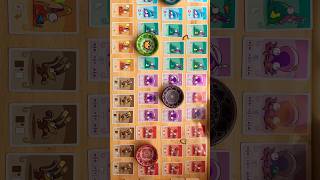
The decree cards fundamentally reshape how area control works in Animal Kingdoms. Each kingdom displays a decree that dictates which cards can legally be played into that territory. One kingdom might only accept odd-numbered cards. Another might require players to alternate even and odd. A third might forbid playing any card that matches the rank of neighboring kingdoms. These constraints are randomized each round, meaning players cannot develop a single dominant strategy. A card that dominated in Round One might become useless in Round Two. Reviewers note this creates a sense of discovery and adaptation, turning what could be a monotonous game into one where each round feels fresh. The decree cards are the mechanic that prevents Animal Kingdoms from falling into predictable patterns, and they are universally praised as the game's most innovative feature.
The Animal Kingdoms Experience
Breezy and Accessible
Despite the strategic depth, reviewers consistently describe Animal Kingdoms as a breezy game that is remarkably easy to teach. The rules are simple: play cards to kingdoms, place influence markers, score majorities. New players grasp the fundamentals within minutes. What makes this quality valuable is that the simplicity of teaching does not diminish the game's capacity to engage experienced players. The 30-60 minute playtime ensures the game doesn't overstay its welcome, and turns move quickly once players understand the constraints they face. This combination of accessibility and substance makes Animal Kingdoms function as both an excellent gateway game and a satisfying choice for experienced gamers.
Interactive and Dynamic
Player interaction in Animal Kingdoms is constant and meaningful. Reviewers highlight the battle mechanism as a source of this dynamism. When two players tie for majority in a kingdom, they enter a standoff where they simultaneously reveal cards from their hands to break the tie. The player holding the highest-numbered card wins the majority and its associated points. This creates tension in hand management because players must anticipate where battles might occur and reserve strong cards accordingly. Additionally, the decree cards create knock-on effects where one player's legal play might suddenly close off options for opponents. Reviewers emphasize that you cannot simply execute your own plan in isolation; you must constantly react to what others are doing and how the decree cards interact with their plays.
What Makes Animal Kingdoms Stand Out
Decree Cards That Ensure Every Game Feels Different
The decree card system is the engine of replayability in Animal Kingdoms. With a large deck of unique decree combinations, no two games follow the same strategic path. Reviewers note that this prevents the emergence of a single "solved" strategy. In one game, you might prioritize securing a high-scoring kingdom early. In another, that same kingdom might become worthless due to decree restrictions. This variability rewards flexibility and punishes rigid planning. Players who can adapt on the fly consistently outperform those locked into predetermined strategies. The result is a game where mastery comes from understanding principles rather than memorizing optimal lines of play.
Scalability Across All Player Counts
Animal Kingdoms plays excellently from one to five players, a feat that reviewers find genuinely surprising. At two players, the game is tactical and controlled, with both players able to plan several moves ahead. At three or four players, the board becomes more chaotic as more hands compete for majorities. At five players, control becomes nearly impossible and the decree cards introduce genuine unpredictability. Rather than one player count being superior, reviewers note that each count delivers a distinct experience. The game's architecture supports all these variations naturally, without requiring alternate rules or player count scaling mechanics. This is a significant achievement in game design, and it ensures Animal Kingdoms remains accessible regardless of table size.
Potential Drawbacks
Certain Decree Combinations Can Create Dead Zones
Reviewers note that specific decree card combinations can occasionally create scenarios where one or more kingdoms become nearly impossible to play into legally. A decree requiring cards to be played in strict numerical sequence (8-7-6-5-4-3-2-1) with no skipping can leave a kingdom locked down if an early card commits players to a path they cannot sustain. While this is rare and some players view it as an interesting puzzle, others find it frustrating when their carefully managed hand cannot legally contribute to a kingdom. Some reviewers suggest house rules to address this, such as allowing decree cards to cycle instead of locking at endpoints. However, most conclude this is a minor concern that surfaces infrequently enough to not significantly impact enjoyment.
Analysis Paralysis Can Extend Play at Higher Counts
Reviewers caution that the decree card restrictions and hand management puzzle can induce analysis paralysis, particularly at four or five players where board state becomes complex. A single card play can cascade through multiple constraints, changing which plays are legal in neighboring kingdoms. Some players find themselves spending considerable time calculating whether a move is even legal before deciding on its strategic merit. While the 30-60 minute advertised playtime holds at two or three players, groups prone to overthinking may find themselves extending play significantly. Reviewers emphasize that this is a table issue rather than a game design flaw, but it is worth noting for groups that prioritize brisk gameplay.
If You Enjoy Animal Kingdoms
Reviewers recommend exploring other area majority games and hand management designs if Animal Kingdoms resonates with you. Many who love Animal Kingdoms also appreciate games where card restrictions and spatial constraints create meaningful decision-making. The game's focus on variable scoring and adaptive strategy suggests fans might enjoy games where fixed strategies fail and flexibility is rewarded. Additionally, players drawn to Animal Kingdoms often appreciate the artistic presentation of games, suggesting titles with beautiful card design and thematic coherence would align with their tastes. The combination of light rules and strategic depth also appeals to players seeking games that teach quickly but reward mastery, a quality that defines many modern gateway games with hidden depth.
What Reviewers Are Saying
"There is so much thinking to it like they're so you know there's definitely luck of the draw but really this game is all about what can you do with it."
— Before You Play
"The decree cards change every game it always feels yeah there's not one strategy like I must get this Kingdom plus these chips that score you know."
— Before You Play
"I really really like that the decree cards change every game and it always feels yeah there's not one strategy you have to be able to roll with the punches and adapt to it."
— Before You Play