/pic4172124.png)




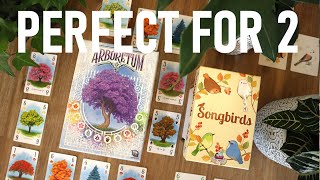















































Arboretum Deep Dive
What the Community Thinks About Arboretum
Arboretum has earned a devoted following among board game reviewers who praise its elegant design and deceptive depth. Multiple experts describe the game as one of the best card games released, highlighting its simple components that mask surprisingly complex decision-making. The nearly universal sentiment is that Arboretum delivers rich gameplay experiences despite its minimalist premise: a deck of numbered tree cards, a few simple rules, and the opportunity to create beautiful paths. Reviewers consistently recommend the game to both newcomers and experienced gamers, noting that its 30-minute playtime makes it accessible for any game night.
Core Mechanics That Define Arboretum
Hand Management and the Discard Dilemma
The heart of Arboretum lies in hand management, where every card drawn forces an excruciating decision. Players must simultaneously play one card to their tableau and discard one card face-up to a personal discard pile. This dual action creates continuous tension, as players perpetually face a choice that feels impossible to make. Reviewers highlight that discarding is rarely an easy decision, roughly one out of every ten hands offers a simple discard choice, while the other nine demand careful deliberation about which card to sacrifice. The shared discard piles amplify this tension, as players can retrieve previously discarded cards, turning every discard into a strategic gift to potential opponents.
Path Building and Majority Scoring
Players construct scoring paths by placing cards orthogonally adjacent to one another, building numerical sequences that ascend within each tree type. To score a path, players must hold the highest value cards of that tree type in their hand at game's end. This creates a magnificent push-your-luck tension: do you build longer, more visually rewarding paths in front of you, or hoard high-value cards in your hand to secure the scoring rights? The end-game reveal when players expose their hidden cards to determine who scores which paths delivers one of the game's most memorable moments, where carefully laid plans can evaporate entirely.
The Arboretum Experience
Deceptively Cutthroat Gameplay
Despite its serene forest aesthetic and gorgeous tree artwork, Arboretum emerges as one of the meanest games in the hobby. The theme and presentation suggest a peaceful, relaxing experience, yet the actual gameplay is ruthless and confrontational. Multiple reviewers describe the game as "deceptively brutal," where players constantly take cards that opponents need and execute plans to block others from scoring. The beautiful arboretum that develops on the table masks a cutthroat experience where players actively work to deny one another victory points. This contradiction between the calm theme and intense mechanics creates one of the game's most delightful surprises.
Tense and Crunchy Decision-Making
Every turn in Arboretum generates palpable tension despite the game's brevity. Reviewers describe the game as "crunchy," requiring players to think deeply about each decision without excessive analysis paralysis. The small amount of available information, only nine cards in hand and visible discards, means that thoughtful players can make calculated moves while remaining unable to predict all consequences. The game creates four distinct decisions per turn: which cards to draw (from deck or known discards), where to place the card, and which card to discard, each carrying significant weight. Players frequently express regret four turns later about placement decisions or discard choices, realizing their mistakes in hindsight. This "painful decisions and regret" dynamic keeps players engaged and eager to immediately play again.
What Makes Arboretum Stand Out
Elegant Simplicity with Hidden Depth
Arboretum achieves what many games aspire to: remarkable simplicity in presentation masking sophisticated strategic gameplay. The rules fit on a few pages, explaining that players draw two cards, play one, and discard one. Yet the scoring rules and path construction create surprising depth that initially confuses new players but rewards mastery through repeated play. Reviewers emphasize that the game's core mechanics form a cohesive whole without extraneous elements. Even the special scoring conditions for ones and eights, which some find slightly inelegant when taught, quickly become second nature and add strategic nuance to hand management. The game feels timeless, comparable to classic card games that have endured for decades.
Exceptional Replayability Without Variance
Arboretum achieves remarkable replayability despite containing the exact same cards in every game. Players never construct their arboretum the same way twice, as both the order cards appear and the drafting decisions of opponents create unique puzzles. The game's minimal variance, no randomization beyond deck shuffling, no variable player powers, means players can engage in competitive optimization while still experiencing fresh challenges. Reviewers note they can envision playing Arboretum 20 or 30 times without exhaustion, as the strategic decisions themselves remain engaging and memorable. The game plays beautifully across all player counts from two to four, though two-player experiences feature a unique intensity from head-to-head competition, while three and four-player games distribute impact across multiple opponents.
Potential Drawbacks
Teaches Poorly Despite Elegant Rules
While rules are simple, teaching Arboretum presents unexpected challenges, particularly when explaining the end-game scoring majority mechanism and special card interactions. New players struggle to visualize how holding cards in hand relates to scoring paths on the table, requiring careful explanation with examples. The special bonuses for ones and eights feel slightly inelegant to communicate, with no card iconography to reinforce the concepts. Reviewers mention that most players grasp the mechanics after the first game, with questions typically resolving by the scoring phase. However, the initial learning curve contrasts with the elegant rules, making first plays occasionally frustrating despite the game's overall design quality.
Theme-Mechanics Disconnect
The game's gorgeous aesthetic and tranquil forest theme completely misalign with its brutal, mean-spirited gameplay. New players approaching the beautiful box expect a peaceful, relaxing experience perfect for a serene game night. Instead, they discover a cutthroat competition where opponents actively deny them victory points and regret becomes a central emotion. This mismatch surprises unprepared players, though most embrace the contradiction enthusiastically once they understand it. Players who specifically seek peaceful, meditative games may find Arboretum's intense decision-making and confrontational play disappointing, as the theme fails to deliver on its implied promise of relaxation.
If You Enjoy Arboretum
Players drawn to Arboretum typically appreciate other hand management card games with tight decision-making, particularly Lost Cities for its two-player intensity and set collection dynamics. Bonanza shares Arboretum's trading and hand management DNA while offering negotiation mechanics. For those seeking similar crunchy card play, Koi Pond delivers parallel tension through hidden hand mechanics and majority scoring. Games with comparable deceptive brutality despite serene themes, where players regularly sabotage opponents behind beautiful components, expand the appreciation of Arboretum's design philosophy. Players value games where small decisions compound across many turns, where hidden information creates tension, and where player counts dramatically affect experience while maintaining quality.
What Reviewers Are Saying
Arboretum is one of the best card games I've played in years and it swiftly jumped up to become one of my favorite games in general. Every decision you make in the game, drawing, placing, and discarding, is interesting, important, and often arduous. The hand majority mechanism and the way paths score creates this wonderful push-your-luck tension.
— Getting Games
Arboretum is a deceptively disguised push-your-luck game where you want to make that path as long as possible while still maintaining the majority. I love push-your-luck games, and this one cleverly hides it through set collection and placement decisions. It's quite exciting.
— John Gets Excited
The theme on this one is an absolute lie. It looks like it's going to be a pleasant game about making sets of trees and taking a nice walk to score points, but it's actually a game where people are constantly taking things that you're after and you just have to accept it. One of the meanest, most cutthroat games around, but deceptively brutal in the best way.
— Board With Steve