/pic6205610.png)















Arydia Deep Dive
What the Community Thinks About Arydia
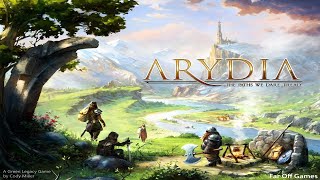
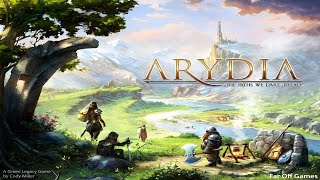
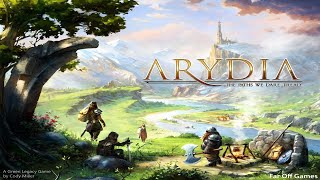
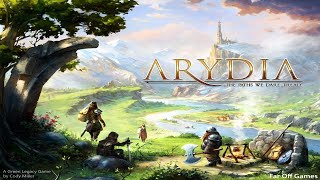
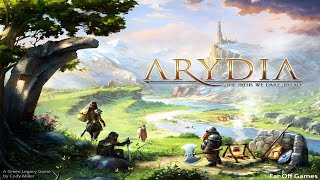
Arydia: The Paths We Dare Tread has captured the attention of board game enthusiasts across multiple content communities. The 2025 release from Far Off Games landed among BoardGameGeek's top rated games of the year, evidence of strong reception from the wider gaming public. Reviewers and players consistently praise the game's ambitious design and production values, though some acknowledge the significant time commitment and pacing complexities that come with a 60 to 80 hour campaign.
Core Mechanics That Define Arydia
Directional Combat and Spatial Positioning
The directional damage system stands out as one of Arydia's most innovative mechanics. During combat, players roll a d20 and consult their weapon's threshold chart, which determines whether an attack deals basic, enhanced, or critical damage. The crucial step follows: choosing which direction to apply that damage pattern across the enemy's damage grid. Enemies have critical points that trigger bonus damage when hit from specific angles, and armored sections that reduce incoming damage. This transforms every combat turn into a spatial puzzle where positioning becomes as important as dice rolls. Reviewers highlight how this system rewards flanking and careful positioning without becoming overly complicated, creating meaningful tactical decisions throughout the campaign.
The Combo Economy and Threat System
Combat coordination emerges through the combo and threat systems working in tandem. Rather than individual initiative, players draw from a threat deck each turn, which either increases the threat track or activates all enemies. When enemies activate, they spend accumulated threat on their most expensive affordable action, creating mounting tension as the track climbs. Meanwhile, the party banks combo points earned from basic actions like movement, then unleashes powerful special abilities at critical moments. Reviewers note that this creates genuine coordination challenges, as players must position for optimal attacks (which generate combo points) while simultaneously setting up teammates and deciding when to spend that shared resource pool for finishing moves. The system discourages analysis paralysis by tying resource generation directly to movement and positioning.
The Arydia Experience
Open World Exploration and Discovery
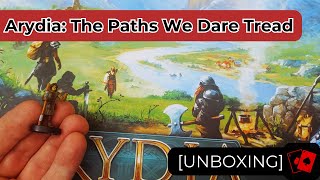
Arydia creates a persistent sense of exploration across dozens of sessions. The world map consists of hexiles (hexagonal tiles) that players move through, drawing from an evolving travel deck each movement. This deck physically changes based on player decisions. Clearing bandits makes travel safer; angering a faction creates ambushes. Reviewers emphasize that the travel deck reflecting the world state creates immersion and consequence. When entering a location, hand painted map cards connect like puzzle pieces to form complete areas, sometimes spanning four to six cards. What deeply impressed reviewers was how maps permanently transform during the campaign. When a story event alters a location, such as fire destroying a marketplace, players replace the old map card with its updated version, creating physical evidence of their impact that procedural or app-driven systems cannot replicate.
Character Customization and Progression
The six character paths (Valor, Shadow, Light, Wandering, Arcana, and Inspiration) allow substantial personalization. Players assemble their miniature by selecting a character portrait head and attaching it to their chosen class body, personalizing the figure without requiring painting skills. Each path provides starting skills and a unique character ability. Beyond aesthetics, the game features skill trees represented by tiles punched from boards. Gaining experience through quests allows players to unlock dice or abilities from these skill trees, mimicking video game progression systems. Reviewers found this physicality satisfying, noting that actually removing tiles from a progression board and slotting them in feels like claiming loot. The triple layered player boards themselves impressed reviewers as gorgeous and functional, organizing equipment, stats, and character progression in a way that mirrors video game inventory screens.
What Makes Arydia Stand Out
Green Legacy Resettability
Unlike destructive legacy games where components are permanently altered, Arydia uses what the community calls a green legacy design. The game is fully resettable after campaign completion, allowing players to experience all six character paths without purchasing multiple copies. Reviewers confirm this actually works in practice. Groups that completed their 80 hour campaign immediately reset everything to play again with different character classes. While reset takes a couple hours of sorting cards and refiling maps, the process remains feasible. This resettability also enables something crucial: the camp mechanic allows seamless character addition or removal between sessions. New characters instantly level up to match the party, solving the common problem where players who miss sessions fall behind.
Stunning Production and Component Design
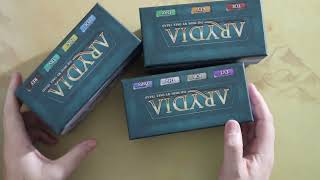
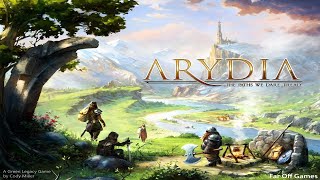
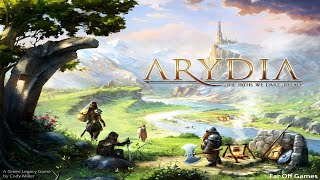
The production values drew universal praise across all reviewers. The game contains 60 plus prepainted miniatures, 1,200 cards, and 300 map cards, making it a production monster. Reviewers marveled at specific details: the metal resource components (silver, gold, copper) that feel weighty and elegant; the clever triple layered player boards with indented areas so skill tiles and equipment organize visibly; the FAQ printed on the reverse side of every skill card. One reviewer called this FAQ approach revolutionary, saying no other game implements it at this scale. The packing instruction diagrams on the box interior showed meticulous attention to detail. Each class includes a literal treasure chest box containing class specific starting gear. The hand painted artwork remains consistent across 300 plus location cards, and the coherence of the visual world impressed reviewers who spent hours exploring it.
Potential Drawbacks
Tutorial Length and Learning Curve
The tutorial structure emerged as a significant barrier. Multiple groups reported tutorial sessions running three or more hours before actual gameplay begins. The structure itself creates isolation at the table: each player completes a class specific mini tutorial independently, reading through instructions silently while sitting together. Only one player receives a practice dummy miniature while everyone else uses cardboard tokens during learning, which dampens early cooperative engagement. Reviewers expressed frustration with this delayed payoff: groups spend hours absorbing interconnected systems before experiencing them meaningfully. For a game marketing itself as accessible to ages 14 and up, this learning investment is steep. The feedback splits noticeably; some groups praised the thoroughness while others found it tedious, suggesting the tutorial structure itself presents the fundamental problem.
Mid to Late Campaign Pacing Fatigue
A clear pattern emerged across multiple completed campaigns: strong first half, divisive second half. Groups consistently reported high engagement for the initial 20 to 30 hours, then declining enthusiasm as repetition sets in. The core issue appears to be quest variety stretched across too much playtime. In a 10 to 12 hour campaign, simpler quests feel acceptable because players constantly progress. Stretched across 60 to 80 hours, those same quest structures (gathering herbs, delivering messages, fighting discovered enemies on generic terrain) feel repetitive by hour 45. Reviewers also noted that gear progression happens slowly enough that extended stretches occur between meaningful character upgrades. When players fight similar enemies with the same gear loadout for five to eight sessions, even the clever spatial combat starts feeling like solving the same puzzle repeatedly. Component visibility compounds this issue: enemy damage tracking cards are too small to read from across a standard table, requiring constant card passing or standing to reference information during play.
If You Enjoy Arydia
The game appeals most directly to players who love tactical combat with spatial puzzles and can commit to 60 plus hours with a consistent group. For groups seeking exploration focused campaign games, Gloomhaven delivers similar tactical depth with tighter session lengths. Descent: Legends of the Dark offers app-driven dungeon crawling with campaign progression in a more streamlined package. If you enjoy the open world exploration and resettable legacy elements specifically, Sleeping Gods provides a storybook adventure with meaningful branching in a shorter campaign. For pure combat system satisfaction, Frosthaven offers a massive box with deep tactical encounters. The one to two player experience represents Arydia's optimal sweet spot, where table space remains manageable and both players can reference combat information without awkward card passing.
What Reviewers Are Saying
"Seriously, more games should do that. I've never seen anything like that in a game, having an FAQ on the other side of each card."
— Sir Thecos
"This is a big cooperative campaign kind of open-ended story game of exploration where you're going through and exploring the world, encountering monsters and things to fight, and the production is amazing."
— BoardGameGeek
"What really impressed me was these maps that connect together like puzzle pieces. When a story event changes a location, you physically replace the map card, so you can see the impact of your decisions on the world."
— Totally Tabled