BUY OR SKIP Arydia: The Paths We Dare Tread? (Brilliant Combat But ...)
Games in This Video
1 game is featured in this video — it unlocks as you watch.
Transcript
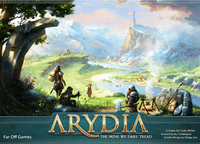
We just spent the last week watching every single piece of footage we could find on Aridia, the paths we dare tread, and I have some many thoughts about this massive campaign game.
Yeah, this second printing from far-off games. Should you back it or skip it? Let's figure this out.
Full transparency, we watched every available footage and consumed every piece of information we could find about this game. Gameplay videos, unboxing footage, campaign materials, everything. What we're looking at is this massive cooperative fantasy RPG that promises 60 plus hours of openw world adventure in a box the size of a small dog.
The campaign page compares it to a miniature schnowzer, which is hilarious. Here's what you need to know. This is designed by Cody Miller, published by Faroff Games for 1 to four players ages 14 and up. Each session runs about 2 hours, but the full campaign is 60 to 80 hours based on what we saw groups reporting. This is a serious commitment, not a weekend game.
Right. And this is the second printing, not a second edition. They're not changing fundamental rules, just fixing typos and adding FAQ clarifications. The campaign hit its $200,000 goal in about 2 hours and ended up at over $400,000 with more than 4,000 backers. For pricing, the base game is $1.99, but the gameplay all-in at 229 gets you the base game plus two mini expansions, which seems like the sweet spot. Yeah, and if you already own the first printing, there's a $15 tier with the new Fabled Fishing expansion, plus an upgrade pack with corrected cards. That's a no-brainer for first printing owners. The scope really hit us when we watched the footage. 60 plus prepainted miniatures, 1,200 cards, 300 map cards.
This is a production monster.
Production values are genuinely stunning. The core hook is you're playing exiles trying to earn your way back home by collecting wooden coins called squills for doing good deeds. You're revealing hexiles, discovering locations, meeting NPCs, getting into tactical combat. It's called a green legacy game, which means it's fully resettable after you finish, so you can play through again with different character classes.
Which brings us to the six different paths, your character classes: valor, shadow, light, wandering, arcana, and inspiration. You customized your miniature by picking a character portrait and popping that head onto the class body. Clever touch that gives personalization without needing painting skills, which is huge for people who aren't miniature hobbyists.
Now, let's talk mechanics because this is where things get interesting. The game has three nested layers: world exploration, adventure mode, and combat mode. When exploring the world map, you're moving your party token between hexiles and drawing from this travel deck every time you move. What's cool is this deck evolves based on your decisions. Clear out bandits, travel gets safer, anger, affection, expect ambushes. The deck physically changes to reflect the world state.
Yeah. And when you enter a location, you're flipping through hand painted map cards that connect together to form the complete area. We saw footage of locations spanning four to six map cards that join like puzzle pieces. These locations have NPCs, points of interest, story events, and combat encounters. What impressed us was how maps physically change during the campaign. When a story event alters a location, like a fire destroying a marketplace, you permanently replace the old map with its updated version.
Combat is where the design really shows its teeth. Turn-based tactical on a grid, alternating between player turns and enemy activations. But here's the hook. The directional damage system. You roll a d20 and check your weapon's threshold chart. Different roll ranges give you different damage patterns, basic, enhanced, or critical. Then you choose which direction to apply that pattern across the enemy's damage grid. Enemies have critical points that trigger bonus damage when hit and armored sections that reduce damage. It's a spatial puzzle where you're thinking about angles and positioning constantly,
and the threat and combo systems work together beautifully. Enemies don't have individual initiative. You draw from the threat deck each turn. It either increases the threat track or activates all enemies if it shows all foes. When enemies activate, they spend accumulated threat on their most expensive affordable action, so there's mounting tension as the track climbs. Players counter with the combo system a shared resource pool. Basic actions like movement generate plus one combo, and the party banks these points to unleash powerful special abilities at critical moments. We watched one encounter where the group positioned to attack through multiple weak points while banking combo, then blew it all on a devastating finishing move. The coordination is genuinely clever. You're not just managing your own turn, you're setting up teammates and deciding when to cash in that shared resource pool. The victory condition is collecting enough squills by harvest time to earn your pardon and go home. But from completed campaigns we watched, there are actually multiple ending variations depending on when you decide to conclude. The exact branching isn't super clear, but different groups reported different conclusion experiences.
Okay, let's talk about what actually works because there's genuinely a lot to celebrate. First off, that directional combat system is brilliant. From all the footage we watched, positioning determines everything. Attacking from different angles changes which critical points you can access, and enemies have directional defenses that reward flanking. It's not just rolling dice. It's a genuine spatial puzzle every single turn.
Right. And what makes it sing is how it interacts with the combo economy. You're moving to optimal positions, which generates combo points. So, positioning for better attacks simultaneously build your resource pool. We watched multiple encounters where careful positioning led to chaining attacks through weak points, banking enough combo to unleash massive finishers. It rewards planning without drowning you in analysis paralysis. The production values deserve serious credit. Those triple layered player boards genuinely impressed us. Each pass comes with stacked boards representing equipment, character stats, and skill trees that mimic video game inventory screens. Their satisfying physicality to upgrading your character. You're removing skill tree tiles from punch boards and slotting them into your progression board. It feels like claiming loot. And each class includes an actual treasure chest box with class specific starting gear.
You were geeking out over those player boards
because they're gorgeous and functional. The map system is elegant, too. A single location might span four to six cards that join to form the complete area. The handpainted artwork is consistent across 300 plus cards, and the physical map changes create memorable moments. Seeing a location permanently transform because of your story choices has weight that appd driven systems can't replicate.
The green legacy resetability is another win. We watched footage of a group that completed their 80our campaign and then immediately reset everything to play again with different character classes. That works, which is huge. You can experience all six paths without buying multiple copies. The reset takes a couple hours of sorting cards and refiling maps, but it's feasible. and the drop-in dropout character system. The camp mechanic allows seamless character addition or removal between sessions. New characters instantly level up to match the party, solving that problem where someone misses sessions and falls behind. From gameplay, we observed this works smoothly. One session might be solo, the next brings in a partner, then back to solo without penalties.
Solo players can manage one to four characters, though. From footage, the sweet spot looks like one to two characters for pacing. The immediate level up is such a smart solution for keeping everyone engaged regardless of attendance. That makes this way more accessible than most campaign games that lock you into a fixed roster.
But here's where things get complicated, and we need to be honest. The tutorial structure is rough. From multiple first session observations, groups reported tutorial sessions running 3 plus hours before actual gameplay begins. 3 hours of learning before you play. That's a serious barrier. And the structure is weird. Each player gets a class-specific mini tutorial they complete independently. You're sitting together at the table but not interacting. Everyone's reading through instructions silently. Only one player gets the practice tummy miniature. Everyone else uses cardboard tokens. It feels isolating for a cooperative game.
What's frustrating is the delayed payoff. You spend hours absorbing systems before experiencing the interconnected gameplay that makes them meaningful. For a game marketing itself as accessible, this is steep. Not everyone will tolerate a multi-hour tutorial before fun begins. Feedback splits here. Some groups praised it, others found it tedious, suggesting the tutorial structure itself is the problem. The bigger issue, mid to late campaign pacing. From multiple completed campaigns we watched, there's a clear pattern. Strong first half, divisive second half. groups consistently report high engagement for the initial 20 to 30 hours, then declining enthusiasm as repetition sets in. One campaign literally said 9.5 out of 10 for the first half, maybe a seven for the second half.
The core issue seems to be quest variety versus playtime ratio. In a 10 to 12hour campaign, you can tolerate simpler quests because you're constantly progressing. Stretched across 60 to 80 hours, those same quest structures feel repetitive. From footage, you're repeatedly fighting discovered enemies on generic terrain maps for the job system, gathering herbs, delivering messages, tasks that feel fresh in hour five, but exhausting by hour 45. And the gear progression rate makes it worse. We watched extended stretches of combat encounters between meaningful character upgrades. When you're fighting similar enemies with the same gear loadout for 5 to eight sessions, even the clever spatial combat starts feeling like solving the same puzzle repeatedly. That's a real pacing problem.
Component visibility is another issue. The enemy damage tracking cards are too small to read from across a standard game table. From two-player footage, both players struggle to reference enemy damage grids and remaining health without constantly passing cards or getting up. At four players, where do you even place these cards so everyone can see them? There's no elegant solution. The shop storage system is baffling. You stuff purchased item cards into the NPC card holder alongside the shopkeeper card. From footage, extracting these cards from the tightly packed holder looks awkward and timeconuming. For a game with 1,200 cards, these usability oversightes compound into significant frustration over 60 plus hours.
And the roleplay system doesn't work for a lot of groups. When you meet NPCs, one player draws their character card with minimal prompts. That player roleplays responses to questions. But from what we observed, this only functions when players stick to highlighted keyword options, ask about topics the card doesn't address, and the only response is that seems to fall outside my recollection. We saw this repeatedly breaking immersion.
Multiple groups we watched simply skipped roleplay entirely, reporting it dragged out the game without adding much. Solo players found it impossible. Talking to yourself in character is weird. Even two-player groups that initially engaged eventually abandon roleplay to improve pacing. The disconnect between the campaign framing roleplay as essential and reality that many groups bypass it suggests this pillar doesn't carry the weight the design assumes.
So, where does this land? After watching all this footage and analyzing everything, I'm thinking 7.5 out of 10. It's ambitious, innovative, the spatial combat is genuinely clever, but those pacing issues and the tutorial barrier hold it back from being an unconditional recommendation.
Yeah, I'm right there at 7.5. When it works, especially in that first 30 hours, it's excellent. The tactical depth is real. Production is impressive, and the resettable format adds value, but the mid-c campaign repetition is documented across multiple playthroughs, and that 3-hour tutorial is a real problem for accessibility. Those aren't minor quibbles. The 60 to 80our commitment amplifies every friction point. Issues manageable in hour 10 become exhausting by hour 40 if you're not fully engaged. And from what we observed, engagement drops significantly in the second half for many groups, enough to be a pattern worth discussing.
Our verdict depends heavily on your tolerance for long campaigns and whether you're playing at the sweet spot of one to two players. Most positive experiences we watched clustered at those player counts. The four-player experience has real question marks around component visibility and table space.
Think about your gaming group. If you love tactical combat with spatial puzzles, don't mind slower gear progression, and have the table space and storage, there's a lot to love. The directional damage system alone sets it apart from typical dungeon crawlers. For solo gamers, this accommodates that style well. The drop-in dropout system means you can manage one to two characters comfortably, and the campaign scales smoothly. The roleplay doesn't work in solo play, but tactical combat and exploration hold up. If you're primarily solo looking for a long-term project, this could work. Two-player groups appear to be the sweet spot. The combo system creates natural cooperation. Table space remains manageable, and both players can reference combat information without excessive card passing. Most completed campaigns we saw were at two players with strong satisfaction in that first half. For experienced gamers who appreciate tactical depth, the systems are robust. Strategy fans will find meaningful decisions in positioning, threat management, and combo spending.
But beginners might struggle with tutorial length and organizational overhead across dozens of sessions.
If you already own the first printing, that $15 fishing plus upgrade tier is genuinely excellent value. You get the new Fabled Fishing expansion plus all card corrections. Since this is a reprint with only typo fixes, your first printing stays current. You're paying $15 for an expansion and Arata, which is fantastic.
So, here's the final word. Aridia is worth your attention if the specific experience matches what you're looking for. The innovation in combat design is real. Production delivers and for the right player at the right player count, this could be your game of the year. Just make sure you're actually committing to 60 plus hours, not just wishing you had time for it.
Yeah, be honest about whether you'll actually finish an 80hour campaign. We've all backed games with good intentions that sat on the shelf. But if this clicks, you'll get your money's worth in content hours and tactical depth. Thanks for hanging with us while we deep dived into this behemoth.