/pic607021.jpg)













Assyria Deep Dive
What the Community Thinks About Assyria
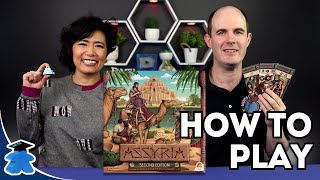
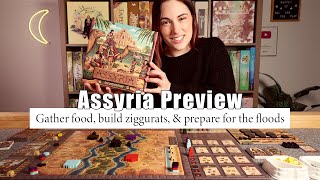
Assyria stands as a singularly unique experience in the Eurogame landscape. Meeple University marvel at its refusal to follow familiar conventions, and Chairman of the Board call it an underrated gem with so many paths to victory. Reviewers consistently highlight the tension between building and loss: Assyria generates genuine attachment to your wooden pieces while simultaneously rewarding you for treating them as expendable. The regular catastrophe of the floods means players navigate a constant push and pull between expansion and survival, investment and sacrifice, designed by Emanuele Ornella and published by Ystari Games.
Core Mechanics That Define Assyria
Bidding for Resources and Turn Order as Strategy
The opening phase of each round establishes turn order and resource access through a bidding system. Players bid with their leaders to claim cards granting food and favor, with the crucial twist that superior cards lock you into later action phases. Reviewers emphasize how this creates meaningful decisions from turn one, since paying for better resources forces immediate calculation about future turns. The bidding row generates genuine interaction as opponents outbid you, forcing pivots toward different resource combinations. This phase elegantly teaches the game's central theme, that advantage in one area creates vulnerability elsewhere.
Expansion, Feeding, and the Engine of Actions
Once resources are secured, players expand by placing huts on land and river spaces, then feed them using food, favor, or wild resources. Huts generate camels, the game's action points, when placed on rivers, and victory points when placed inland. The feeding requirement turns simple placement into a tactical puzzle, since failed feeding causes huts to vanish, erasing investment without return. Players then spend their hard-earned camels on a range of action types: building or upgrading ziggurats that grant new spawning points and ongoing multipliers, buying additional cards and resources, making offerings to advance on influence tracks, and building wells that block opponents. The ziggurat engine builds satisfyingly, yet this same engine creates the central tension, since your most powerful pieces sit vulnerable on river spaces at flood time.
The Assyria Experience
Dynamic Bidding and Tactical Feeding
The Assyria experience begins with interactive bidding that shifts priorities each round, ensuring no two games follow the same resource hierarchy. Reviewers found this opening keeps everyone engaged as every player selects their row. The expansion phase then demands tactical feeding decisions, since keeping a growing empire fed requires careful allocation and sometimes forces abandoning promising placements. Reviewers highlighted how meaningful the choice to build on rivers becomes: you know the floods are coming, yet building there remains optimal because river huts generate the camels you need for powerful actions. This creates a delicious tension between diversifying inland, which is safer but slower, and concentrating on rivers, which is faster but risky.
The Floods as Natural Consequence and Teaching Tool
The floods at the end of certain rounds are more than rules text; they are the game's philosophical centerpiece. Everything built on river spaces vanishes, wiping away carefully constructed empires. Reviewers described being attached to these pieces and seeing flood loss as painful, only to realize the game actively encourages building there because the camel engine depends on river huts. One reviewer confessed getting emotionally attached to the huts before recognizing them as fragile, point-grabbing empires meant to drift away. The floods rebalance aggressive play and keep late-game comebacks possible, teaching a profound design lesson: sometimes you build things knowing they will be destroyed because the journey matters more than the destination.
What Makes Assyria Stand Out
A Wholly Original Design
Reviewers explicitly stated they could not directly compare Assyria to any other game they had played, describing it as strange, unique, and special in how it works. This originality stems from disciplined design rather than gimmickry, combining area development, resource management, engine building, and action selection into a harmonious whole where each system reinforces the others. Reviewers praised the variety of paths to victory, noting that different approaches actually work, with one player chasing ziggurat multipliers while another pursued influence majorities and well placement, resulting in a tight contest despite radically different plans.
Meaningful Turn Order and the Camel Economy
Turn order in Assyria functions as a genuine economy. Choosing better bidding cards locks you later in action order, meaning you cannot capitalize immediately on a resource advantage. This forces richly strategic decisions: secure superior resources now and act last, or accept inferior resources and act early. The camel system emerging from river huts creates the game's resource metabolism, since everything you want to do costs camels, making river placement essential rather than optional. This transforms what could be a simple area game into a resource-conversion puzzle that rewards planning and punishes wasteful spending while remaining approachable.
Potential Drawbacks
Procedural Complexity and Feeding Overhead
The game's greatest friction is its procedural density. Each round follows a structured sequence of reveal, bid, expand, feed, and act, and the feeding phase especially demands careful bookkeeping as players calculate whether their cards, tokens, and wild resources can sustain their network. Reviewers noted the game can feel grindy at times due to this tracking, and the need to evaluate feeding before committing to expansion adds analysis overhead. For players who value snappy decision-making, the constant feeding calculations may feel like work rather than puzzle-solving.
Camel Scarcity and River-Hut Dependency
The most jarring moment for new players comes when they realize river huts, which will vanish in the flood, are the primary source of camels needed for everything else. This creates a paradox: you must build pieces you know you will lose in order to access the actions that generate points. While experienced reviewers recognized this as intentional and elegant, a first play can feel counterintuitive, and camel scarcity creates turns where players lack the actions to capitalize on interesting options, forcing passes or suboptimal spending.
If You Enjoy Assyria
Assyria shares intellectual kinship with Hansa Teutonica, another throwback Euro where network-building generates cascading bonuses and turn order becomes contestable. Fans of Tigris & Euphrates, Reiner Knizia's masterpiece of balance and controlled chaos, will find a complementary strategic experience. The game also appeals to fans of In the Year of the Dragon, which similarly forces you to weather recurring disasters by assembling the right contingencies at the right moments. For players who love throwback German designs with elegant drafting and area development, Amyitis extends that same lineage with comparable engine-building depth.
What Reviewers Are Saying
"Assyria is strategically rich, with each decision affecting your next move greatly. The floods are balanced and intentional, reminding us all why ancient civilizations didn't invest heavily in riverside condos. It's hard not to get attached to the huts, but deep down, it's my fragile, point-grabbing empire drifting away."
— Meeple University
"This is a really engaging game with tons of different paths to victory. I've only played it once so far and I'm super intrigued to explore it further. It really did capture my imagination. I love games that feel unique, and I'm really impressed by this one."
— Chairman of the Board
"Assyria is definitely an underrated gem. You don't hear anybody talking about this game, and it's quite special in how it works. It has so many different paths to victory, and it's a lovely game once those rules click. The game is a hell of a lot of fun."
— Chairman of the Board