/pic1629288.jpg)
In Babel, each player makes use of members of various tribes of the ancient world to build temples, exploit (or exterminate) their opponent's work force, destroy or steal their opponent's temples and otherwise do whatever it takes to build the tallest temples to win the game.
The game plays out on a small game board representing regions of 5 ancient civilizations, Medes, Sumerians, Hittites, Persians, and Assyrians. Each player will be dealt a hand of cards (consisting of 5 types corresponding to the above tribes). Players themselves are represented by stone figures. Temple cards will be made available at the side of the board for building throughout the game. On his or her turn, a player may discard a card to move to the corresponding region, place a card on the region they are currently located, build a temple by having tribesmen equal to the number or level on the temple card AND having built the previous (lower) temple level, move tribesmen from one region to another, or perform a skill action unique to each tribe. Players may perform any and all actions available to them, being able to perform most actions as many times as they wish and saving any number of unplayed cards for subsequent turns.
A big component of this game is placing your tribe cards in sets. Skills can only be used if a set of three (or more) cards is at the same location as the player marker. By discarding one of the cards of a set, the skill may be used. No matter the tribe, performing this action can force the opponent to discard half their hand. Other skills, such as robbing a temple from an opponent, skipping a level on a temple build, destroy an opposing temple, etc. are specific to the tribe activated.
Game play progresses until one of two conditions is met: if a player builds 15 points (or levels) of temples before the opposing player builds at least 10 points, that player wins. If the opponent does have more than 10 points, the game continues until one player reaches 20 points (in which case he or she wins) OR one player subsequently drops below 10 (in which case he or she loses).


1000+ Board Game Collection Tour
- Great game
- Phenomenal game
- Incredible game
- Satisfying puzzle
- Doesn't have the premium shine of other games
- Falls in a weird crack where gameplay is great but other games are preferred
- Not travel friendly
- Four Northwood
- Enchanted Ivy
- Rolling Deep
- Eureka
- Watergate
- Seven Wonders Duel
- Lord of the Rings Duel
Mechanics (from transcript analysis)
- Puzzle — The puzzle is very satisfying.
Video topics + discussion points
Quotes (from this video)
- Wingspan Pocket. This is charming. I like Wingspan Pocket better than I like Wingspan.
- I don't care about the cards. I don't care about the world building. I don't care about the cards. I've said this time and time again.
- All In Productions for me is an absolute miss.
- This is basically Rococo but not as much fun as Rococo. That's kind of the
- It's a good game, not a great game.
- And why would I ever play this over Pirates of Maracaibo?
- I would never ever ever suggest this over Pirates of Maracaibo.
- Rebuilding Seattle, which is great.
- This is the best game I'm getting rid of, in my opinion.
- I think it's phenomenal. I just think Rebuilding Chicago is slightly better.
References (from this video)

- Plays up to six players
- Not very long
- Highly replayable
- Fun for all ages
- racing
- Camel Up
Mechanics (from transcript analysis)
- Card Drafting — Players play cards to race using gravity as their engine.
- Set Collection — It is a racing game where you play cards simultaneously.
- Simultaneous action selection — It is a racing game where you play cards simultaneously, simultaneous action selection where you get resolve alphabetically.
Video topics + discussion points
Quotes (from this video)
- It has deck building, the mechanic of deck building that I wish I have in some others that makes my life easier in deck building.
- It all fits together very cleverly.
- This is the first sort of ultra heavy, above 4 on BGG type of game that I've liked this much for quite a while.
- It makes for really interesting decisions.
- The components are really great in here as well, they've got lots of little buildings and metal coins and all sorts of fun stuff.
- It's really a three-dimensional puzzle.
- The limited amount of actions you can do makes it like it's so tight that you have to think ahead.
- It's just a really simple, really elegant, thinky, you know two player push and pull back and forth sort of game.
- The theme is so fun, it's like the puns in the shop and everything else.
- It is also a lot more interactive than your typical one.
- It's really a deep strategy game.
- It's been really close every time, with high scores around about 100.
References (from this video)

- interesting combination of pathfinding and engine upgrades
- artful component emphasis on forest theme
- nest building and foraging
- forest
Mechanics (from transcript analysis)
- Engine Building — engine-building upgrades
- Pathfinding — strategic pathfinding through a forest
- set collection / token-based scoring — collecting trinkets and returning to your nest for points
Video topics + discussion points
Quotes (from this video)
References (from this video)

- Thoughtful drafting with clever interaction
- Feels like a real space race with strategic depth
- Complex drafting order may be challenging for newcomers
- Rule explanations can be dense
- Drafting and strategic positioning in a space race
- Space racing between singularities
- Cerebral, drafting-forward with tactical uncertainty
Mechanics (from transcript analysis)
- alphabetical drafting — Cards are drafted and resolved in a unique alphabetical element order
- mixed resolution — Cards resolve in a way that can move ships toward or away from others
- simultaneous action with risk — Choose risk/reward options and hope others' moves align with your plan
- Simultaneous Actions — Choose risk/reward options and hope others' moves align with your plan
Video topics + discussion points
Quotes (from this video)
- you start the race with three rumor cards and you can only win the race if you get back to London with no rumor cards and less than £10
- you win by not losing
- you balance the low risk low reward and the high-risk High reward cards at the right time
- it's post-apocalyptic what do you expect
- you play cards to move around the track
- early copies of the game were misprinted badly
- Wacky Races the board game is based on the classic 1968 cartoon
- it has drafting Corner management and engine management
References (from this video)

- strong thematic conceit (language barrier)
- cooperative play with unique communication restrictions
- language barriers in cooperative play
- Tower of Babel
Mechanics (from transcript analysis)
- Cooperative card game — no player actions on a turn; players give orders to others as language evolves
- language-change mechanic — languages slowly change, complicating communication
Video topics + discussion points
Quotes (from this video)
References (from this video)
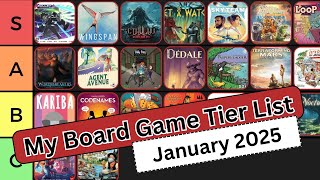
- top three game
- my top three game in both my list solo and general
Mechanics (from transcript analysis)
Video topics + discussion points
Quotes (from this video)
- this one is an abstract game that actually worked pretty well
- oh boy oh boy this is a game I don't have to think about it I I I could even think about giving it lower than a d but I will give it a d now
- the design doesn't work at all it's so specific there's like so much text on the cards it's i' I've I've never seen cards like that
- this is we have the suspicion that this is AI generated or at least some of it uh like what the regarding the rules in the design because wow this is really cumbersome
- it's a solid game this is like a game that is has a cool premise it works very well but it's nothing special but still I keep coming back to it because the Bame Marina implementation is so great
- Kaber of course uh this needs to be an S tier because it's my top three game in both my list solo and general
- Secret identity I will also give an a yeah it works really well
- it's very very tough but I like it it's always fun
- very good Abra game I can just I just recomend can recommend that to pretty much everyone
- Not turn I just reviewed on my channel uh I like this game I will give this a B I think B is fine uh it's a good game it has a very interesting Bing mechanism and a it has a few mechanisms that are very unique
- Missana uh I'm still really torn now that I played the cave of Gins which is really good um I might rank this higher I would also give this a B I don't know this game I think this game like will become even better like when you have more expansions right the base game is okay it's fine probably just a b Toc
- just one srank one of the best party games out there definitely srank uh I always like to pull it out it's one of my most favorite party games
- K grip also clear srank let me just put it up here clear srank game is one of my most most favorite portable solo games ever
- Kites Kites I will give a H A or B uh it's a very good game but I think I will give it a b it's also like a fun time you play like one two three four games and then you're over it and then you don't want to play it for a few weeks right at least that's how I feel but every time I pull it out it's very very fun I like it
- fun facts also clear S rank I like this a little bit more than just one uh but they're both incredible party games so definitely also S rank
- belati um a game that is not very well known I think internationally but a very cool deduction party game I also have to give this an S it's always a fun time like really really fun party games
References (from this video)

- Liked the concept.
- Found it really fun.
- Giggled a lot due to the chaotic difficulty.
- Extremely difficult to win.
- Impossible to get past the first level.
- Hard to describe the game.
- Information can become outdated as new words replace old ones.
- Can be difficult to distinguish which player's actions belong to which game when playing multiple sessions.
- Building a pyramid based on words
Mechanics (from transcript analysis)
- cooperative play — The game is described as a cooperative game.
- Hand Management — Players manage cards with words that dictate actions.
- Word Game — The game is based entirely around words and their association with actions.
Video topics + discussion points
Quotes (from this video)
- The rulebook for this is so bad. It's so bad.
- I was so wrong about this game.
- It's so cool when you get to the end of the game and you see all your little foxes lined up.
- You're building out this industrial empire. You're moving goods. You're investing in cities.
- It's a really satisfying feeling when your engine finally starts to hum.
- It's a really atmospheric game.
- You're scavenging through the ruins of a flooded world.
- It's like a city-building simulation.
- There's a lot going on. You really have to plan ahead.
- It's a game about shifting alliances and political intrigue.
- You never know who to trust.
- This game really nails the feeling of high-speed racing.
- It's so much fun, and it's surprisingly easy to get into.
References (from this video)

- Interesting concept with languages.
- Has been on the shelf for over a year and unlikely to be played.
- Languages
Mechanics (from transcript analysis)
Video topics + discussion points
Quotes (from this video)
- Girl I never got around to play. When I tried to getting into solo, I don't remember when it was like a couple years ago. I try thinking I'm gonna make a solo series because that's going to be a good idea and I didn't enjoy myself too much because it felt like work.
- It's one of those where it's a very clever game. It's very good. It's just a little bit dry and a little bit long for what it was.
- I feel like I played it enough because we got to play this a couple of times, a few times uh when we got it.
- Legacies was for me too much work for the fun I had. It is a little convoluted. It's it's a it's a cool game, but it's not my kind of game.
- In a crowded market of so many tile drafting, tile placement games, we have like we have harmonies, we have spectacular, what else do we have? Cascadia, we have still have Baron Park, we have King Domino, like we have ASU, we have so many games in this category.
- But I think I would have chosen to play for example Spectacular over it.
References (from this video)

Mechanics (from transcript analysis)
- 18xx — Described as like the 18XX rolling right.
- Roll and Write — Described as like the 18XX rolling right.
Video topics + discussion points
Quotes (from this video)
- Our board game collection has surpassed the 1,000 board game mark.
- It feels like it's time to do another collection tour.
- This is Tiny Epic Galaxies. It's a really fun dice rolling, resource management, engine building kind of game.
- Terraforming Mars. This is a classic.
- The feeling of terraforming Mars is just epic.
- Too Many Bones. This game has some of the coolest dice I've ever seen.
- It's a cooperative adventure game with really satisfying combat.
References (from this video)
- Fascinating puzzle
- Incredibly easy setup
- Small footprint
- Comforting and approachable feel
- Minimalistic but works well
- Nice variety and difficulty tweaking
- Iconography is tricky
- Wishes symbology was easier
- Wishes for a little more pizzazz
- Solving a puzzle with dice and cards
Mechanics (from transcript analysis)
- Dice Placement — Dice are rolled into spaces on a board, and their positions and values are manipulated.
- Resource Management — Players use tokens to manipulate dice, and running out of tokens leads to a loss.
- Set Collection — Players try to match dice conditions to clear cards from stacks.
- variable difficulty — A secondary deck of cards can be used to increase the difficulty.
Video topics + discussion points
Quotes (from this video)
- This, however, is going to be a solo game review roundup.
- I'm going to be going through them from the one I like the least to the one I like the most.
- Hercules and the 12 Labors from me gets a six out of 10.
- Ace of Spades here has a theme that I tend to really, really enjoy, the weird west.
- This is going to get a seven out of 10 from me.
- So, I find it fascinating. I find the setup incredibly easy.
- This one's going to get a 7.5 out of 10 from me.
- This is going to get an eight out of 10 from me. It's one I very much recommend for a casual solitaire gamer.
- This is 20 Strong Tangled Woods Red. So, 20 Strong is a dice system which has had several games made in it.
- This one from me is going to get a an 8.5 out of 10. That is a seal of excellence for that one.
- If you have not played Tangle Strong at all, I think Tangle Woods Red... is a fantastic jumping-on point.
References (from this video)

- Comes with its own play mat.
- Wooden discs flick really nicely.
- The map works well.
- Very simple to play.
- Could be liked by kids and non-gamers.
- Found it a bit disappointing due to lack of depth.
- Not enough game to bring back.
- Four-player variant leads to constantly bashing the leader.
- There are better dexterity games with more entertainment factor.
- Didn't quite hit the spot.
- getting attackers into the goal area over your opponent
Mechanics (from transcript analysis)
- Area Control — Players try to get their attacker pieces into the goal area over their opponent.
- Blocking — Defenders are used to block and try to flick the opponent's attacker off the board.
- dexterity — Players flick wooden discs across a play mat.
- Multiplayer Competition — Can be played with two and four players, with the four-player variant having goals in the corner.
- Player Elimination (implied) — Defenders can be used to get into places so the opponent's attacker can't get into your goal.
Video topics + discussion points
Quotes (from this video)
- it's wonderfully thematic it really fits the the idea of going mad
- at its best this game is hilarious and I'm amazed that I would get rid of a game that had me in tears of laughter
- it's such a simple idea that makes for so much negotiation
- I'm giving corporate America a seal of actual love
- it's a really lovely production amazing artwork from Quan Chau Moria
- this one was a big disappointment I'm sorry to say
- there are a lot of better dexterity games out there that have just a few extra rules and a bit more entertainment factor for me
References (from this video)
- Extremely brutal and mean
- Directly harmful mechanics
- Two-player only game (making direct conflict inherent)
Mechanics (from transcript analysis)
- Resource Management — Players manage resources to construct towers and activate abilities.
- Take That — Players can use abilities to directly harm opponents, such as tearing down towers, converting troops, or eliminating troops.
- tower building — Players construct towers on different locations by playing cards.
Video topics + discussion points
Quotes (from this video)
- these are games where you need to be prepared to get a bit nasty in order to overcome your opponents
- it is a brutal game it's vicious I wish I could play it more because it does require higher player counts but it's not a social deduction game but it's social deduction almost adjacent um and it is just so so good
- it's always described as kind of a knife fight in a phone booth because again you can't move without getting or rubbing shoulders with the other players
- notoriously known as one of the meanest games out there
- by far the most brutal card game I've ever played
- by far the most cutthroat the most mean and nasty game that I have ever ever played
- during the game all bets are off I'm going to do whatever I can to win it
References (from this video)
- Extremely ferocious and mean
- Very competitive
- Starts slow but gets more exciting
- Unlike anything Uwe Rosenberg has designed
- Didn't pull off the win
Mechanics (from transcript analysis)
- Area Control — Very cut Thro as we were tearing each other's temples down switching temples off to the other side.
- Resource Management — Starts off slow because you need very particular cars in particular places.
- tug-of-war — A kind of tug-of War Style game as you're trying to build these temples out.
Video topics + discussion points
Quotes (from this video)
- Rise is a fantastic Euro um that all about climbing tracks and it really does have this kind of roll and right feel um as when you move up some tracks it'll push you up other tracks which will give you other bonuses it really does have that kind of combo domino effect scoring um all well that's what this game is all about really and I don't think any other game does it better than rise does.
- This is such a cool game that I must admit I do need to be in the right mood to play because it is quite cerebral it's a bit of a game of attrition where you need to be patient and know when to strike and know when to sit back.
- What a wonderful game it's so smooth and so streamlined but still offers so many options and it's exactly what I want for a game in my collection.
- This is probably the most competitive game of bble that I've had um very cut Thro as we were tearing each other's temples down switching temples off to the other side.
- Really cool Euro again criminally underrated and overlooked um but maybe the new addition will get this one back into the spotlight so that is ayia.
- I actually prefer this game to Splendor because um it's it's just a bit more bit more interesting in my opinion.
- Kind of really does walk that tight rip of being a Euro but also an abstract strategy game.
References (from this video)

- Strong scalability and mix-and-match options
- Solitaire puzzle feel
- dice manipulation and resource optimization
- Cards arranged around a central area with fixed requirements
- solitaire/puzzle-driven
Mechanics (from transcript analysis)
- Deck Manipulation — Three dice on each side must be met to claim cards; tokens can modify dice when needed.
- dice manipulation — Three dice on each side must be met to claim cards; tokens can modify dice when needed.
- solo puzzle — Designed as a solo game with scalable combinations (16 basic, 16 advanced cards).
Video topics + discussion points
Quotes (from this video)
References (from this video)

- Compact and quick
- Easy to pick up for groups already familiar with similar games
- Not a deep engine-builder; more of a party filler
- Word association with a twist
- Light party game with a rhythm of clue sharing
- Casual, humorous
- Times Up
- Rabble
Mechanics (from transcript analysis)
- Word association with twist — Like Times Up, but with a physical or slightly different twist depending on rounds.
Video topics + discussion points
Quotes (from this video)
- "an excellent party game because it's just basically trivia"
- "Rabble adds a little twist of some physical challenges sometimes into the mix"
- "Jinxo shares some genetic material with the likes of code names and herd mentality"
- "You need to come up with the same word"
References (from this video)

- tight real-time puzzle experience
- short playtime with high tension
- some players may prefer heavier or lighter difficulty
- bomb diffusion vibe (puzzle-driven tension)
- diffusion-style cooperative puzzle
- tense, puzzle-centric
Mechanics (from transcript analysis)
- Cooperative Game — players work together to solve timed puzzles
- cooperative puzzle-solving — players work together to solve timed puzzles
Video topics + discussion points
Quotes (from this video)
- two players, you choose
- I'm really excited to see how this one plays since it is also a two-player game with eye cut you choose
- Unlock is really top tier as far as room escape games go
- pass your partner the perfect card
References (from this video)

- quick, concise puzzle
- strong potential for solo play
- dice manipulation puzzle
- fantasy or thematic engine-building space (descriptor inferred from title and genre)
- concise, puzzle-focused
Mechanics (from transcript analysis)
- Deck Manipulation — solo play involves manipulating dice outcomes to achieve desired objectives
- dice manipulation — solo play involves manipulating dice outcomes to achieve desired objectives
Video topics + discussion points
Quotes (from this video)
- Two Win was a sleeper hit for me.
- Park Ranger was a delightful little solo treat that really stood out for me.
- I really enjoyed it. It is a quick, concise puzzle
- This one was too long, and I did not enjoy the take that element.
- Flower Fields hit a really nice intersection of being clean, easy to learn, easy to teach, but also having just enough going on that it felt like it has a little bit of a competitive edge.
References (from this video)
- Mean, but balanced two-player experience
- Fits in neatly with Rosenberg's design language while not feeling like a typical Rosenberg game
- Confrontational nature can be off-putting for casual players
- mythic confrontation
- Temple duel with temple-building mechanics
- confrontational, direct competition
Mechanics (from transcript analysis)
- duel/tug-of-war — play cards to build temples and attempt to outpace opponent; cards have powers that can affect temples
- Tug of War — play cards to build temples and attempt to outpace opponent; cards have powers that can affect temples
Video topics + discussion points
Quotes (from this video)
- this one is a lovely game by Stephan Dora, a great design in his own right.
- you are trying to collect exactly three of these animal tokens of each type to get the maximum amount of points
- a real brain burner but so simple and elegant to play as well
- Lost Cities a joy to get that one back to the table
- it's far too long I think it took us nearly two hours to play this which is obscene for the weight of the game
- Katarena one of the best abstract strategy games out there
- this is a bit of a whitewash of a game
References (from this video)

- High social interaction and performative play
- Flexible rules that invite house-rule experimentation
- Accessible language and broad player involvement
- Strong group dynamics and humorous moments
- Can devolve into chaos with large groups
- Effectiveness depends on players' willingness to perform
- Quality of experience can vary with audience mood
- Word creativity, bluffing, performance
- Social party game where players create made-up words and pitch definitions
- Humorous improv with flexible rules
- Scrabble
Mechanics (from transcript analysis)
- Bluffing and pitching — Players pitch or perform a description of their word to persuade others of its fit
- Category-driven definition — A category card in play defines the target of the word and the operating joke or definition to pitch
- End-of-round refresh — Players draw back up to eight letters after each round to prepare for the next word
- Tile drafting / word construction — Players select letters from a hand to form a word that fits a chosen category card
- Voting with Yes/No cards — All players vote yes/no on the presented word/definition; majority outcome determines point gain
Video topics + discussion points
Quotes (from this video)
- Blabby is a game of madeup words.
- it's Scrabble crossword now with a pitch.
- you can spell out whatever words you want using these tiles.
- the game is all about word creativity and pitching.
- Blabby is available globally on Amazon and Barnes & Noble.
- they've included a phone stand into the box for filming your pitches.
- Blabby is a brand-new startup in which you can play with words and performances.
- the developers have built a little phone stand into the box for you to film your pictures.
- it's all about word creativity and pitching as long as you use the category you can spell out whatever words you want.
- you can perform singing, acting, drawing, impressions—whatever you want to use to describe your word.
References (from this video)

- strong solo puzzle design with satisfying chaining of rewards
- high strategic depth via advanced card variants and substitution options
- portable and travel-friendly solo puzzle design
- encourages planning and anticipation through token economy
- clear pathway to escalate difficulty with advanced cards
- enjoyable surprise elements when rewards unlock flexible play
- box could be more travel-friendly as noted by the reviewer
- puzzle can feel repetitive for players seeking greater variety over many plays
- some players may desire more explicit control over deck composition
- the advanced variant can add complexity that may overwhelm new players
- procedural puzzle solving with pattern matching and set-collection-like rewards
- abstract puzzle space centered on card stacks and dice tokens
- non-narrative, puzzle-driven experience
- Oiverse (Impatience line of solo puzzles)
- Siberian
- Urban
- Buttonshy solo puzzle titles
Mechanics (from transcript analysis)
- card stacks and goal fulfillment — placing cards in piles and completing goals to gain rewards
- dice manipulation — rolling, swapping adjacent dice, and rotating dice to change values and colors
- reroll mechanics — ability to reroll a row of dice and reconfigure positions
- row/board manipulation — rotating the center board and moving cards between stacks
- Token economy — spending tokens to swap or rotate dice and influence card outcomes
Video topics + discussion points
Quotes (from this video)
- This is new to me.
- This is actually one of my favorite games from Impatience recently.
- I like this game. I like this game.
- This is a fantastic travel friendly solo puzzle that I thoroughly enjoy.
- I think this is an easy four out of five for me.
- That's basically your solo playthrough and review of Ravel.
References (from this video)
- strong hand management with tactical choices
- engaging head-to-head rivalry
- some rounds can feel constrained by the two pyramid cards that come out
- destruction and theft of pyramids
- pyramids and power cards in a competitive head-to-head
- mean-spirited, direct confrontation
- Battle Line
- Lost Cities
Mechanics (from transcript analysis)
- area/board manipulation — cards destroy opponent pyramids or steal top levels
- Deck Manipulation — cards destroy opponent pyramids or steal top levels
- Hand Management — managing a hand of cards to deploy to locations
Video topics + discussion points
Quotes (from this video)
- it's really tight this Bard is and the opportunity cost of doing one thing
- there are so many different ways you can score in this game
- it's punchy
- the game end really does rush up on you
- polished, refined, gorgeous to look at
- you can just take the pieces off the board and go again
References (from this video)
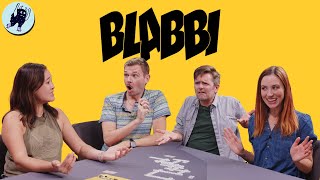
- Encourages creativity
- Humorous gameplay
- No strict spelling rules
- Subjective scoring
- Requires imaginative players
- Creative word-making and storytelling
- Collaborative improvisation
Mechanics (from transcript analysis)
- Voting — Other players vote on the believability of the word
- Word creation — Players create fake words and define them
Video topics + discussion points
Quotes (from this video)
- This is a game about um being silly and making up fun words
- It's not Cutthroat spelling be
- The poop fuels the ships