/pic1368514.jpg)
Welcome to the Tasty Minstrel universe! Put your Elves, Dwarves and Gnomes to work in the Village and Guilds of Belfort to collect resources and build up the city!
Elves collect wood from the forest while Dwarves collect stone from the quarry. An Elf and a Dwarf together can collect Metal from the mines, and either one can collect Gold. Build buildings in the five districts of the pentagonal city and hire Gnomes to run them to gain their special abilities.
Belfort is a worker placement game with area majority scoring in each district as well as for each type of worker. Buildings give you influence in the districts as well as income, but taxes increase based on your score so the winning players will have to pay more than those behind! Manage your resources and gold well, choose your buildings wisely, and help build the city of Belfort!

Belfort - Game Play 1

Belfort - Game Play 3

1000+ Board Game Collection Tour
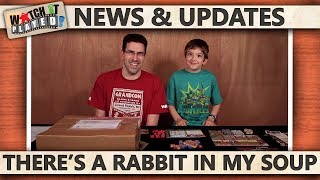
- Luke has been enjoying it
Mechanics (from transcript analysis)
Video topics + discussion points
Quotes (from this video)
- hi everybody welcome back to watch it played
- my name is Rodney Smith and this is Luke Smith
- Belfort by Tasty Minstrel Games
- Luke this is one that you've been quite enjoying haven't you
- we do a full review of Village
- we talk about a lot of different things we do a full review of Village
- also some people are probably going to ask me you're doing Belfort next I thought we did a deciders vote for descent too
- Fantasy Flight Games just released an updated FAQ for Descent 2
- Rodney roughly one year ago I donated a game and made a promise
- the game was City of Thieves
- Life Death poop poop
- Primordial Soup
- highest rated by Board Game Geek users
- in this game you control a tribe of amibas and you have to acquire genes and influence the development of your amibas
- the game comes with 20 different genes allowing you for a variety of different combinations
- the player with the most successful species resigns in the soup
- Daniel I've got to say you really surprised us with this one and both of us are hooked just by the box art alone
- thanks for the chocolate
- till the next episode thanks for watching
References (from this video)
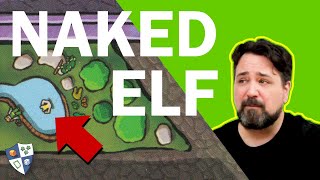
- Packed with tiny little doodles referencing all kinds of neat stuff.
- The game's name is a reference to a real town in France called Belfort, which has a pentagonal downtown just like the game's board.
- References to Catan resources.
- Tasty Minstrel Games dragon named Dargon is present.
- Scout ship from Terra Prime is depicted.
- Coin from Terra Prime is present.
- Ruler made from 100% ent-free wood.
- Seth Jaffee's BGG username carved into the wood.
- Parts of Josh Cappel's signature are present.
- Maple leafs nod to the Canadian artists and designers.
- Michael Mindes hawking copies of Terra Prime and Train of Thought.
- Characters from The Order of the Stick appear.
- A goon reading the Belfort rulebook is depicted.
- BoardGameGeek's old mascot Ernie is present.
- A dray beast from Conquest of the Fallen Lands is depicted.
- Blacksmith hammering T M G.
- Fun little things happening around the board like elves and dwarves delivering gold.
- Thieves breaking into the bank and an elf calling goons.
- Market stall sells elf hats.
- Elf skinny-dipping in a pond.
- A lineup outside a pub with ladies being ushered in.
- Guys selling the game's four resources: ore, wood, stone, and gold.
- Worker placement/area control game with hidden details
- France
- Catan
- Terra Prime
- Train of Thought
- Conquest of the Fallen Lands
Mechanics (from transcript analysis)
- Area Control — Mentioned as a core mechanic of the game.
- Worker Placement — Mentioned as a core mechanic of the game.
Video topics + discussion points
Quotes (from this video)
- But you'd better bust out your jeweler's loupe, because most of them... are microscopic!
- These maple leafs are a nod to the fact that the game's artist and designers are all Canadian.
- Josh pointed out a bunch of little doodles that aren't really references - they're just fun little things happening around the board.
References (from this video)
- tightens and improves the base game without creating an alternate version
- asymmetric powers add depth and variability
- a relatively small box that adds substantial value to every game
- some players may prefer no extra content if table space is tight
- the collector’s edition can complicate card assortment
- refinement and expansion of base mechanics with varied critter abilities
- Top-board integration with the base game; asymmetric critter powers
- polished, incremental improvement to the core experience
- Everdell
Mechanics (from transcript analysis)
- asymmetric critter powers — Each critter has a unique mini-card that alters how you play.
- Asymmetric Player Powers — Each critter has a unique mini-card that alters how you play.
- expanded coin/resource flow — Coins and card flow adjustments let you move the market up or down for points.
- garland award (garden-like) end-game scoring — A new random award based on diversity of critters/buildings at a game end.
- Player Board | Main Board — A top board slides into the main board; market action interacts with it to access more resources and cards.
- top board and market action — A top board slides into the main board; market action interacts with it to access more resources and cards.
Video topics + discussion points
Quotes (from this video)
- it's a real Challenge and it works with all of the expansions
- it's a really full solo game because there's lots of different components that you can add in and play with
- there is a way to bring Nightweave into two player games and add an extra player
- New Leaf it's probably the best looking of the expansion boards
- number one is Belfair with a bullet
References (from this video)

Mechanics (from transcript analysis)
Video topics + discussion points
Quotes (from this video)
- we would play Warhammer I think I said it last time we would start Warhammer at like 9 A.M on a Saturday and like not until 9 p.m one combat we would play one massive three on three four on four yeah three to five thousand points each which is oh dude I wish I had photos oh my God and everybody's stuff was painted it was so great that was so great gaming yeah it was a great game
- that's when I remember the stupid toads plan the slam the salon of course you know since it was the newest army at the time was so massively overpowered because that sells armies yeah powerful Army so minis yeah and we were all like dwarfs were screwed
- I remember playing one time and I'm like I don't really know how this works but let's just see and I put it out there and this guy runs across with his General on a dragon and he got warped and destroyed in a second and it was like turn one and I'm like oh no what are you gonna do for the because that was like half his points right
- we were playing a blood Bowl league and I had like a chaos team for my blood Bowl team and so my my star player was a Minotaur and and then you have lineman and then like and that's basically your proper League of that the blood bowl like so the blood Bowl chaos team your whole thing is is that you're not fast but everybody is super strong and so you just you just March you just slowly March down and you injure every single one of them can't play around yeah yeah you just you just Smash and you basically you score a touchdown as fat like you knock somebody down you score a touchdown you spend the rest of the game not even worried about the ball you just sit there and just pound people that's what they do
- it was like the second turn of the game and like his star like Blitzer guy on like his elf team and at least like he he was just within range I could do my double Blitz with my with my Minotaur zip zip roll it was like and I got it all higher no it was like it was like boom injured roll again 12. dead
- Games Workshop all the time for their prices and this to anything but you know man there they have some solid solid games and blood bowl is an extremely solid game however it it desperately needs an updated computer game of it because the computer game the blood Bowl has is like it's from like seven eight years ago but it's it's fun to play and you can play it online with people me and Rob Oren used to play it a lot
References (from this video)
- Models fit well for demonic cultist types in Repent
- demonic cultists
Mechanics (from transcript analysis)
Video topics + discussion points
Quotes (from this video)
- OPR is the GURPS of wargaming.
- 40K rules as deep, I would call it artificially deep.
- Star Wars Legion terrain is almost always the best.
- OPR skirmish is a breath of fresh air compared to Kill Team.
- The damned stuff is supposed to be out, but it's not out yet, unfortunately.
References (from this video)

- Dwarves and Elves
- Fantasy
Mechanics (from transcript analysis)
Video topics + discussion points
Quotes (from this video)
- Our board game collection has surpassed the 1,000 board game mark.
- It feels like it's time to do another collection tour.
- This is Tiny Epic Galaxies. It's a really fun dice rolling, resource management, engine building kind of game.
- Terraforming Mars. This is a classic.
- The feeling of terraforming Mars is just epic.
- Too Many Bones. This game has some of the coolest dice I've ever seen.
- It's a cooperative adventure game with really satisfying combat.
References (from this video)
- Unique puzzle each time
- Variability through vouchers and spectral cards
Mechanics (from transcript analysis)
- spectral cards — These, along with vouchers, create variability in runs and offer an alternative to standard rewards.
- Vouchers — These are a key component that contribute to the unique puzzle aspect of each run.
Video topics + discussion points
Quotes (from this video)
- And so I wanted something like that. Again, I didn't want to do those specific mechanics, but I wanted something like that.
- And on this walk, I was like, that's where you put it. You beat the boss, this is a huge moment, you feel very powerful. You don't just get $7, you get a card.
- And these ors are my vouchers / spectral cards.
References (from this video)

Mechanics (from transcript analysis)
Video topics + discussion points
Quotes (from this video)
- thank you the folks at Tasty minstral games for partnering with us to help make this series happen
- I really appreciate that I know our viewers do too and I also want to say a thank you to sen Fung and Jay the designers of BFF for who are very quick to answer any questions I had I really appreciate that
- your positive feedback your thumbs up all that is really really nice
References (from this video)

Mechanics (from transcript analysis)
Video topics + discussion points
Quotes (from this video)
- well the first action is very straightforward the elf is going to return from the blacksmith which will give me a fresh piece of metal then sell it yes then I'm going to sell this metal that did didn't last long so I can collect another piece of gold then I'm going to build the card that I have in my hand it's a market it's going to cost me one wood three stone and two metal and he wants me to place the property marker into this District here and then as a final action I'm going to spend a gold so I can buy one of these Pub property cards and add it to my hand let's see what comes out next a Gardens and that completes my action phase
- well I thought about this carefully and I'm actually going to pass ooh
- well I know this is a short episode but I want to leave you guys at the action phase you can help me one more time before the game is over and I know we've had some pretty good action phases along the way I'm in the lead currently but I kind of tapped out there towards the end of that turn and Luke you had a pretty decent action phase enough to close the gap in the points I don't know we'll find out but don't worry I left you guys with a couple tricks up my sleeves make sure you look at my resources and all the options of what I can do and let's see if we can have a really nice Last Action phase
References (from this video)

Mechanics (from transcript analysis)
Video topics + discussion points
Quotes (from this video)
- if as an action you want to purchase for one coin one of the face of property cards or draw one card from the face down property deck you can do that during the action phase but it has to be the very last action that you take
- there are certain other locations like the librarian Guild or if you've built a library property where you can pick up some property cards during the round and then potentially build it during the same round but that specific action of paying a coin to buy a property card has to be your last action
- now we're going to move on to the non-players action phase
- in a two-player game you always have to remember that the non-players each have four dwarves four elves and that's just for this part of the scoring so that when you're trying to see who has the majority you have to include them in the mix
- so as you can see we're all tied for having the most dwarves which means instead of getting the full points we get bumped down and we each get one point
- because Luke and the non-players are tied they get bumped down to the next rank they're each going to get one point and I get bumped right off there's no points for me
- so then if we look at the scoreboard we have to see how much we owe in taxes now if you look at the side of the scoring track of the district that we're currently on you can see that we owe two coins in taxes so that money we collected we have to give back
- now you know something we forgot to do let's flip over that dwarf into a master dwarf but we need to place the property marker for that Pub
- I need your help I'm going to show you with the board my cards everything let me know what you think I should do in the YouTube comments below and then we'll come back and see if I can keep my lead on Luke until the next episode
References (from this video)

Mechanics (from transcript analysis)
Video topics + discussion points
Quotes (from this video)
- hi welcome back to watch it played my name is Rodney Smith
- now remember when you build this property as a normal player you only place one of the property markers
- if a non-player builds the gate house you'll have to pick which of the sides of that gay house that you want to put the property marker on and of course because non-players can't hire gnomes that other side will never get filled in
- well we've taken our actions and who's going to take their actions now Harvey and Walter
- well I'm going to have Harvey take the gate house because I'm afraid of Luke taking it
- now look what's happened here because he used the Wizard's Gill to swap this property marker now there's two purple matching my two blue so I don't have majority here this is going to bring down my total points
- now we're going to be on to a round where at the end of this round we are going to be doing some scoring so this is going to be very very important
- now I really want to stay as the first player so I'm going to place my dwarf into the King's camp as my first placement
- now once again the advantage of passing second which I'm going to be doing now is I can now Place mine knowing what he's put here if I want to try to maximize my chance of getting bonuses
- this is important because we're going to be scoring at the end of this round
- I want to remind you as a little hint you can always build walls for three wood and three stone
- if you like someone's suggestion give them a thumbs up if you don't like it don't give them a thumbs down just provide your own suggestion then other people can vote for yours as well
References (from this video)

Mechanics (from transcript analysis)
Video topics + discussion points
Quotes (from this video)
- The non-player crests will never change so in this case the red player will always be the third non-player and the purple player will always be the fourth non-player.
- When in the scoring phase although only players one and two will accumulate points treat the game as if it were a four-player game when you're looking at the scoring chart.
- So I'm going to assign three elves into the woods and I'm going to place my last remaining dwarf here into the Quarry.
- I'm going to build the in
- I want n you're going to recruit an elf.
- I'm going to give you a shot of the board I'm going to show you the cards that are in my hand the resources that I have and I want you in the YouTube comments below to suggest what you think I should do for my turn.
References (from this video)
- Ability to collect property cards during the action phase from certain locations.
- Building properties grants property markers in districts, influencing majorities.
- Gnome locks provide ongoing benefits when a gnome is placed on them.
- Worker placement allows for strategic gathering of resources and worker majorities.
- District majorities award points based on the number of property markers.
- Worker majorities also award points, with considerations for ties and non-player workers.
- Calendar phase tracks game progression and triggers events.
- Income and tax system creates a push and pull on resources.
- Purchasing property cards as a specific action must be the very last action taken in the action phase.
- Tied majorities in districts result in scoring lower than the first place reward.
- Non-players do not score points but must be considered in majority calculations.
- Tied worker majorities also result in lower point scores.
- Taxes must be paid based on the current district, reducing collected income.
- Forgetting to move non-player dwarves during their action phase can lead to mistakes.
Mechanics (from transcript analysis)
- building properties — Players can build properties by spending resources like wood, stone, and metal. Building a property allows placing a property marker in a district.
- calendar phase — The calendar advances, marking the progression of seasons and potentially affecting game events or turn order. Non-player dwarves also move forward during this phase.
- gnome locks — Purchasing a gnome and placing it into a gnome lock (like the bank or pub) grants abilities. For example, placing a gnome in the bank allows collecting a free coin per turn, and placing it in the pub allows converting a dwarf into a master dwarf.
- income and taxes — Players collect income based on their properties and then pay taxes, which are based on the current district's tax rate.
- property cards — Players can purchase property cards for one coin during the action phase, but it must be the last action taken. Certain locations like the Librarian's Guild or built library properties allow picking up property cards and potentially building them in the same round.
- scoring phases — There are scoring phases for district majorities and worker majorities. For district majorities, first place gets 5 points, second 3, and third 1. Ties result in scoring the next rank down. Non-players do not score points but affect majorities. Worker majorities also have a tiered scoring system where ties result in scoring the next rank down.
- Worker Placement — Workers (dwarfs, elves) are placed in various locations to gather resources, take actions, or gain benefits. There's a focus on worker majorities for scoring. Non-players also have workers that must be accounted for in majorities.
Video topics + discussion points
Quotes (from this video)
- if as an action you want to purchase for one coin one of the face of property cards or draw one card from the face down property deck you can do that during the action phase but it has to be the very last action that you take
- there are certain other locations like the librarian Guild or if you've built a library property where you can pick up some property cards during the round and then potentially build it during the same round but that specific action of paying a coin to buy a property card has to be your last action
- now we're going to move on to the non-players action phase
- in a two-player game you always have to remember that the non-players each have four dwarves four elves and that's just for this part of the scoring so that when you're trying to see who has the majority you have to include them in the mix
- so as you can see we're all tied for having the most dwarves which means instead of getting the full points we get bumped down and we each get one point
- because Luke and the non-players are tied they get bumped down to the next rank they're each going to get one point and I get bumped right off there's no points for me
- so then if we look at the scoreboard we have to see how much we owe in taxes now if you look at the side of the scoring track of the district that we're currently on you can see that we owe two coins in taxes so that money we collected we have to give back
- now you know something we forgot to do let's flip over that dwarf into a master dwarf but we need to place the property marker for that Pub
- I need your help I'm going to show you with the board my cards everything let me know what you think I should do in the YouTube comments below and then we'll come back and see if I can keep my lead on Luke until the next episode
References (from this video)
- Clever ideas for property placement and blocking opponents.
Mechanics (from transcript analysis)
- building — Players can build properties like pubs, walls, and gardens.
- majority scoring — Players score points based on who has the most properties in a district.
- property markers — Used to claim districts and influence scoring.
- Resource Management — Players collect and spend resources like stone, wood, and gold.
- worker majorities — Points are awarded based on having the most workers of a certain type.
Video topics + discussion points
Quotes (from this video)
- thank you the folks at Tasty minstral games for partnering with us to help make this series happen
- I really appreciate that I know our viewers do too and I also want to say a thank you to sen Fung and Jay the designers of BFF for who are very quick to answer any questions I had I really appreciate that
- your positive feedback your thumbs up all that is really really nice
References (from this video)
- Suggestions from viewers are increasing as the game progresses.
- Rodney has to place a property in a district where Luke has a majority due to limited options.
Mechanics (from transcript analysis)
- income tax — Players receive income based on their position but must pay taxes.
- placement — Players place property markers into districts.
- Resource Management — Players manage wood, stone, metal, and gold to build properties and perform actions.
- Worker Placement — Dwarves and elves are placed in various guilds and locations to perform actions and collect resources.
Video topics + discussion points
Quotes (from this video)
- well the first action is very straightforward the elf is going to return from the blacksmith which will give me a fresh piece of metal then sell it yes then I'm going to sell this metal that did didn't last long so I can collect another piece of gold then I'm going to build the card that I have in my hand it's a market it's going to cost me one wood three stone and two metal and he wants me to place the property marker into this District here and then as a final action I'm going to spend a gold so I can buy one of these Pub property cards and add it to my hand let's see what comes out next a Gardens and that completes my action phase
- well I thought about this carefully and I'm actually going to pass ooh
- well I know this is a short episode but I want to leave you guys at the action phase you can help me one more time before the game is over and I know we've had some pretty good action phases along the way I'm in the lead currently but I kind of tapped out there towards the end of that turn and Luke you had a pretty decent action phase enough to close the gap in the points I don't know we'll find out but don't worry I left you guys with a couple tricks up my sleeves make sure you look at my resources and all the options of what I can do and let's see if we can have a really nice Last Action phase
References (from this video)
- Changes for two-player setup are clearly explained.
- The gameplay example, though short, demonstrates key actions and phases.
- The explanation of non-player actions could be confusing initially.
Mechanics (from transcript analysis)
- Area Majority — Used for scoring and determining bonuses, with non-players having a fixed number of workers.
- property development — Players build properties like the inn and place workers or gnomes to operate them.
- Resource Management — Players manage wood, stone, metal, and gold to perform actions.
- Set Collection — Collecting wood, stone, metal, and coins through different locations.
- Turn order manipulation — Turn order can be changed by visiting the King's camp.
- Worker Placement — Players place workers on guilds to gain benefits during the action phase.
Video topics + discussion points
Quotes (from this video)
- The non-player crests will never change so in this case the red player will always be the third non-player and the purple player will always be the fourth non-player.
- When in the scoring phase although only players one and two will accumulate points treat the game as if it were a four-player game when you're looking at the scoring chart.
- So I'm going to assign three elves into the woods and I'm going to place my last remaining dwarf here into the Quarry.
- I'm going to build the in
- I want n you're going to recruit an elf.
- I'm going to give you a shot of the board I'm going to show you the cards that are in my hand the resources that I have and I want you in the YouTube comments below to suggest what you think I should do for my turn.
References (from this video)

- The game board is visually appealing with districts that are easy to set up.
- The round summary on the board provides helpful reminders of game phases.
- Properties and guilds have clear visual indicators and symbols.
- The rulebook explains property and guild effects thoroughly.
- The game offers multiple paths to victory through building, resource management, and area control.
- In a two-player game, some setup and gameplay changes are not detailed in this video.
- It's unlikely but possible to run out of property markers, though the game provides a way to substitute them.
- The effect of converting a normal dwarf to a master dwarf on the pub property is a one-time only effect and can be wasted if not timed correctly.
- building a fantasy city as a contractor, outmaneuvering opponents for the king's favor.
- fantasy city
Mechanics (from transcript analysis)
- Action Drafting — Players choose from a variety of actions during their turn in the action phase.
- Area Majority/Influence — Players score points based on having the most property markers in city districts.
- Contracts — Players fulfill contracts by building properties and placing markers on the board.
- Gnomes — Gnomes are special worker tokens that can be hired and placed on gnome locks to unlock property abilities.
- Income — Players collect income at the end of the collection phase based on built properties.
- Resource Management — Players collect and spend wood, stone, metal, and gold to perform actions.
- Set Collection — Players collect property cards and build them to gain benefits and score points.
- Taxes — Players owe taxes based on their score track position, impacting their available coins.
- turn order track — The game uses a turn order crest system that can be modified during play.
- Worker Placement — Players place workers on various board locations to take actions, gain resources, or claim benefits.
Video topics + discussion points
Quotes (from this video)
- I've been hired as a contractor to build the fantasy city of Belfort.
- The game takes place over seven rounds that consist of up to five phases.
- The purpose of placing your worker is so that later in the round you'll be able to take them back and at that time receive the benefit of the job they completed for you.
- The properties you pick and the districts you place them in will have a real impact on your final score.
- The game does not intend to restrict you to the 12 property markers that come with the game.
- The keep though costly to build provides one income and allows you to place two property markers as you can see on the board.
References (from this video)

- Placing property markers gives a solid majority.
- Building the keep provides significant benefits like placing two property markers.
- The game involves interesting team-ups and modifications of ideas between players.
- Scoring majorities in districts can yield significant points (5 points for first place).
- Worker majorities also provide points during scoring.
- The game has a good flow, moving through calendar, placement, collection, action, and scoring phases.
- Gaining workers (elves, gnomes) and gold appears to be a strong strategy.
- Confusion regarding rules clarification for the librarian's guild.
- Can be difficult to get specific resources needed for buildings.
- Non-player actions can interfere with player plans.
- Taxes can significantly reduce available gold.
- Placing property markers can be a tough choice.
- Running out of money can limit options in the placement phase.
Mechanics (from transcript analysis)
- Area Majority — Players compete for majorities in different districts by placing property markers, which grants points during scoring phases.
- Income — Players gain income from properties during certain phases.
- Resource Management — Players collect and spend resources like metal, wood, stone, and gold to build properties and perform actions.
- Set Collection — Implied through collecting property cards and potentially specific types of workers.
- Taxes — Players must pay taxes based on their income bracket, affecting their gold reserves.
- Worker Placement — Players place workers (elves, dwarves, masters) on various locations (guilds, buildings, resource gathering spots) to take actions.
Video topics + discussion points
Quotes (from this video)
- my elf is returning from the blacksmith and he's bringing with him one piece of metal which I'm going to go right to the Trading Post with this and sell it to collect one gold and then I'm going to use that one gold to buy one wood
- I am all out of resources but now I get to place two property markers that's one of the big benefits
- well for the coming round because there's no scoring phase on this round we're now moving on to the next round calendar phase means we move it forward look we're on an X that means at the end of this round there will be a scoring phase
- metal dudes team up to get some metal and some gold you are going to be rolling in money yep
- I have to place a property marker this was a really tough choice uh and I'm trying to think ahead to what Luke might do with his non-players so I'm going to place mine here in the library in this spot so even if Luke was to pop another non-player in here I'll have majority still
- well I got to say this is not an easy choice for me I don't really see a lot of good options I certainly don't see a place I can put it to take points away from Luke so I think I'm just going to get this purple one out of the way so I'm going to take this blacksmith card and I'm going to put it right here
- well I have to say I think that scoring phase pretty good for me yeah how do you feel about it not too good right but because you're a h you have to pay more taxes this is true I am in a higher tax bracket I'm going to have to pay five coins in taxes you're going to have to pay four because you're not that far from me
- my dwarf came back from the librarian to gild and stole some books he stole some books why didn't you just check them out like everybody else your workers are turning into big thieves
- well no one's going to argue with the fact that you just had a very good action face fantastic yes it was fantastic I don't feel like I'm leaving you guys with a lot of great choices to help me out here but I am leaving it to you put your suggestions in YouTube comments below whatever gets the most votes that's what I'm going to come back and do
References (from this video)

- cat-and-mouse deduction with light, fast play
- asynchronous play options allow flexible pacing
- clear, approachable rules for a two-player audience
- rule complexity can creep in with the multiple action/trap interactions
- deduction can feel asymmetric or opaque to newcomers
- deduction and hidden information
- cryptozoology hunt with a cat-and-mouse feel
- asymmetric deduction with clues and traps
Mechanics (from transcript analysis)
- asymmetric roles and hidden information — Bigfoot player uses a hand of path/action cards; crypto zoologist gains clues from traps and eliminates possibilities
- Hidden Roles — Bigfoot player uses a hand of path/action cards; crypto zoologist gains clues from traps and eliminates possibilities
- path drafting and card rotation — players construct paths from two piles, trading information through clues to narrow guesses
Video topics + discussion points
Quotes (from this video)
- February is the month of love so let's look at games for two players
- I'm not going to lie, I'm single this time I'm looking at games that play two players
- these are my top 10 games for two
- let's not fall out
- you know I don't have to tell you but you have to tell me I'm going to die alone
- it's asynchronous so you can either pick your favorite side and play with that one all the time or switch things up keep it spicy
- you can wake up your sleepy baby Raptors and recover your frightened scientists
References (from this video)

- high player interaction and negotiation
- memorable misdirections and back-and-forth plays
- complex rules and learning curve
- rules ambiguity without careful setup
- economic development, market manipulation, factional intrigue
- medieval-inspired fortress economy with mercantile power
- competitive negotiation and back-and-forth play
Mechanics (from transcript analysis)
- area influence / control — Controlling districts or markets yields points and advantages
- Worker Placement — Players deploy workers to perform actions and gain resources
Video topics + discussion points
Quotes (from this video)
- yelling is cathartic, it's good for you
- my asian parents won't be too disappointed
- it's the warm-up, but you're doing great
References (from this video)

Mechanics (from transcript analysis)
Video topics + discussion points
Quotes (from this video)
- If you wait for inspiration you might be sitting there for a very long time trying to force an answer isn't necessarily the right way to do things.
- attack it obliquely
- the ability to be hyper focused and just obsessive about finishing a project is a common trait of successful people.
- the old saying: if you want to go fast go alone, if you want to go far go together.
- empathy towards the end user is a huge design skill and you have to understand how they will interact with your product.
- motivation usually comes after you begin.
References (from this video)
- Adds more points, more depth, and a wrinkle of trading with powers
- May shift balance toward competition if not tuned
- point pathways, production coordination, and village competition
- A board extension attached to the top of the main board
- adds a competitive wrinkle with additional events and resources
- Gloomhaven
Mechanics (from transcript analysis)
- Pathways to points — new scoring opportunities and pathways to earn points
- Seasonal/Randomized events — new general events and tokens to alter balance
- Trading powers — player powers replace generic abilities for more focused play
Video topics + discussion points
Quotes (from this video)
- my absolute favorite way to play everdale
- Knight we've bought with the plots ploys and personality
- this is a no-brainer for a solo player
- the Mist Wood expansion adds a lot of things that I've mentioned previously