/pic5146864.png)




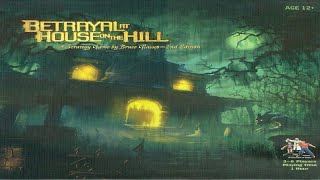
























Betrayal at House on the Hill Deep Dive
What the Community Thinks About Betrayal at House on the Hill
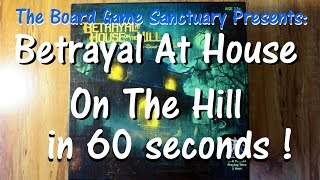
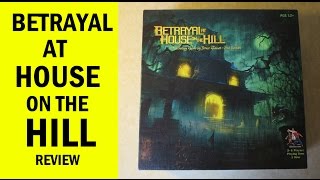
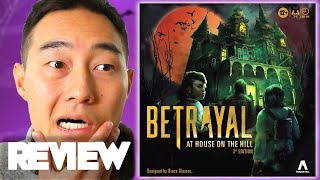
Betrayal at House on the Hill, published by Avalon Hill and originally designed by Bruce Glasco, occupies a singular place in the board gaming community. It is simultaneously a game people remember as a gateway into the hobby, a reliable Halloween night centerpiece, and a title that divides experienced gamers on its long-term staying power.
The Secret Cabal Gaming Podcast captures this duality well. Jamie describes it as his number one board game for years, a position it held until his tastes shifted toward games with less randomness. Steve from the same show calls it "number two on my list of best Halloween games" and says he would have easily put it on his horror list if someone else had not already claimed it. Foster the Meeple names it simply a "classic" and first on the list for any haunted house themed game night, noting that "lots of people love this game, lots of people already own this game."
On the critical side, 3 Minute Board Games takes a harder stance after playing all four editions of the game. The verdict there is that the first half of the game "is just padding" for most groups, and the changeover period where players read the haunt scenario "is such a drag." The reviewer compares it unfavorably to Mansions of Madness for players who want a more serious haunted house experience, and suggests the game would work better as an app-driven experience where exploration and the eventual haunt feel more connected.
What bridges these camps is this: nearly everyone agrees the game works best when players embrace its chaotic, story-driven spirit rather than approach it as a tightly balanced competition. As Meeple University puts it, the game "is as much roleplay and story as it is challenge, and you can still tell a great story even from a hopeless situation."
Core Mechanics That Define Betrayal at House on the Hill
Modular Board and Tile Exploration
The haunted mansion in Betrayal at House on the Hill does not exist at the start of the game. It is built room by room as players explore. Each turn, a player can spend movement points equal to their current Speed trait to move through doorways. When they step into an uncharted space, they draw a tile from the room deck and place it, orienting it so the door they just walked through aligns with a door on the new tile. The tile may carry immediate effects, a symbol that triggers an event card, an item, or an omen.
The Secret Cabal Gaming Podcast highlights this as a core reason the game drew them in early: "it's the exploration aspect, it's the randomness." Every play produces a different floorplan across three levels, the upper floor, the ground floor, and the basement, all of which matter once combat and monster movement begin. Meeple University's full rules walkthrough notes that some tiles carry floor restrictions and get buried if they cannot legally be placed, keeping the exploration feeling organic rather than mechanical.
The Traitor Mechanic and the Haunt
The defining moment of every session is the haunt trigger. Each time a player draws an omen card, they roll dice equal to the total number of omens in play. On a result of five or more, the haunt begins. Meeple University explains that the haunt number is determined by cross-referencing the triggering omen with the session's blue scenario card, selecting one of fifty distinct haunt scenarios spread across two booklets. In most cases, one player is revealed as the traitor.
Players split up. The traitor reads their secret objectives while the other players read theirs, and the game transforms from cooperative exploration into an asymmetric confrontation. The traitor gains control of monsters, becomes immune to negative room effects, and pursues a separate win condition. As the Secret Cabal Gaming Podcast puts it, "when you do trigger the haunt, one of you turns on the others, that's when the fun begins." Paula from Game Night Picks at Pair Of Dice Paradise describes her first experience: she was the traitor her very first game, won, and "walked away from that game night saying I want more of whatever this is."
The Betrayal at House on the Hill Experience
Narrative-Driven Play
More than almost any other game mentioned by reviewers in the same breath, Betrayal at House on the Hill is described as a vehicle for storytelling. Paula from Game Night Picks at Pair Of Dice Paradise traces her entire entry into hobby board gaming to the moment the game gave her "that feeling" of being inside a story. She describes flipping tiles to build the house, reading cards about her reflection whispering threats in her ears when looking into a mirror, and then watching everything change when the haunt arrived. The game scratched an itch she had been scratching with Clue as a child, but went far deeper into genuine narrative immersion.
The Secret Cabal Gaming Podcast frames this as the game's core appeal, describing "the story aspect of the game" as one of its essential mechanisms alongside exploration and tile placement. Even Jamie, who eventually fell away from the game as his preferences shifted, says that "if I'm sitting around not caring about trying to win a game, this is fantastic because it's just a fun experience."
Chaotic and Foreboding Atmosphere
Betrayal at House on the Hill does not produce clean, predictable outcomes, and reviewers treat this as a feature rather than a flaw. The haunt trigger is random. The specific scenario that emerges depends on which omen caused it. The resulting scenario may heavily favor one side. The Secret Cabal Gaming Podcast acknowledges the game is "a little bit wonky" but argues it "stands up" precisely because the chaos is part of the horror movie logic the game evokes. Meeple University reinforces this framing explicitly, noting that it is not always going to be a fifty-fifty chance between the two sides winning, and that the game asks players to find the value in the story being told rather than in a balanced competitive outcome.
3 Minute Board Games identifies this as a point of genuine tension in how the game should be received: "Betrayal at House on the Hill is fine if you take it for what it is, a silly haunted house betrayal game with wacky stories. You can't take it too seriously." For groups that lean into the atmosphere, the unpredictability generates the kind of memorable moments that get retold long after the session ends. For groups seeking strategic satisfaction, it can feel arbitrary.
What Makes Betrayal at House on the Hill Stand Out
Fifty Distinct Haunt Scenarios
Few games of comparable weight offer the structural variety that Betrayal at House on the Hill provides through its haunt library. The Secret Cabal Gaming Podcast points to this directly as a reason the game earns its place on a shelf: "there's like 50 haunts so the game is going to be different nearly every time." Each haunt brings its own monsters, tokens, objectives, and special rules drawn from the two booklets that ship with the game. Meeple University's tutorial notes that haunts come in four types including the standard one-versus-many traitor mode, a free-for-all variant, a cooperative no-traitor scenario, and a hidden traitor mode where all players read from the survival guide and a random token designates the secret betrayer. This range means the game can play out as a pure cooperative challenge, a paranoid hidden role experience, or a full competitive fight depending on what the scenario demands.
Accessibility That Draws New Players In
Both the Secret Cabal Gaming Podcast and Foster the Meeple emphasize how the game functions as an on-ramp. The Secret Cabal Gaming Podcast notes it is "super easy to play, you can learn it in no time" and that "anybody would have fun with it." Paula from Game Night Picks at Pair Of Dice Paradise describes her first session as someone with no prior hobby board game experience, coming from a background in theater and a love of Clue, and finding the game immediately legible and emotionally engaging. The four-trait character system, the movement point economy, and the card-driven event and item resolution all operate on intuitive logic that does not require heavy rules literacy to enjoy. Foster the Meeple lists it first when discussing games appropriate for a Halloween-themed gathering precisely because ownership is widespread and the barrier to getting the table engaged is low.
Potential Drawbacks
The Exploration Phase Can Feel Like Padding
3 Minute Board Games offers the sharpest critique of the game's structure: for experienced groups, the first half of the game, the exploration phase before the haunt triggers, functions more as setup than as meaningful play. "For me in most of the groups I play with that first half of the game it's just padding," the reviewer states. The tiles are drawn randomly, the events and items arrive without strategic direction, and the whole phase can feel like prelude rather than substance. The reviewer goes further, suggesting the game would be better served by an app-driven version where exploration choices genuinely shape which haunt eventually arrives, making the pre-haunt phase feel earned rather than incidental.
Balance Is Unpredictable Across Haunts
The fifty-haunt system that gives the game its variety also produces sessions where one side begins with a dramatically better position. Meeple University addresses this directly in the rules tutorial, noting that "it's not always going to be a 50/50 chance between the two sides winning, sometimes one side just begins with a much better chance of victory." The Secret Cabal Gaming Podcast, while enthusiastic about the game overall, concedes it is "a little bit wonky." The Meeple University naughty list video even jokes about players who "finish a game of Betrayal at House on the Hill and then complain that the haunt was imbalanced," asking "what game did you think you were playing?" This tension is real: the game's design accepts imbalance as part of its unpredictable horror movie logic, but groups who sit down expecting competitive fairness are likely to feel frustrated by lopsided scenarios.
If You Enjoy Betrayal at House on the Hill
Players drawn to the narrative richness and haunted house setting of Betrayal at House on the Hill have strong options for their next game night. Mysterium shares the haunted manor atmosphere in a fully cooperative format, asking players to interpret ghost visions to solve a murder mystery. Foster the Meeple describes it as "very vibe, perfect for the Halloween season" and places it immediately after Betrayal on a haunted house theme night list.
Betrayal at Baldur's Gate transplants the exploration-and-haunt structure into the Dungeons and Dragons universe. The Secret Cabal Gaming Podcast mentions the Betrayal at House on the Hill Legacy version as a game the group was eager to play together, suggesting the franchise's expansion into campaign play is a natural next step for fans who want more from the system.
Deception: Murder in Hong Kong offers the social deduction and hidden role tension that the traitor mechanic in Betrayal touches on, but in a tighter, more mechanically focused package. Foster the Meeple lists it as a recommendation for murder mystery themed game nights. The expansion Widow's Walk extends Betrayal itself with new tiles, cards, and haunt scenarios for groups who want more within the system they already know. And for players who connect with Betrayal through its deduction-and-mystery roots, Clue represents the classic that many reviewers, including Paula from Game Night Picks at Pair Of Dice Paradise, name as the direct ancestor of their love for games like Betrayal.
What Reviewers Are Saying
"I didn't know a game could make me feel like I was in a story, which is a thing I love. It's why I'm an actor, it's why I read books, it's why all these things, and a game gave me that feeling. I didn't know it was possible. And then that was it, that was it for me."
— Game Night Picks - Pair Of Dice Paradise
"What makes this game fantastic, like literally fantastic, it's not the best game ever designed. It's a little bit wonky. But what makes it fantastic is the fact that it's super easy to play, you can learn it in no time. Second, there's like 50 haunts so the game is going to be different nearly every time."
— The Secret Cabal Gaming Podcast
"Betrayal at House on the Hill is fine if you take it for what it is, a silly haunted house betrayal game with wacky stories. You can't take it too seriously. If I wanted to play a haunted house game I'd probably play something more serious like Mansions of Madness. I like the idea of Betrayal at House on the Hill."
— 3 Minute Board Games