/pic4314964.jpg)













Betrayal Legacy Deep Dive
What the Community Thinks About Betrayal Legacy
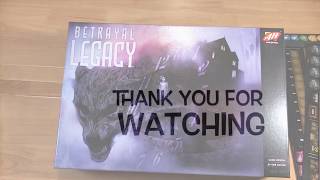
Betrayal Legacy stands out as a watershed moment for legacy games. Reviewers keep returning to one word: ritual. No Rolls Barred describes it as the best opening to any legacy campaign, Board Game Coffee calls it a meaningful upgrade to Betrayal at House on the Hill, and Meet Me At The Table marvels at the slow reveal of its components. Designed by Rob Daviau and published by Avalon Hill, the game transforms a beloved haunted-house design into something ceremonial, where groups gather to unlock the mystery of how the house became haunted across a multi-generational campaign.
The legacy mechanism is not a gimmick here; it is thematic bedrock. Players do not simply rediscover items in later games, they inherit them, naming objects so descendants encounter them generations later. A found item becomes "the family heirloom" and carries real meaning. This creates an in-group language of inside jokes and memories that only your specific table will ever share, and combined with the horror theme it turns each session into a small ritual of unearthing new terrors.
Core Mechanics That Define Betrayal Legacy
The Legacy Deck and Discovery System
Unlike standard Betrayal, where a hidden traitor emerges mid-game, Betrayal Legacy advances through a structured legacy deck drawn across thirteen connected games. Cards do not just trigger haunt revelations; they unlock story beats, add rules via stickers, and plant secrets in sealed envelopes that open weeks or months later. Board Game Coffee praises how organic the discovery feels, since rules arrive as small surprises rather than all at once. By the midpoint of the campaign, players have unlocked mechanics they had no idea existed at the start, which gives the experience a forward momentum traditional Betrayal lacks.
Family Heirlooms and Multi-Generational Play
The heirloom system turns disposable items into family legacy. When you find an item, a limited supply of stickers lets you mark it as an heirloom, and if it reappears in a future game it carries your family's name and enhanced abilities. This creates a feedback loop where physical objects become conduits for story. Reviewers note how the naming encourages personalization, turning abstract components into tangible artifacts, while the scarcity of heirloom stickers forces real choices about what deserves preservation.
The Betrayal Legacy Experience
A Ritualistic Approach to Horror
Several reviewers describe Betrayal Legacy with language more typical of spiritual practice. Assembling at the table, opening sealed boxes, reading journals, and discovering new rooms feels ceremonial, and the horror theme fits that structure perfectly. No Rolls Barred talks about a group becoming a little cult that speaks the language of the game, unearthing new terrors and hints of something bigger waiting in the dark. The shared experience of a particular haunt changing everything creates bonds that outlast the game, so players remember Betrayal Legacy as much for specific nights as for its mechanics.
The Social Contract of Shared Narrative
Betrayal Legacy succeeds because it writes a different story for every group. Unlike thematic games that hand the same plot to every table, this campaign evolves according to your choices, your luck, and how you name and inherit your heirlooms. No Rolls Barred calls it a favorite legacy game despite owning heavier, more complex titles, and the reason is emotional rather than mechanical: playing with the same specific people, all discovering horror together, transformed the game from good to personally treasured. That distinction matters more than component count.
What Makes Betrayal Legacy Stand Out
A Seamless Marriage of Legacy and Betrayal DNA
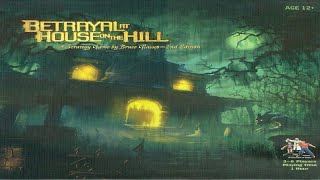
Betrayal at House on the Hill is beloved for its pivot moment, when one explorer's goal suddenly flips from cooperation to betrayal during the haunt. Betrayal Legacy keeps that core and enhances it layer by layer. Early games still feel familiar, but stickers and unlocked content steadily expand the experience. Board Game Coffee highlights that you can now go outside the house, a first for the series, and that encounters increasingly make sense within the evolving narrative, with a haunt in one game connecting to secrets seeded games earlier. That continuity rewards investment in a way static board games cannot.
Generous Pacing and Accessibility
Betrayal Legacy spans thirteen games, but each runs a manageable length, making it feasible to play one a week or one a month. Reviewers note this accessibility is crucial: a deeper campaign like Gloomhaven demands far more setup and table space, while Betrayal Legacy fits on a standard table and plays in a reasonable window. The hidden-knowledge teaching method, where new rules arrive through stickers and sealed envelopes, keeps surprising players without overwhelming them, creating a gentle learning curve across the whole campaign.
Potential Drawbacks
Rules Density and Clarification Issues
While most reviewers praise the incremental discovery, Board Game Coffee notes in a later retrospective that the rules can feel a bit messy. The gap between what is visible in the rulebook and what the game reveals later through stickers and envelopes can create moments of uncertainty about whether you are remembering a rule correctly or have not unlocked it yet. It is not game-breaking, but it asks players to trust the design and occasionally say, we will find out. Groups that prefer crystal-clear rules from turn one may find that unsettling.
Campaign Commitment and Group Stability
Completing Betrayal Legacy requires playing thirteen games, ideally with the same group. Board Game Coffee's table managed seven chapters before lockdowns interrupted indefinitely, which is no fault of the game but a real constraint. Legacy campaigns demand consistency in an era of shifting schedules, and because stickers and destructible components permanently alter the game, you cannot easily reset and replay. It is a one-way journey, thematic but inflexible, and groups prone to turnover may find the story stalled partway through.
If You Enjoy Betrayal Legacy
If Betrayal Legacy resonates with you, the original Betrayal at House on the Hill is the obvious companion, and many reviewers suggest getting comfortable with it first. Pandemic Legacy: Season 1 shares the reverence for sealed-envelope storytelling and group bonding over raw mechanical innovation. Gloomhaven offers a deeper, longer campaign for groups willing to invest in its setup and table space, while Clank! Legacy: Acquisitions Incorporated wraps legacy progression around a lighter, comedic deck-building adventure. Above all, reviewers stress that the chemistry of your specific group matters as much as the box itself.
What Reviewers Are Saying
"Betrayal Legacy has the best first game of a legacy campaign. We loved it, and in the end that's what makes legacy special: the tight-knit team that forms, the in-jokes, the memories only you will share."
— No Rolls Barred
"Unearthing new terrors you didn't know were there, hints of something else bigger waiting for you in the dark, your group becoming this little cult that speaks the language of the game."
— No Rolls Barred
"It tunes it up, adds that extra layer, and things make more sense in this. The encounters that you come across will make sense based on the location you're at, and you can go outside this time, which I don't recall in the other one."
— Board Game Coffee