/pic4830520.jpg)


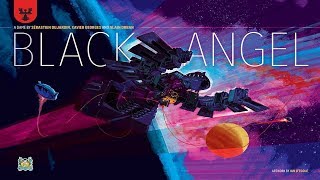
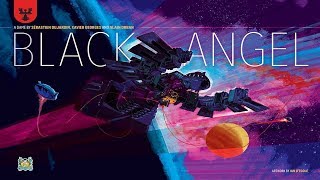
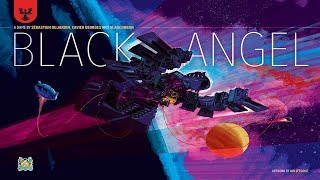
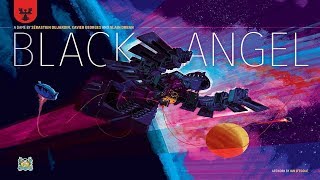










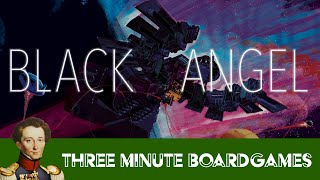















Black Angel Deep Dive
What the Community Thinks About Black Angel
Black Angel has made a strong impression on the gaming community since its 2019 release. Reviewers consistently praise its fresh mechanical approach and ambitious design, though opinions vary on execution. The game has appeared on multiple top-50 lists and continues to attract players seeking something beyond traditional euro mechanics.
Core Mechanics That Define Black Angel
Dice Placement in Deep Space
The heart of Black Angel is its elegant dice system. Players roll dice and allocate them to action spaces on the ship, with the number of pips determining how many times an action resolves. Rather than simply matching color to space, dice placement requires thoughtful sequencing as players decide which tasks to tackle and when to advance the Black Angel toward Spass, the destination planet. This system creates meaningful choices where resource scarcity drives decisions throughout the game.
The Modular Space Board and Mission Cards
A standout feature is how the board shifts as the ship advances. Each turn, the last space tile removes and slides to the front, creating a constantly evolving landscape. Mission cards can trigger when they fall off the edge of space, rewarding players who plan ahead. This mechanic prevents static play and encourages engaging with cards at the right moment, you can even fly your robots to other players' missions to activate their bonuses while gaining benefits yourself.
The Black Angel Experience
Engine Building With Thematic Tension
Players develop engine-like combos through technology tiles placed on their personal boards in a three-by-three grid. By playing cards matching colors in rows or columns, you activate all tiles of that color in that row or column, creating satisfying moments when engines click into place. The game tasks you with balancing immediate technology acquisition against building long-term advantages. One reviewer noted that the racing element toward Spass, driven by any player's reset action advancing the ship, creates shared urgency even in this otherwise competitive space.
The Fragile Ship Dynamic
The Black Angel explores cooperation with a competitive twist. Four AIs control the ship together, sharing a common goal of reaching Spass, yet only the player with the most points wins. The ship suffers from Ravager cards representing damage and pirates, forcing difficult decisions about whether to use actions cleaning up the mess or pursuing personal victory. This creates a tense dynamic where letting the ship barely hang together while pursuing alien missions becomes a viable strategy, though some reviewers felt the competitive incentives could be stronger.
What Makes Black Angel Stand Out
Thematic Presentation and Artistic Vision
The visual design is immediately striking. Bright neon pinks, purples, and blues dominate the components, creating a distinct presence on the table. The space aesthetic uses alien creatures that feel genuinely otherworldly, and the overall production quality elevates the experience. Reviewers specifically noted how the bold colors give the game great table presence and immediate visual appeal, though opinions diverged on whether the artistic directions feel cohesively integrated.
Mechanical Novelty and Depth
Each of Black Angel's systems, the technology puzzle, the mission grid, the dice allocation, the Ravager damage mechanism, feels intentionally designed and fresh. Players will discover multiple paths to victory and find new synergies across plays. The game rewards both calculated long-term planning and opportunistic tactical play, creating layers of engagement as experience grows. Reviewers observed that while understanding individual systems takes time, their interconnected nature creates genuine complexity rather than arbitrary busywork.
Potential Drawbacks
Learning Curve and Rules Integration
Black Angel demands attention during the teach and early plays. The combination of technologies, Ravager damage, resource tracking, and the modular board means new players can feel overwhelmed. Some reviewers found the rulebook's thematic presentation somewhat obscures mechanical clarity, making initial comprehension a challenge. However, most noted that once the core concepts click, the game flows smoothly despite its complexity.
Play Length and Downtime Potential
The game can stretch longer than expected, particularly with four players experiencing multiple learning games. Some reviewers felt three or more hours became fatiguing, though others argued the play time depends heavily on player counts and familiarity. At two players, the experience streamlines considerably, offering tighter pacing while maintaining the full strategic depth. For groups seeking quick, light experiences, Black Angel demands commitment to the table.
If You Enjoy Black Angel
Players drawn to Troyes and Ginkopolis, both from Black Angel's designers, will recognize the design sensibilities at work. If you appreciate Pulsar 2849 and Dice Placement mechanics, Black Angel delivers on that promise with additional layers. Fans of Great Western Trail, Concordia, and Terra Mystica will find comparable design ambition and depth. The game also appeals to those who love Eclipse and Gaia Project for its space theme and complex engines, and players of Circadians: First Light will recognize the attention to mechanical interlocking.
What Reviewers Are Saying
"It makes me think of Gaia Project because I heard your brain hurt like a bunch of yes so many little things. I do this to do this. I don't do this. I don't wanna do this."
— Board Game Coffee
"It's a really interesting worker placement game where your workers are dice so dice worker placement. There's two Avenues of this game. One part actually happens within the spaceship and you're doing things within the ship in order to score victory points and be able to do things in the other phase of the game."
— Foster the Meeple
"I'm very interested in Sharing where that lines up for us because they all share this common mechanism of a work replacement with deck building they do it in very different ways. They do all three are different, very very different."
— Before You Play