/pic4338675.jpg)






















Blackout: Hong Kong Deep Dive
What the Community Thinks About Blackout: Hong Kong
No Pun Included treats Blackout: Hong Kong as a solid but not favorite entry in Alexander Pfister's catalog, admitting that six games in, they were still learning how the game's strategies relate to each other even though the rules themselves gave no trouble. Board Games UnLocked is far more enthusiastic, landing on a score around eight and a half out of ten and struggling to name a real negative beyond how the game looks, calling several of their sessions very tight games that stayed close all the way to final scoring.
The two channels converge on Great Western Trail as the natural comparison point, though for different reasons. No Pun Included argues that comparison is more useful than the one most players reach for, Pfister's earlier Mombasa, since Blackout shares Mombasa's card-playing mechanism but plays more like a lighter, faster Great Western Trail. Board Games UnLocked came to the game expecting something else entirely: from the title alone, the hosts assumed an espionage theme closer to a Cold War game like Twilight Struggle, before realizing Blackout: Hong Kong is about disaster response teams restoring order after a citywide power failure.
Core Mechanics That Define Blackout: Hong Kong
Rolling Dice, Playing Cards, and Working the Rondelle
Each round opens with a dice roll that sets which colored resources are available, then every player plays three cards into their own columns, one card per column. Cards matched to blue, yellow, or red cubes claim the matching resource, while purple cards spend resources on special actions. When the dice do not cooperate, players can spend transportation tokens to travel along the resource rondelle and collect a different resource instead, paying one victory point per token. No Pun Included frames this option as the reason almost any plan can still work, since the rondelle gives players a way to buy around a bad roll rather than being stuck with it.
Contracts That Grow Your Hand and Your Network
Resources collected during a round pay for objectives, described in the transcripts as contracts that reward completion with new cards, special abilities that activate at the end of a round, and permission to place an outpost on the shared map. Outposts extend a player's network toward scouting tiles and toward surrounding whole districts, and district scoring rewards every player with a cube there, not only the one who finishes it. Cards sent out on a scouting mission bring back resources but risk coming home injured, sitting in a hospital until a doctor frees them, which ties hand management directly to the same objectives driving area control.
The Blackout: Hong Kong Experience
A Puzzle That Rewards Patient Planning
No Pun Included describes turns that start out simple and then stall into long silences as a plan quietly falls apart, recalling moments spent staring at the board unable to play even one card. That kind of slow-burn calculation matches accounts of new players who, about thirty minutes into their first session, look up from the board and conclude that the game is a maze, before the systems begin to click into place over repeated plays.
Short Enough to Leave Players Wanting More
Board Games UnLocked repeatedly credits the game's length for matching its material, arguing that a longer runtime would make the game boring, while the length as it stands always ends sooner than players want. Sessions described in the transcript end with players wishing for one more turn, whether to squeeze out ten more points or to finish a card they were one step away from completing, which the channel treats as a sign the pacing is tuned correctly rather than as a complaint.
What Makes Blackout: Hong Kong Stand Out
Balanced Scoring That Rewards Multiple Strategies
No Pun Included calls the compound scoring impressively balanced, since players pursuing objectives, scouting, or district control can all land near comparable totals instead of one path dominating the others. Board Games UnLocked found this out directly in their own sessions: a player sitting near zero points for most of a four-player game closed the gap to finish 48 to 33, and a separate session ended in a 33 to 33 tie after the table did not expect districts to matter as much as they ended up mattering.
A Forgiving Design With No Punishing Penalties
Board Games UnLocked points out that unfinished objectives cost nothing, since the game carries no negative points for objectives a player fails to complete, and an injured team member simply sits out rather than sinking a player's score. No Pun Included connects that same philosophy to dice luck: spending a point to reroute along the rondelle means almost any plan can still be executed even when the dice refuse to cooperate.
Potential Drawbacks
Artwork That Undersells the Design
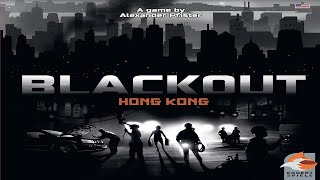
No Pun Included argues the artwork falls below both artist Chris Williams' usual standard and the rest of the box's production, pointing to the board's empty black districts as a missed opportunity to name locations or illustrate a population in distress, and suspects the art was rushed to meet a convention release deadline. Watch It Played goes further, describing the board as incredibly dark to the point that no one can see what is happening, and suggesting presentation, not design, is the reason the game never got the recognition it deserves.
A Theme That Stays in the Background
Board Games UnLocked found the game visually unappealing and wished the theme were more present and integrated, having assumed from the title alone that the game involved espionage rather than disaster relief. No Pun Included raises a related point from the design side, noting the rulebook teaches the rules well but never explains why a mechanic like rescoring a returning card connects to the disaster theme, leaving players to work out that connection on their own, and adds that after several plays the available strategies can start to feel similar to one another.
If You Enjoy Blackout: Hong Kong
Both channels reach for Great Western Trail as the closest comparison. Board Games UnLocked calls Blackout the checkers to Great Western Trail's chess, while No Pun Included argues the comparison is more useful than the one most players make, since Blackout is immediately more accessible than Pfister's more popular and more complex design. No Pun Included also notes that most players compare Blackout to Pfister's earlier Mombasa because the two share a similar card-playing mechanism, even while arguing Great Western Trail captures the experience better. Board Games UnLocked places Blackout's complexity around Escape Plan and lighter than Iron Sky, positioning it as one of the more approachable games in Pfister's catalog.
What Reviewers Are Saying
"Every little role in this game has a reason to exist, not just because it makes the game systems work, but because it makes sense to this world, a world where batteries are a universal resource and serve as a substitute for food. But the game does nothing to bring these elements to the surface."
— No Pun Included
"By end of the game you got 30 points, and I mean 48 to 33, that's a lot closer. This is a very tight game."
— Board Games UnLocked
"It's a really great Alexander Fista game that doesn't seem to have got the love. And what is the defining factor? Is the fact that the artwork is dark and dingy."
— Matthew, Watch It Played