/pic2439223.jpg)
































Blood Rage Deep Dive
What the Community Thinks About Blood Rage
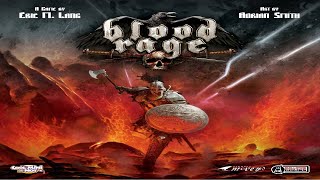
Blood Rage has cemented itself as a modern classic that consistently earns praise across the board gaming community. Reviewers describe it as an accessible yet layered Viking brawl that delivers big moments without demanding hours of rules explanation. Shelfside called it a masterpiece outright, praising designer Eric Lang for creating something that delivers fully on its brutal Nordic premise. BoardGameBollocks placed it at number 63 on their all-time top 100, noting the game "lasts for just the right amount of time, gives you just enough turns to actually strategy, and the game's always close." Tim Chuon, who ranks it his number three favorite area control game of all time, said the more he plays it the more he appreciates it, calling it "hands down one of the best area control games I've ever played." Board Game Coffee praised how easy it is to learn and get into. The near-universal enthusiasm centers on constant player interaction, a thrillingly shrinking map, and the tension of never quite knowing whether to fight for glory or die for it.
Core Mechanics That Define Blood Rage
Card Drafting and Emergent Asymmetry
Each age of Blood Rage begins with a drafting phase where players pick cards from a shared pool and pass the remainder around the table. Cards fall into three categories: green quest cards that set scoring conditions for the round, black upgrade cards that permanently improve a clan or summon powerful monsters, and red battle cards used in combat. The drafting phase is far more than a card selection exercise. As Shelfside explained, players are actively "drafting against your opponents to slow down their card synergies as much as possible," and because cards are picked face-down, you only partially know what anyone else holds. All clans begin the game identical, but the upgrades players draft cause each to develop in its own direction over three ages. One clan might accumulate Loki-themed cards rewarding losses and deaths, while another pursues Thor-themed upgrades for dominant battlefield control. This emergent asymmetry means no two games play out the same way, and reading what opponents are building through the draft is a core competitive skill.
Pillaging and the Pressure of a Shrinking World
The primary engine of Blood Rage's action phase is pillaging: a player with figures in a province attempts to claim its reward, which triggers a call to battle where any adjacent opponent may move a figure in to contest it. Combat resolves cleanly: total strength of figures plus one secretly played battle card, highest wins. Losers send figures to Valhalla but keep their battle cards, meaning deliberate defeat is often the correct play. Tim Chuon highlighted why the map pressure makes this system sing: "Blood Rage will actually shrink the map even further. To me, that makes a much more pressurized environment and way more fun because then as the map shrinks, you're fighting for smaller and smaller regions." At the end of each age Ragnarok destroys a province permanently, compressing the board and forcing increasingly desperate confrontations around Yggdrasil, the center province connected to everything else.
The Blood Rage Experience
Epic and Tense
From the moment miniatures hit the table, Blood Rage delivers a sense of grand, escalating conflict. Each age ratchets up the stakes: point payouts grow, clan upgrades become more powerful, and the board shrinks until every battle feels decisive. Shelfside captured the feeling precisely: "For a game called Blood Rage you are literally spending your rage to send these blood-frenzied warriors to spill even more blood as the world just crumbles apart. Who cares? We just want Glory." Tim Chuon echoed the intensity: "These games have been so epic. The fights have been absolutely insane fighting for the middle center circle, Yggdrasil." The combination of a ticking doomsday clock, mounting point values, and the constant threat of Ragnarok claiming well-positioned units keeps every player invested, even when behind. Shelfside noted that large late-game point payouts mean genuine comeback potential, so "stragglers are continually invested and want to just throw themselves back into this hectic arena."
Interactive and Dynamic
Blood Rage is relentlessly social. When someone declares a pillage, adjacent opponents get to move figures in before combat resolves, meaning players regularly act on other people's turns. Shelfside observed that "the pillaging mechanic literally means that people get to move on other people's turns, so that's a very dynamic board." Beyond physical movement, the draft creates a second layer of interaction where players deny each other powerful card combinations. Tim Chuon praised how "the play interaction here is constant and that the card drafting actually builds out your clan's asymmetry." Players must decide constantly whether to join a fight, let someone pillage freely, or use the chaos to send their own units gloriously to Valhalla for points. Every decision carries weight because every province is shared and contested.
What Makes Blood Rage Stand Out
Dying Is a Valid Strategy
Blood Rage's most distinctive design feature is that losing is often the correct play. Sending units to Valhalla earns glory through Ragnarok bonuses, Loki-themed quest cards reward having units die at specific moments, and some upgrades generate points specifically when figures leave the board. This counterintuitive loop where strategic defeat generates victory creates memorable moments. Shelfside described the experience: "There's the oh-so-inevitable Eric M. Lang-isms of getting points by having your own units die." Tim Chuon identified it as one of two main ways to score: "You're choosing how you want to gain glory, either you're fighting more and choosing Thor-themed cards or you're dying more and choosing Loki-themed cards." This split creates natural tension between the player dominating the board through strength and the player deliberately losing fights to rack up Valhalla points, and neither approach automatically dominates the other.
Lavish Components That Command the Table
Blood Rage's miniatures are a consistent talking point across every review. The game features distinct sculpts for leaders, warriors, and ships for each clan, plus a separate box of oversized monster figures: a Frost Giant, a Troll, a Sea Serpent, and others that deploy directly onto the board when their upgrade cards are played. Shelfside praised the production: "From when you unbox the game you'll see all these separate minis in their own insert. They really did not skimp on this. Every single clan or color has two different types of warriors, one flagship with a distinct leader with a long rod to round it all out." The large monsters carry abilities that change the board state dramatically, from a Troll that kills all warriors in its spawn region to a Fire Giant that triggers damage every time it enters play, making them prized targets in the draft as much as weapons on the map.
Potential Drawbacks
Player Count Matters
Blood Rage works best at three or four players and noticeably suffers at two. Shelfside explained the issue clearly: at two players the game removes many of the most exciting monster cards to balance the card pool, so "you're taking out all these really cool monsters, so that's not worth it to buy this game for two players." The broader problem at low player counts is that the pillaging system loses its chaos: in a two-player game, if one player places a unit the other must contest or hand over a free pillage, creating a reactive loop rather than a genuine scramble. At three and four players, multiple opponents create genuine uncertainty about who will answer a call to battle and at what cost, which is the environment the game's design assumes.
Speed and Theme Fade With Experience
Shelfside offered a candid caution for experienced players. After five or more plays, the rapid pace can start to undercut the richness: "The board just says go go go," making it hard to execute the cool quest chains or upgrade combos that make individual cards exciting. The reviewer also noted theme fading: "I forgot we're playing a Viking game sometimes. Because of all these upgrades and the monsters I just end up thinking of them as, oh, this is the orange player." Players seeking deep strategic puzzles may find the game too fast once the mechanics become familiar, while those who prize faction identity from the start may find the emergent asymmetry a partial substitute for true starting differences.
If You Enjoy Blood Rage
Fans of Blood Rage frequently enjoy Rising Sun and Ankh: Gods of Egypt, the other two games in Eric Lang's unofficial trilogy. Rising Sun adds political alliance phases and negotiation to the miniature-driven area control formula, while Ankh introduces fully asymmetric gods and a dramatic merger mechanic. Players drawn to the draft-driven emergent asymmetry often love Kemet: Blood and Sand, which uses a power-tile market to customize armies. Those who enjoy the combination of accessible combat with meaningful choices might also find Scythe or Root rewarding, though both play at a slower pace with more strategic depth per turn.
What Reviewers Are Saying
"It's a compelling experience. Whilst it's fallen down the list somewhat over the years, you can't get away from the fact Blood Rage is still a game that lasts for just the right amount of time, gives you just enough turns to actually strategy. And the game's always close."
— BoardGameBollocks
"Blood Rage just has what's going on on this box cover: it's all about tons of killing in this brutal Nordic world. It's a relatively fast game, very influenced by each round's draft, which is a fun phase for counterplay, and just has more spice with all the card combos. A good draft won't auto-win you the game by any means because you still need to play well on this crazy dynamic board."
— Shelfside
"Blood rage has quickly, very quickly escalated up my top games chart. I don't know if this would be a top 10 but I wouldn't be surprised to see it being a top 10 on my overall board game list because it's so freaking fun. The more I play Blood Rage the more I appreciate it and the more fun I have with this game."
— Tim Chuon