/pic4122624.png)





































Blue Lagoon Deep Dive
What the Community Thinks About Blue Lagoon
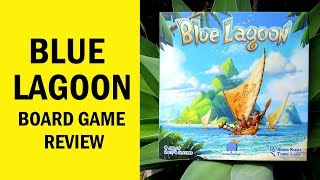
Blue Lagoon has earned widespread admiration among board game reviewers for delivering strategic depth through deceptively simple rules. Designed by Reiner Knizia and published by Blue Orange Games, the game represents the kind of elegant design that the legendary designer is known for. The consensus across the gaming community emphasizes its balance of accessibility and challenge, making it an excellent gateway game that rewards careful play. Reviewers consistently praise its visual appeal and elegant design, with many noting it as one of the standout releases of 2018.
Core Mechanics That Define Blue Lagoon
Two-Phase Island Settlement
Blue Lagoon's most distinctive feature is its two-phase structure that transforms the experience midway through play. Players first spread settlers across the islands during the exploration phase, then lock their positions by placing permanent villages. This design choice creates a unique strategic layer where players must consider not just immediate placement, but how their initial positions will constrain future options. The village placement becomes crucial because it determines where players can expand in the settlement phase, forcing participants to plan multiple moves ahead and adapt to competitors' board control decisions.
Multi-Path Scoring System
Rather than relying on a single victory condition, Blue Lagoon offers multiple avenues to accumulate points. Players can earn points by collecting resource sets scattered across islands, controlling island majorities, connecting their settlers into long trading routes, and achieving area control on individual islands. This diversity means that no single strategy guarantees success; players must constantly evaluate which scoring paths remain viable as the board fills with competitors' pieces. The constant tension between different goals creates situations where blocking an opponent becomes as valuable as advancing your own position.
The Blue Lagoon Experience
Cutthroat Interaction and Forced Decisions
Blue Lagoon generates memorable moments through player interaction that feels natural rather than punitive. Reviewers frequently mention laughing at the table as they realize they must choose between losing opportunities or accepting inferior placement. The game creates scenarios where blocking another player's preferred action is purely advantageous for you, leading to moments where everyone at the table simultaneously appreciates a particularly clever defensive move. This interactive quality makes every placement decision matter not just strategically but socially, as players openly jockey for position and resources with full knowledge of each other's dilemmas.
Satisfying Brevity with Strategic Engagement
Despite the depth of decision-making available, Blue Lagoon completes in 30 to 45 minutes, making it accessible for casual game nights without sacrificing meaningful choices. The fast play doesn't come from luck or simple mechanics, but rather from the natural rhythm of tile placement and the inherent limitations of the island map. Players consistently report feeling mentally engaged throughout despite the short timeframe, with the abstract nature of the game creating a puzzle-like quality where each turn presents fresh tactical problems. The brisk pace also means that losing feels less frustrating, encouraging players to immediately request another round.
What Makes Blue Lagoon Stand Out
Abstract Strategy with Thematic Coherence
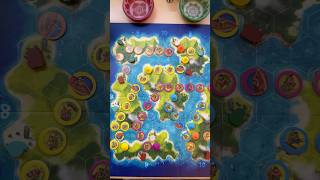
Blue Lagoon achieves a rare balance between abstract game design and thematic believability. While the mechanics are fundamentally about area control and set collection, the island setting and resource-gathering framework make the gameplay feel grounded in a specific world. Players describing their experience consistently mention the visual appeal of the board, with its colorful islands and vibrant components creating an inviting table presence. Yet the gameplay never asks you to engage with the theme mechanically; instead, the theme serves to frame decisions, making abstract optimization feel like colonization and resource management rather than pure point-scoring.
Elegant Simplicity Concealing Tactical Richness
What reviewers emphasize most is how Blue Lagoon teaches quickly yet offers surprising depth. The core turn action is straightforward: place one settler or one village. No special abilities to track, no hidden information to manage. Yet from this single, repeatable action emerges genuine tactical richness. Players describe moments of analysis paralysis not because the rules are complex, but because the board state presents so many viable but non-equivalent options. The game rewards forward planning without punishing exploratory play, allowing newer players to enjoy themselves while giving experienced players room to execute sophisticated strategies.
Potential Drawbacks
Player Count Sensitivity
While Blue Lagoon accommodates 2 to 4 players, the experience varies significantly by count. The game plays at its best with three or four participants, where the board fills naturally and competitive pressure creates engaging moments. With two players, reviewers note the game can feel less interactive, with larger board areas remaining uncontested. This sensitivity means the game's quality depends partly on your available player count, making it less versatile than some alternatives for groups that frequently shift sizes.
Victory Conditions Tied to Tactical Advantage
Because Blue Lagoon offers multiple scoring methods, skilled players can sometimes identify the optimal path early and execute it with limited interference. Once a player establishes a clear advantage in a particular scoring category, other players must either disrupt that strategy or focus on alternative paths, potentially creating a game where one player dominates despite competitive play. Some players may also find the abstract nature of the scoring system less emotionally resonant than games with stronger thematic ties between actions and rewards, though most reviewers see this abstraction as a strength rather than a weakness.
If You Enjoy Blue Lagoon
Fans of Blue Lagoon should explore other Reiner Knizia designs, particularly Through the Desert, which shares the elegant simplicity and multi-path scoring philosophy. Games like Azul offer similar visual appeal and quick play with surprising strategic depth. For those drawn to the area control and island-building themes, Ethnos and Concordia provide complementary experiences with different mechanical implementations. Arboretum and Cascadia appeal to players who appreciate the satisfaction of building connected territories within tight constraints.
What Reviewers Are Saying
"Very similar to his game Through the Desert, there's a bunch of different ways to get points. You're trying to connect up your people to different islands and collect different resources and it's fairly abstract but very simple in its gameplay quite short but loads to think about."
— Actualol
"There's this great moment in Blue Lagoon where you just realize that you've got a certain island secured, you've got another thing secure, but you've got to play somewhere and you start looking around saying you know who's going to force my hand somewhere. Where do I want to force someone's hand if they're going to force my hand here."
— All You Can Board
"You can be pretty nasty in this game and block people out of different regions. It's just great fun and plays in a great amount of time. Lots of things to think about, great tension in it, and just another great solid game by Reiner Knizia."
— Chairman of the Board