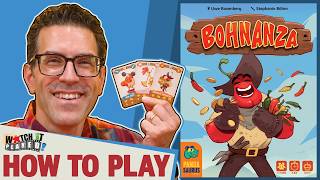
Bohnanza box art

Bohnanza

Game ID: GID0050206
Collection Status
Description

Bohnanza is the first in the Bohnanza family of games and has been published in several different editions, including a 2023 version with flowers.

This entry lists a few different major card sets for Bohnanza: the base game for 3-5 players, the expanded game with the same name for 2-7 players (that is, first expansion included), and Bohnanza Pocket.

In the game, you plant, then harvest bean cards in order to earn coins. Each player starts with a hand of random bean cards, and each card has a number on it corresponding to the number of that type of beans in the deck. Unlike in most other card games, you can't rearrange the order of cards in hand, so you must use them in the order that you've picked them up from the deck — unless you can trade them to other players, which is the heart of the game.

On a turn, you must plant the first one or two cards in your hand into the "fields" in front of you. Each field can hold only one type of bean, so if you must plant a type of bean that's not in one of your fields, then you must harvest a field to make room for the new arrival. This usually isn't good! Next, you reveal two cards from the deck, and you can then trade these cards as well as any card in your hand for cards from other players. You can even make future promises for cards received right now! After all the trading is complete — and all trades on a turn must involve the active player — then you end your turn by drawing cards from the deck and placing them at the back of your hand.

When you harvest beans, you receive coins based on the number of bean cards in that field and the "beanometer" for that particular type of bean. Flip over 1-4 cards from that field to transform them into coins, then place the remainder of the cards in the discard pile. When the deck runs out, shuffle the discards, playing through the deck two more times. At the end of the game, everyone can harvest their fields, then whoever has earned the most coins wins.

The original German edition supports 3-5 players. The English version from Rio Grande Games comes with the first edition of the first German expansion included in a slightly oversized box. One difference in the contents, however, is that bean #22's Weinbrandbohne (Brandy Bean) was replaced by the Wachsbohne, or Wax Bean. This edition includes rules for up to seven players, like the Erweiterungs-Set, but also adapts the two-player rules of Al Cabohne in order to allow two people to play Bohnanza.

Year Published
1997
Transcript Analysis
Browse transcript mentions, sentiments, pros/cons, mechanics, topics, quotes, and references.
Total mentions: 18
This page: 18
Sentiment: pos 17 · mix 0 · neu 1 · neg 0
Mentions per page
Top
Showing 1–18 of 18
Video _i4cJTuruFg All You Can Board top_50_list at 40:39 sentiment: positive
video_pk 62916 · mention_pk 155917
All You Can Board - Bohnanza video thumbnail
Click to watch at 40:39 · YouTube ↗
Overall sentiment (raw)
positive
Pros
  • great negotiation dynamics
  • hand management aspect is strong
Cons
  • group dynamics can affect enjoyment; some groups may not vibe with negotiation intensity
Thematic elements
Comparison games
none
Mechanics (from transcript analysis)
Mechanics unknown.
Video topics + discussion points
No key topics recorded for this video.
Quotes (from this video)
  • it's just such a satisfying game for me to play
  • the scoring is so low it makes every point matter so much
  • this is a voting game that you are going after you're interested in manipulating tokens on the board
  • Mission Deep Sea is the Pinnacle version of the crew
  • Ghost Stories is fantastic cooperative game
  • Cascadia is such a great game
  • Kingdom Builder ... it goes up to five to six players
  • KeyForge unlike anything else I've played out there
References (from this video)
No references stored for this video.
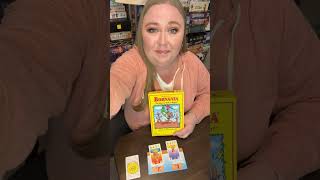
Video QBh2dNCgUtQ Unknown Channel game_review at 0:03 sentiment: positive
video_pk 61474 · mention_pk 154134
Unknown Channel - Bohnanza video thumbnail
Click to watch at 0:03 · YouTube ↗
Overall sentiment (raw)
positive
Pros
  • Strong player interaction via trading, especially at higher player counts, which increases replayability and social engagement.
  • High variability due to bean rarity and trading choices, ensuring each game feels different and strategic planning evolves over time.
  • Accessible yet satisfying weight for players who enjoy medium-light strategy with meaningful decisions.
  • Flexible strategy with multiple viable paths (planting, trading, harvesting) that reward adaptive play.
  • End-game condition scales with deck management and player count, offering a natural sense of progression and tension.
  • Edition improvements in newer prints (mat components, updated presentation) that enhance clarity and tactile experience.
  • Classic status and enduring appeal across decades, evidenced by multiple printings and continued enthusiasm.
Cons
  • Not a party game; best with 4-7 players, which can reduce social energy in smaller groups.
  • Rare beans can be hard to obtain, potentially slowing late-game progress or reducing perceived reward when trades fail to materialize desired beans.
  • Non-reorder mechanic can be challenging for newcomers used to flexible hand management, requiring an adjustment period.
  • Theme is light and abstract; players seeking a strong narrative or thematic immersion may be underwhelmed.
  • Trade negotiations can become lengthy with many players, potentially increasing playtime and causing downtime for some participants.
Thematic elements
  • Resource management and agricultural economy, driven by scarcity, variable bean types, and strategic trading to outpace opponents in end-game scoring.
  • A farmer’s bean field marketplace where players cultivate and manage bean crops across multiple plots, competing to maximize coin-based victory points through planting, trading, and harvesting actions.
  • Abstract farming economics rendered through a compact card-and-tableau mechanism; the flavor emerges from field layouts and bean varieties rather than a narrative arc.
Comparison games
  • Catan
  • Ticket to Ride
  • Scout
Mechanics (from transcript analysis)
  • End-game scoring and field optimization — End-game scoring blends several factors: harvested bean counts, field utilization, and coin totals. This multi-factor scoring rewards players who carefully balance planting discipline, trading savvy, and harvesting efficiency across rounds, producing a nuanced victory condition rather than a single-dimensional objective.
  • End-game trigger via deck depletion — The game progresses as the draw deck cycles, and when the deck runs out three times (conceptualized as three years), the game ends. This pacing mechanism ensures a dynamic arc where players must adapt to evolving card availability and shifting opportunities, creating a natural endgame window that rewards efficient management of fields and trades over time.
  • Field-management and replacement rules — Players manage multiple bean fields, with rules dictating when fields can be scrapped and how planted cards must be allocated. The interplay between field capacity and planting obligations creates a resource management layer that forces deliberate prioritization of which beans to grow, how to allocate space, and when to harvest or trade to optimize field efficiency.
  • Hand order lock — Players receive a fixed five-card hand at the start of their turn and cannot reorder the sequence. This constraint forces players to plan within the exact order of the cards they are dealt, creating tension and encouraging forward-looking trade and harvest decisions rather than reactive play.
  • Harvesting and coins as score — Harvesting beans converts stacks into coins, and coins accumulate as end-game points. The payoff is tied to the rarity and arrangement of beans in a field, making harvesting decisions tense as players weigh current profits against potential future returns, while also considering how coin totals interact with field constraints and the timing of end-game triggers.
  • multi-use card effects — Cards serve multiple purposes: they influence planting options, contribute to harvesting outcomes, and determine coin-based points at game end. The same card can empower field development, enable lucrative harvests, or become a resource to be traded, providing depth as players balance immediate planting needs with long-term value.
  • Multi-use cards — Cards serve multiple purposes: they influence planting options, contribute to harvesting outcomes, and determine coin-based points at game end. The same card can empower field development, enable lucrative harvests, or become a resource to be traded, providing depth as players balance immediate planting needs with long-term value.
  • planting phase with mandatory first plant — Each turn begins with planting: the player must place the first drawn card into one of their bean fields. Placing a second card is optional, but the first planting is mandatory. This creates a structured rhythm where early turns set the field layout and future options, and decisions cascade through subsequent turns as fields fill and trade options expand or contract.
  • Rarity-driven payouts — Bean types vary in rarity, with rarer beans offering higher rewards when harvested. This scarcity shapes trading strategies, as players attempt to secure a mix of common and rare beans to optimize their final score and to deny valuable beans to opponents. The rarity mechanic adds a subtle auction-like tension to each trading phase.
  • Trading — After planting, the active player draws two face-up cards and may trade with any other players, with the caveat that all trades must involve the active player on that turn. Trades are public, the traded cards are laid out, and everyone then must plant the traded cards. The mechanic creates a dynamic market-like environment where negotiation, timing, and perception of scarcity drive strategic exchanges and can influence field development for the rest of the round.
  • Trading phase with active-player constraint — After planting, the active player draws two face-up cards and may trade with any other players, with the caveat that all trades must involve the active player on that turn. Trades are public, the traded cards are laid out, and everyone then must plant the traded cards. The mechanic creates a dynamic market-like environment where negotiation, timing, and perception of scarcity drive strategic exchanges and can influence field development for the rest of the round.
Video topics + discussion points
No key topics recorded for this video.
Quotes (from this video)
  • This is a game I played early on around the same time I started playing Katan and Ticket to Ride.
  • This is a newer version, a newer printing than I had that Amigo sent to me.
  • I love it because the version I had was just the cards and this version has the mats in it that shows you your bean fields that you have based on player count.
  • So, this game is great because it plays three to seven people and it definitely plays better, I feel, at the higher player counts and people are always asking for strategy games that play more people and this is one that plays up to seven.
  • It's not a party game. It is a strategy card game.
  • you are dealt your hand of five cards, and you Whoops. cannot reorder your cards.
  • one of the games that did it first where you're going to get your hand and you don't get to reorder it.
  • There is also a 25th anniversary edition that comes looking more like a book, which is fun.
  • This is the same game, but it's with flowers instead of beans.
  • Bonanza is a great game. It stood the test of time. It's one of my tried and trus.
  • There is a reason it has a 25th anniversary edition and has had so many different printings because this game's a classic.
  • Thank you to Amigo for sending me this updated version of the game so that I now have bean fields and don't have to just play on an empty table.
  • Give me a like and a follow and I'll keep bringing you more board game content. Thanks. Bye.
References (from this video)
No references stored for this video.
Video x30AER-8JIw top_10_list at 0:34 sentiment: positive
video_pk 61479 · mention_pk 154137
Bohnanza video thumbnail
Click to watch at 0:34 · YouTube ↗
Overall sentiment (raw)
positive
Pros
  • Trade-focused gameplay scales well with more players
Cons
none
Thematic elements
  • negotiation and trading to obtain needed goods
  • bean farming community
  • economic/resource-trading theme
Comparison games
none
Mechanics (from transcript analysis)
  • negotiation — Players trade beans to obtain what they need; trades improve with more players.
Video topics + discussion points
No key topics recorded for this video.
Quotes (from this video)
  • This game has been around forever. In fact, this is the 25th anniversary edition.
  • The more people you have playing, the better the trades are.
  • In the super low player counts of two or three, I don't think it's as fun.
  • This is one I think you definitely want five to six players to have a really good time with.
  • This is the original. I still love it. I think it's a great play.
  • You can play this with actually it says up to 99 players, but as long as everyone has a sheet and can see the sets of cards in the middle.
  • Camel Up is this wacky camel racing game
  • you are trying to predict which camel is going to win the race, but they move in unpredictable ways.
  • This plays up to eight players, I believe.
  • I love Camel Up.
  • you definitely want five to six players to have a really good time with.
  • what you are doing is you are building a castle, one to the right of you and one to the left of you.
  • you can't neglect one or the other because you only score your lower scoring castle.
  • You're drafting tiles and then placing those tiles into your castle.
  • this is one of the games that plays much better at the higher player count.
  • If you're wanting a similar feel but not wanting it in a board game, look into the card game Splitto.
  • World Wonders. This one does top out at five, but it's one of those games where you don't necessarily know how long the round's going to be because people are going to be allocating their money.
References (from this video)
No references stored for this video.
Video hVXjX0NYHbU Unknown game_review at 0:00 sentiment: positive
video_pk 60675 · mention_pk 153087
Unknown - Bohnanza video thumbnail
Click to watch at 0:00 · YouTube ↗
Overall sentiment (raw)
positive
Pros
  • Elegant negotiation-driven gameplay
  • Fixed-hand mechanic creates a unique planning puzzle
  • Interactive trading with other players
  • Clear, colorful components and rulebook with good illustrations
  • Supports multiple player counts with variants
Cons
  • Game can feel long for its scope
  • Limited replayability due to similar bean cards with different numbers
  • Fixed hand reduces agency and can rely on RNG of flips
  • Mats wear out over time and some components might be delicate
  • Endgame pacing can be brittle with longer playtimes
Thematic elements
  • Set collection and negotiation through trading beans
  • Bean farming and trading on a farm with field management
  • Fixed-hand with forced planting and turn-based trading
Comparison games
  • Chinatown
  • Sidereal Confluence
  • Sons of Anarchy
Mechanics (from transcript analysis)
  • Deck draw and turn cadence — On each turn players draw five cards from the top of the deck.
  • End condition — The game ends after the deck runs out, three times; the player with the most money wins.
  • Fixed hand order — On each turn you must play the card closest to you from your fixed hand, then may play the next one.
  • Flip-and-plant — Each turn two cards from the deck are flipped and must be planted, shaping future options.
  • Harvesting for money — Harvesting beans yields money; if you do not meet the bean-number requirement the harvested beans do not pay.
  • Mats and table presence — Special mats simulate dirt for planting/harvesting, reinforcing thematic feel.
  • Trading — Trading beans with other players is central; traded beans must be planted and trading is a constant negotiation.
  • Trading mandatory and interactive — Trading beans with other players is central; traded beans must be planted and trading is a constant negotiation.
  • Two field limit — Players can only grow two different bean types at a time.
  • Variants/expansions — Bean variants and accessories (like magpie bean and coin variant) add variety and extend playtime.
Video topics + discussion points
No key topics recorded for this video.
Quotes (from this video)
  • Bonanza is an elegant trading game of just cards just constantly negotiate then puzzle over the fixed hand order.
  • traded beans always have to be planted.
  • my personal score seven out of ten.
  • Bonanza would have been an 8 out of 10 for me actually.
References (from this video)
No references stored for this video.
Video MyF00fzT3bY Possibly Board Gaming general_discussion at 24:50 sentiment: neutral
video_pk 60208 · mention_pk 152646
Possibly Board Gaming - Bohnanza video thumbnail
Click to watch at 24:50 · YouTube ↗
Overall sentiment (raw)
neutral
Pros
  • highly accessible, family-friendly
  • solid engine for gateway-type experiences
Cons
none
Thematic elements
  • agricultural resource management
Comparison games
none
Mechanics (from transcript analysis)
  • set-collection/commodity trading — players cultivate fields (producing goods) and trade to fulfill objectives
Video topics + discussion points
No key topics recorded for this video.
Quotes (from this video)
  • There are so many possibilities, Jamie, even if you took it and decided to make it a campaign-based game where you took scenarios from the actual show, took the characters from the show and decided to, okay, you can play any of these characters, here's the scenario, solve the scenario with the people that you have.
  • Deck builders are a good way to tell stories well. I think they tell stories well.
  • There are so many subtleties that could happen.
  • Paradise has been something that I have enjoyed actually.
  • It's a wonderful distraction, wonderful information, wonderful source of joy when you're doing other things that require like a lot of physical attention and it's a stress reliever.
  • There are so many tricks and twists you can do with the two universes; the campaign could progress season by season with an evolving core game.
References (from this video)
No references stored for this video.
Video NPT9wBZ0WfE Board Gaming Doctor top_10_list at 2:13 sentiment: positive
video_pk 40219 · mention_pk 121634
Board Gaming Doctor - Bohnanza video thumbnail
Click to watch at 2:13 · YouTube ↗
Overall sentiment (raw)
positive
Pros
  • Accessible and engaging for a range of players
  • Interactive elements via bidding and negotiation
  • Strong replayability with group variability
Cons
  • Can feel chaotic with aggressive trading
  • Theme may be light for some players
Thematic elements
  • Set collection and card interactions for points
  • Card collection and agriculture-themed farming
  • Array
Comparison games
none
Mechanics (from transcript analysis)
  • card drafting — Draft cards that represent crop types to build sets.
  • hand management — No hand reordering; players must work with the cards they hold.
  • set collection — Score via collected cards and finished sets.
  • set collection / scoring — Score via collected cards and finished sets.
Video topics + discussion points
No key topics recorded for this video.
Quotes (from this video)
  • This is all an effort to rerank my collection
  • here are the honorable mentions there are 29 games unique games that start with the letter b
  • Brass Birmingham is the number one game of all time as according to Board Game Geek
References (from this video)
No references stored for this video.
Video YCu3WjcE518 Totally Tabled top_16_list at 15:02 sentiment: positive
video_pk 39932 · mention_pk 149536
Totally Tabled - Bohnanza video thumbnail
Click to watch at 15:02 · YouTube ↗
Overall sentiment (raw)
positive
Pros
  • incentivizes trading between players
  • fast and highly replayable
Cons
  • heavy on planning; can stall with analysis paralysis
Thematic elements
  • resource management / set collection
  • bean farming
Comparison games
none
Mechanics (from transcript analysis)
  • hand-building / set collection — Trade and plant beans; front of hand dictates plays, trades, and scoring.
Video topics + discussion points
No key topics recorded for this video.
Quotes (from this video)
  • that was an absolute chaotic mess I don't even know if this video is watchable or not
  • the ultimate board game travel kit
  • absolute chaotic mess and yet I had fun talking about 16 games
References (from this video)
No references stored for this video.
Video 25x2uxxY83w Unknown Channel general_discussion at 6:43 sentiment: positive
video_pk 35515 · mention_pk 149913
Unknown Channel - Bohnanza video thumbnail
Click to watch at 6:43 · YouTube ↗
Overall sentiment (raw)
positive
Pros
  • Strong social interaction and negotiation focus
  • Accessible entry point into Rosenberg design with social flair
Cons
  • Older design with classic weight and length
  • Luck and negotiation balance can vary by group
Thematic elements
  • Trading and negotiated card play
  • Old West mining cooperative/market
  • Social, negotiation-heavy euro-lite
Comparison games
  • Katan
  • Glass Road
Mechanics (from transcript analysis)
  • hand management — Players select and reveal cards to optimize actions and trades
  • negotiation — Players trade and negotiate to achieve objectives
Video topics + discussion points
No key topics recorded for this video.
Quotes (from this video)
  • "Bonanza does a great job of putting that negotiation forward and creating more of a social interactive experience that I feel like Katan offers as a Euro game that is somewhat unique amongst Euro games today"
  • "Katan by creating that social interaction the fluidity and the kind of non-scripted approach to that"
  • "Sleeping Gods is an amazing experience very reminiscent of an open world game"
  • "This is definitely a step up in complexity"
References (from this video)
No references stored for this video.
Video IwuuICu5jAg Cal, a couple that loves to play board games general_discussion at 22:50 sentiment: positive
video_pk 32987 · mention_pk 152505
Cal, a couple that loves to play board games - Bohnanza video thumbnail
Click to watch at 22:50 · YouTube ↗
Overall sentiment (raw)
positive
Pros
  • simple rules set with meaningful decisions
  • fast play with high interaction
  • great for family game nights
Cons
  • thematic flavor may feel light for hardcore gamers
Thematic elements
  • agriculture, harvest, and market dynamics
  • farm economy with crops and trade
  • light, economic resource management
Comparison games
  • Dominion
Mechanics (from transcript analysis)
  • card drafting — players draft and exchange cards to maximize profits.
  • market drafting — players draft and exchange cards to maximize profits.
  • set collection / hand management — players manage a hand of vegetable cards to claim sets and earn money.
Video topics + discussion points
No key topics recorded for this video.
Quotes (from this video)
  • Sleeping Gods.
  • Not a game.
  • I believe he got nine out of 10.
  • Paladins.
References (from this video)
No references stored for this video.
Video AZt_hMIBhMI Adam Porter top_10_list at 9:40 sentiment: positive
video_pk 13751 · mention_pk 110982
Adam Porter - Bohnanza video thumbnail
Click to watch at 9:40 · YouTube ↗
Overall sentiment (raw)
positive
Pros
  • Groundbreaking mechanic of maintaining order in hand
  • High player counts and strong group dynamics
  • Iconic brand with many expansions
Cons
  • Artwork initially criticized but later appreciated by the reviewer
  • Complexity grows with expansions
Thematic elements
  • Market bargaining with beans and trading
  • Bean farming and trading in a pastoral setting
  • Strategic bean economy with a quirky German pun in the theme
Comparison games
  • Scout (Oink Games)
Mechanics (from transcript analysis)
  • hand management — Cards stay in the same order; players plant beans from position one and trade to optimize fields.
  • Hand management with preserved order — Cards stay in the same order; players plant beans from position one and trade to optimize fields.
  • Harvest timing and coin scoring — Harvesting determines coin rewards; longer growth yields more coins, but delayed harvest risks disruption.
  • Open trading negotiation — Players trade cards to assemble optimal bean fields; deals can be struck for mutual gain.
Video topics + discussion points
No key topics recorded for this video.
Quotes (from this video)
  • it's got gorgeous artwork to it
  • I think there's multiple editions perhaps they've got different artwork
  • it's in the same range as that really good trick taking game
  • This is the very definition of a filler game right you're not going to play this for long two minutes per game you'll probably play it four or five times
  • it's loud really frantic really active
  • anomia is a hilarious game right where you've got a central deck of cards you turn over
  • it's absolutely hilarious
  • this is a Twist on rock paper scissors
  • it's the Mind is this turned into a card game so you've got a hand of cards with different numbers on them and the numbers all go in a sequence
  • it's Cooperative you're trying to succeed at getting rid of all your cards
References (from this video)
No references stored for this video.
Video HhaTW27wt6U Midas Suggested Game top_10_list at 14:06 sentiment: positive
video_pk 13519 · mention_pk 88851
Midas Suggested Game - Bohnanza video thumbnail
Click to watch at 14:06 · YouTube ↗
Overall sentiment (raw)
positive
Pros
none
Cons
  • theme may feel dated to some players
  • old production aesthetics
Thematic elements
  • economic negotiation and set collection
  • bean farming and market trading
  • light, family-friendly trading game
Comparison games
  • Feast for Odin
  • Baron Park
Mechanics (from transcript analysis)
  • hand management — you must keep cards in the order drawn and manage with trading to reorganize
  • hand management with order constraint — you must keep cards in the order drawn and manage with trading to reorganize
  • negotiation — trading with others to maximize value and timing
  • Negotiation/Trading — trading with others to maximize value and timing
  • set collection — collect bean types to score points
Video topics + discussion points
No key topics recorded for this video.
Quotes (from this video)
  • the thrill of the chase
  • it's one of the most unique games that i've ever played
  • this game is not for everyone
  • it's the game that got me into the hobby
  • the mind management world is based off this graphic novel series from matt kindt
References (from this video)
No references stored for this video.
Video 9tReR2V0iNk Secret Cabal Gaming Podcast top_10_list at 7:34 sentiment: positive
video_pk 12498 · mention_pk 127655
Secret Cabal Gaming Podcast - Bohnanza video thumbnail
Click to watch at 7:34 · YouTube ↗
Overall sentiment (raw)
positive
Pros
  • accessible and fast-playing for Rosenberg fans
Cons
  • less thematic depth for some players
Thematic elements
  • set collection and resource optimization
  • prosperous bean-farming world
  • light and approachable farming fantasy
Comparison games
  • Agricola
Mechanics (from transcript analysis)
  • set collection — collect and optimize bean resources
  • tile placement — arrange fields and resources for best combos
Video topics + discussion points
No key topics recorded for this video.
Quotes (from this video)
  • Eric Lang is the rock star of board-gaming
  • artwork and production matters; artwork and production matters; it's not just putting a game out
  • Jamie Stegmaier... Kickstarter guru
  • it's not just putting a game out, artwork and production matters
References (from this video)
No references stored for this video.
Video q8qzBJMaB7I Unknown general_discussion at 7:55 sentiment: positive
video_pk 12125 · mention_pk 85003
Unknown - Bohnanza video thumbnail
Click to watch at 7:55 · YouTube ↗
Overall sentiment (raw)
positive
Pros
  • classic, easy to teach and very mass-appealing
  • compact box for a game with strong depth
  • strong thematic flavor for families and casual players
Cons
  • artwork not universally appealing
  • interaction can be lighter than some players expect
Thematic elements
  • agriculture and trading
  • bean farming economy
  • light, humorous
Comparison games
  • Sushi Go
Mechanics (from transcript analysis)
  • hand management — you must decide which card to play from a fixed hand each turn
  • hand management with fixed order — you must decide which card to play from a fixed hand each turn
  • set collection — different beans have different values and scarcity affects strategy
  • set collection by bean type with varying values — different beans have different values and scarcity affects strategy
  • Trading — players trade beans to optimize their fields and payouts
  • trading game — players trade beans to optimize their fields and payouts
Video topics + discussion points
No key topics recorded for this video.
Quotes (from this video)
  • this is one of my favourite filler games of all time so I would highly recommend this
  • the theme comes through really nicely if you love the film
  • it's definitely been made with love
  • I love push your luck games I think that phase works nicely cause there's still a lot of luck involved
  • gateway game with bite to them
  • great to have a game that good in a box this size
References (from this video)
No references stored for this video.
Video My8JACcOfoM 3 Minute Board Games general_discussion at 0:11 sentiment: positive
video_pk 11847 · mention_pk 102710
3 Minute Board Games - Bohnanza video thumbnail
Click to watch at 0:11 · YouTube ↗
Overall sentiment (raw)
positive
Pros
  • Very easy to learn with quick play cycles
  • High levels of player interaction and negotiation
  • Strong family-friendly appeal and light humor around beans
  • Compact components and portable for casual play
Cons
  • Group-dependent experience; a single player delaying trades can slow the game
  • Not a deeply strategic euro; may feel lightweight to serious euro players
  • Base game lacks a solo mode
Thematic elements
  • Economically growing and trading different bean seeds to maximize income
  • Bean farming and trading on a small farm, reflecting a light-hearted agrarian theme
  • humorous, family-friendly, casual
Comparison games
  • Gula
  • Laahav
  • A Feast for Odin
  • Laav
  • Castle Combo
  • Bonanza Gold bean game
Mechanics (from transcript analysis)
  • Area Control — Players plant beans into fields represented on their personal board to reach planting/harvest thresholds.
  • Area/board control through fields — Players plant beans into fields represented on their personal board to reach planting/harvest thresholds.
  • Deck management / round end — A central deck runs out, is reshuffled from discard, and the game ends after the third depletion.
  • hand management — Cards in hand must remain in the given order; only the top card can be played each turn.
  • set collection — Players aim to collect and complete sets of bean types to score points and coins.
  • Trading — On a turn, players may trade bean cards with rivals to shape their hand toward favorable sets.
Video topics + discussion points
No key topics recorded for this video.
Quotes (from this video)
  • incredibly simple core rules
  • really high levels of player interaction
  • the beans are easy to make stupid jokes about
  • Bonanza is what I would call a batch game here in New Zealand
  • it's a family game
References (from this video)
No references stored for this video.
Video BsfzqCEbxso Adam Porter top_10_list at 43:26 sentiment: positive
video_pk 11383 · mention_pk 87377
Adam Porter - Bohnanza video thumbnail
Click to watch at 43:26 · YouTube ↗
Overall sentiment (raw)
positive
Pros
  • Interactive gameplay focused on table talk and negotiation
  • Unique hand management mechanic creates interesting constraints
  • Quirky, personality-filled artwork
  • Engaging social experience
Cons
  • Game runs a bit too long for the experience it offers
Thematic elements
  • Bean trading and negotiation
  • Agricultural/Economic
  • Economic simulation
Comparison games
none
Mechanics (from transcript analysis)
  • hand management — Cards in hand must remain in same order, can only play from front
  • set collection — Build matching stacks of cards to score points
  • trading/negotiation — Players can trade cards with each other to free up options
Video topics + discussion points
No key topics recorded for this video.
Quotes (from this video)
  • the artwork is is odd it's a bit ugly and so but in a really sort of cute way i i like it it's got a lot of personality
  • there's a lot of drama a lot of tension in there but it's also abstracted that it doesn't feel dark and mean and nasty
  • babylonia harks back to that older era where board games were trying to look serious and historical
  • it's a strange game in that it's got two different games essentially you know you start out playing one thing and then it switches to something else about halfway through but that switch is not clunky it feels very natural
  • ultimately this is a push your luck game uh which is a type of game that i really really enjoy
  • the game looks odd it looks like a game for children it's got this weird cartoony artwork but the gameplay is not really like that at all
  • this is one i frequently come back to okay a couple of times a year i'll i'll be looking for what should i play there we go if wishes were fishes
  • it's really good it's it's hard to explain why it's good but it's really good
  • i've talked previously about the fact that i like dice games that don't rely on the yahtzee mechanism and this is one of those
References (from this video)
No references stored for this video.
Video xgNI1-iDDDc Adam Porter analysis at 1:14 sentiment: positive
video_pk 8098 · mention_pk 23808
Adam Porter - Bohnanza video thumbnail
Click to watch at 1:14 · YouTube ↗
Overall sentiment (raw)
positive
Pros
  • Ingenious use of hand management
  • Cards must stay in fixed order
  • Creative negotiation opportunities with other players
Cons
none
Thematic elements
  • card trading
  • negotiation
  • agriculture
Comparison games
  • Lost Cities
Mechanics (from transcript analysis)
Mechanics unknown.
Video topics + discussion points
No key topics recorded for this video.
Quotes (from this video)
  • Your cards are ordered, you must never change the order of your cards
  • If nobody guesses my card I get zero points and if everybody guesses my card I get zero points
  • I've got to come up with a clue that's just obscure enough that some people around the table will get it
  • Evolution is my absolute favorite game
  • It's like a jigsaw but you build it all together - a game can be this
  • Social deduction games can get quite loud and aggressive
  • I really don't like games which require you as a player to be funny
  • I find it so awkward and cringy, to be honest I won't play these games anymore
  • There are billions and billions of possible combinations that we could make
  • Hand management is a really satisfying part of many many card games
References (from this video)
No references stored for this video.
Video 4Z8_t2e4MEY Before You Play top_50_list at 20:06 sentiment: positive
video_pk 4734 · mention_pk 119124
Before You Play - Bohnanza video thumbnail
Click to watch at 20:06 · YouTube ↗
Overall sentiment (raw)
positive
Pros
  • high player interaction; great social negotiation
  • scales well to many players
  • strong game-night energy
Cons
  • length can be longer with heavier player counts
  • theme and art are very utilitarian
Thematic elements
  • economic negotiation around bean cards
  • Bean farming; wheeling and dealing
  • economic-focused, social interaction
Comparison games
  • Cascadia
Mechanics (from transcript analysis)
  • Deck/hand management — Careful sequencing of draws and trades to maximize scoring opportunities.
  • set collection — Different bean types score differently; players aim to optimize field composition.
  • Wheeling and dealing — Players negotiate trades and manage a hand to build the best fields.
Video topics + discussion points
No key topics recorded for this video.
Quotes (from this video)
  • we are embarking on our top 50 journey
  • the games for the most part are going to be shipped directly from the publishers
  • we have excluded games that we've only played one time
  • crossovers obviously because we share a collection a lot
  • please keep in mind we are not here to sway you one way or the other but we do have to disclose
References (from this video)
No references stored for this video.
Video hcav_9iSMfM Foster the Meepola Channel general_discussion at 25:26 sentiment: positive
video_pk 2915 · mention_pk 85205
Foster the Meepola Channel - Bohnanza video thumbnail
Click to watch at 25:26 · YouTube ↗
Overall sentiment (raw)
positive
Pros
  • tight trading decisions
  • high potential for player interaction in negotiation
Cons
  • two-player version misses some trading depth
  • needs more players to shine
Thematic elements
  • negotiation, set-collection, and risk management
  • bean farm with trading and planting
  • family-friendly, negotiation-focused
Comparison games
none
Mechanics (from transcript analysis)
  • card placement and sequencing — order of plantings and available beans matter
  • placement and sequencing — decide order of planting to maximize value
  • set collection — collect beans and trade to optimize profits
  • set collection with trading — collect beans and trade to optimize profits
Video topics + discussion points
No key topics recorded for this video.
Quotes (from this video)
  • this game is so good at literally you get a storybook and it'll be like go here do this when this happens this is what it means and read this page and it just teaches you as you go in such like a beautiful way
  • I really liked it I'm not sure how you felt I don't know how I feel yet we've only played two or three
References (from this video)
No references stored for this video.
Transcript Navigation
Top
Showing 1–18 of 18
View on BoardGameGeek