






















Boonlake Deep Dive
What the Community Thinks About Boonlake
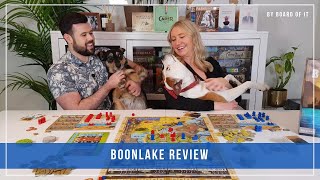
Boonlake has earned a place in the hearts of serious euro game enthusiasts since its 2021 release. Board game reviewers consistently highlight it as a standout title that combines accessible mechanics with surprising depth, and many return to it repeatedly despite the constant flow of new releases. Channels like Chairman of the Board rank it among their favorites of its year, while Getting Games keeps it in regular rotation. The game resonates with players who appreciate thoughtful engine building and mechanics that reward clever planning without punishing those who prefer a more exploratory approach.
Core Mechanics That Define Boonlake
The Shared Action-Selection System
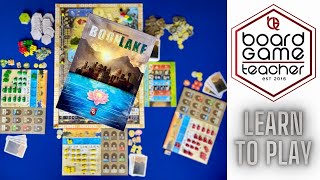
At the heart of Boonlake lies an elegant action-selection system designed by Alexander Pfister and published by Capstone Games that sets it apart from standard euro games. Instead of simply letting the active player take an action and move on, the game shares that action with all opponents, giving them weaker versions of the same choice. This creates constant interaction and engagement, as players must consider not just their own benefit but what power they're giving their opponents. As actions are neglected, they grow stronger, rewarding players who time their selections carefully or creating pressure to take key actions before they become too potent. The system drives a rhythmic back-and-forth where every decision matters to the whole table.
Engine Building and Resource Management
Boonlake embraces the euro tradition of layered engines and cascading upgrades. Players settle the wilderness by erecting buildings, towns, and enclosures on a shared board, gradually unlocking income and points as new phases trigger. Card play feeds into this expansion, allowing players to pursue novel cards and synergies that compound as the game progresses. The satisfaction comes from discovering how small decisions early in the game bloom into powerful engines by the midgame, where a single turn can unlock multiple scoring opportunities and resource chains. Multiple paths to victory keep every player engaged in their own puzzle while remaining tied to the shared landscape.
The Boonlake Experience
Sailing, Tempo, and Turn Structure
Boonlake captures an evocative theme of exploring and developing a lakeside frontier. Players sail down the lake, collecting bonuses at checkpoints before resetting and running the path again, mirroring the cyclical rhythm of settlement and harvest. This player-driven tempo element means the game never feels like it's being done to you; instead, your choices directly shape the pace. The halfway reset point provides a natural moment to reassess strategies and pivot if early decisions haven't paid off. This structure prevents the feeling of being locked into a single plan and keeps games dynamic.
Accessibility Paired with Strategic Depth
Despite boasting multiple scoring avenues, levers to pull, and synergies to explore, Boonlake remains fundamentally accessible. New players can understand the core loop quickly and make meaningful choices from turn one. Yet the game rewards repeat play and deeper study, as experienced players discover subtle positioning tactics, optimal upgrade paths, and ways to manipulate the action queue. This balance between accessibility and depth means Boonlake plays equally well at the table of newcomers and seasoned gamers, making it a rare design that scales across skill levels.
What Makes Boonlake Stand Out
Alexander Pfister's Signature Design Sensibilities
Boonlake stands as a testament to designer Alexander Pfister's mastery of euro mechanics. The game distills years of experience with player interaction, tempo, and engine design into a cohesive whole. Pfister brings the tools he's honed across his catalog, yet Boonlake feels like a culmination rather than a repeat. Every system serves the others, from the shared actions to the card-driven engine to the board upgrades. There's no bloat, no mechanic that feels tacked on, and no moment where the game overstays its welcome. The result is a title that both respects the time players invest and rewards that investment with rich gameplay.
A Massive Sandbox of Viable Strategies
What elevates Boonlake beyond solid euro is the sheer breadth of strategic approaches available to players. One player might focus on rapid card development and combo chains, while another pursues efficient building placement for steady income. A third could prioritize controlling key actions, forcing opponents into suboptimal choices. None of these paths feels obviously superior, and table dynamics shift based on which strategies players pursue. This variability ensures that no two games play identically, and players who've enjoyed Boonlake once rarely feel satiated after a single play.
Potential Drawbacks
Shared Actions Can Feel Punishing
The core mechanic that drives engagement also introduces a unique tension some players find frustrating. Selecting a powerful action means giving all opponents a weaker version of that same power. When opponents capitalize on the cascade of shared actions to close a strategic gap, the player who triggered that surge may feel their lead slip away. This is an intentional design feature meant to keep games competitive, but players who prefer predictable advantages or less direct interaction might find the back-and-forth exhausting. The system demands that players think not just about their own optimization but about the unintended benefits they're granting the table.
The Upgrade Puzzle Can Overwhelm New Eyes
While the core action is simple, the web of card interactions, building upgrades, and income triggers grows denser as the game progresses. Players who thrive on rapid decision-making might feel bogged down in their third turn when considering how a new card synergizes with existing pieces. The game doesn't penalize thorough thinking, but it rewards it, so analysis paralysis can extend playtime if the table includes players who like to fully map out their turns. Experienced players can move briskly, but introducing Boonlake to a group of analysis-prone gamers might result in a longer first play than some might expect.
If You Enjoy Boonlake
For players captivated by Boonlake's blend of shared systems and personal engines, several peer titles offer adjacent pleasures. Concordia shares a similar philosophy of elegant interaction and card-driven economics, though with a distinct route-building focus. Nova Luna and Terra Mystica appeal to those who relish the puzzle of positioning and upgrades, while Viticulture provides a thematic alternative that pairs worker placement with tableau building. Each offers its own angle on what makes euro gaming rewarding, and fans of Boonlake often find themselves drawn to these designs for their thoughtful systems and respect for player agency.
What Reviewers Are Saying
"The main action system, how you actually resolve your actions, you're going to have this stack of these action strips and you're going to draft which one you want and that is going to show the actions you can take but it's also going to give everybody else an action. So you're constantly engaged in this game and even when it's not your turn you're still invested in what other people are selecting."
— Chairman of the Board
"It has a lot of the euro things that I tend to love, you know always upgrades, and it's got these cool little levers as well you can pull for little bonuses and it's just a ton of things you can do. You can build some very cool engines because all the cards and things synergize with each other."
— Chairman of the Board
"Boonlake is one I brought along this weekend because I am still very much enjoying that one."
— Getting Games