/pic1542342.jpg)















Bora Bora Deep Dive
What the Community Thinks About Bora Bora
Bora Bora represents Stefan Feld operating at peak design capacity, offering a masterclass in restrictive mechanics married to genuine player agency. Reviewers consistently praise the game for achieving that rare balance where tension and accessibility coexist. The game generates passionate responses, with fans celebrating its tight economy and those who bounce off it citing the inherent meanness of the dice-placement system. Regardless of stance, the board gaming community recognizes Bora Bora as one of Feld's greatest accomplishments, a game that has earned its place among elite point-salad euros through years of sustained enthusiasm from dedicated players.
Core Mechanics That Define Bora Bora
Dice Placement as Resource and Barrier
Bora Bora's signature system inverts conventional dice-worker-placement logic. Higher-value dice appear stronger since they grant more powerful actions, but lower-value dice provide the flexibility to act when you need to. The critical constraint: you cannot place a die on an action where another player has already placed a lower value. If someone positions a one on an action space, no one can use that space for the remainder of the round. This creates constant tactical tension. Players must read the board state, anticipate opponents' intentions, and decide whether to secure actions now or hope better opportunities emerge later. The result is a game where restriction becomes the primary decision-making tool.
Tight Economy Through Mandatory Objectives
Each round forces a hard choice: complete one of three available tasks or discard one and lose its points. With only six rounds across the entire game and numerous competing objectives involving islander recruitment, hut construction, temple worship, and jewelry collection, players face constant scarcity. You cannot achieve everything in a single game. This artificial constraint transforms Bora Bora into an efficiency puzzle where every action matters and wasted opportunity compounds across rounds. Reviewers emphasize that this tightness defines the experience, creating pressure that escalates as the game progresses.
The Bora Bora Experience
Intense and Interactive
Bora Bora embraces confrontation through its blocking mechanics. Players frequently shut down opponents' preferred actions or claim resources others desperately need. Reviewers debate whether this constitutes "meanness" or simply high player interaction. Those who appreciate it describe the tension as immensely satisfying, a constant back-and-forth where you must anticipate and counter opponents while protecting your own position. Those who find it frustrating cite the helplessness of having your optimal action blocked by an opponent's strategic die placement, particularly in multiplayer games where the dice-selection order can create cascading disadvantages.
Colorful and Thematically Rewarding
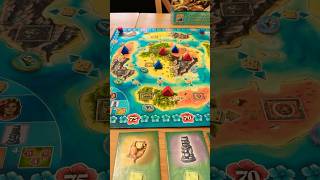
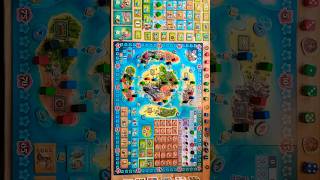
The Polynesian island setting provides visual and thematic appeal that many Feld designs lack. The bright, vibrant components draw players into the table. More importantly, the mechanisms connect to the theme authentically: recruiting islanders, building huts, consulting gods, and completing fishing expeditions all feel grounded in the setting rather than pasted on. This thematic coherence enhances the experience, making point-generation feel purposeful rather than abstract.
What Makes Bora Bora Stand Out
Multiple Mini-Games in One Package
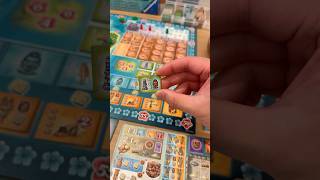
Reviewers highlight how Bora Bora contains area-control elements, set-collection mechanics, and engine-building components that interweave seamlessly. You manage islander tiles that grant actions, pursue jewelry sets, and compete for temple dominance. The genius lies in how these subsystems synergize: completing one objective can support progress toward another. This layered design prevents the game from feeling one-dimensional while maintaining mechanical clarity and an elegant rules footprint.
Point-Salad Excellence
Bora Bora exemplifies the point-salad approach at its finest. Multiple paths to victory mean no single strategy dominates. Two players pursuing entirely different scoring approaches can end within points of each other. The game rewards planning while remaining accessible to players willing to adapt mid-game. Reviewers note that replays feel fresh because shifting board states invite different approaches, preventing solved-game syndrome.
Potential Drawbacks
Blocking and Frustration in Higher Player Counts
The dice-placement restriction creates genuine moments where players have no viable actions. When you roll low dice and an opponent places a one on your preferred action, you might be forced into suboptimal moves for an entire round. This compounds in three and four-player games where turn order amplifies disadvantage. Reviewers emphasize that this is not a design flaw but an intentional constraint some players dislike intensely enough to avoid the game.
Round Structure and Setup Friction
Between-round administration is nontrivial. Dice must be rolled, action spaces prepared, and tiles distributed. The endgame also demands careful attention: multiple interlocking scoring conditions mean missed combinations cost significant points. Some reviewers note the game's length combined with this overhead creates a weight-to-playtime ratio that discourages casual table inclusion. Two-player games flow much better than multiplayer variants due to reduced administrative burden.
If You Enjoy Bora Bora
Fans of Bora Bora should explore other Stefan Feld designs, particularly Trajan and The Castles of Burgundy, which share his point-salad sensibility and emphasis on meaningful restriction. Five Tribes offers similar dice-driven area control with a different flavor. Those drawn to Bora Bora's thematic coherence should investigate games like Puerto Rico and Great Western Trail, which blend mechanical sophistication with setting authenticity. Players who relish the interactive blocking elements might gravitate toward Lorenzo Il Magnifico or other economic games where player interference shapes the strategic landscape.
What Reviewers Are Saying
"I absolutely love that. Sometimes it just works out that not only do I just need a low value for a particular action, but it also messes with you even better."
— The Dice Tower
"It's a tight economy of the game. Every round, you have to be completing a task from the three you have available in front of you. If you cannot, you have to discard one and lose out on scoring it."
— The Dice Tower
"The endgame scorings are hard to get and you have to get all of them to even get any points. Many of them are in combination and intertwined with each other and it's like one action can cost you that many points, so it's a brutal game."
— Ryan and Bethany Board Game Reviews