/pic7361181.png)















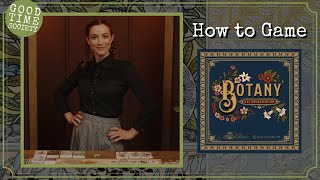
Botany Deep Dive
What the Community Thinks About Botany
Botany captures the hearts of board gamers for one central reason: the Victorian-era theme and the historical accuracy of its premise. The game invites players into a beautiful world of 19th-century plant hunting expeditions where collectors ventured globally to gather exotic specimens for their estates. Reviewers consistently highlight how the game's theme, art, and flavor text create a cohesive, immersive experience. The production quality elevates the entire experience, with gorgeous botanical illustrations, lush artwork that evokes historical herbarium prints, and elegant navy blue box design that screams Victorian sophistication. Several reviewers note this game works particularly well for players interested in plants, horticulture, or historical aesthetics.
Core Mechanics That Define Botany
Hand Management and Strategic Planning
At its heart, Botany revolves around hand management paired with area movement. Players hold specimen cards representing plants from specific locations around the world, and they must plan routes to visit those locations to acquire specimens. The core tension emerges from careful planning: you study the cards in your hand, identify which locations you need to reach, and chart an efficient path to maximize collections before your coins run dry. Reviewers appreciate that this mechanic forces meaningful decisions every turn without becoming overwhelming. You must weigh whether to buy expedition cards that help your journey or conserve funds for travel. This creates a satisfying puzzle where planning ahead separates successful botanists from unsuccessful ones.
Set Collection with Spatial Constraints
Botany uses set collection as its scoring engine, but with a twist: the wardian case mechanic creates tangible physical limits. Players can only hold three plants per case and start with one case, forcing decisions about whether to press specimens for instant points or preserve them alive in cases for their full value. This limitation encourages tactical thinking about storage, return trips to the estate, and when to cash in collections. The botanical press offers a fallback (converting specimens to single points), but the real rewards come from bringing live specimens home to your gardens intact. This spatial puzzle layer transforms set collection from a simple scoring track into an engaging resource management challenge.
The Botany Experience
A Meditative, Exploration-Focused Journey
Multiple reviewers describe Botany as relaxing and meditative rather than confrontational. The game lacks significant player interaction, which one reviewer characterizes as making it feel like a one-to-three player game even at higher counts due to downtime. Others see this as a strength. The focus remains on your own expedition, your own collections, and your own estate building. There is no direct combat or take-that mechanics (aside from a clever poisonous plant sabotage system). Players simply travel the globe, discover beautiful botanical specimens, and build their collections according to personal strategy. This creates a calm, thoughtful game where you make plans, execute them, and enjoy the journey of discovery.
Rich Thematic Flavor and Worldbuilding
What elevates Botany beyond mechanical elegance is its commitment to theme. The event cards feature spectacular flavor text that transports players into the Victorian era of plant collecting. These events roll with dice and create moments of luck and consequence, yet they feel narratively earned rather than punishing. You are not just moving tokens on a board; you are reading about monsoons, tropical diseases, rival collectors, and botanical discoveries. The art on every card reinforces the historical setting through period-appropriate botanical illustration styles. Reviewers emphasize that this flavor text and thematic coherence make people want to return to the game repeatedly, as the experience itself justifies the table space the game demands.
What Makes Botany Stand Out
Accessible Complexity Wrapped in a Gorgeous Package
Botany presents as a heavier game than it actually is. The board sprawls across the table, components are numerous, and the setting suggests deep strategy. Yet the ruleset remains straightforward and approachable. New players grasp the core loop quickly: pay a coin, draw an event, move, collect specimens, go home. There are no hidden combos or fiddly edge cases. This makes Botany excellent for introducing non-gamers to modern board games without overwhelming them. The production quality (beautiful botanical prints, metal coins, Thundergryph Games' signature aesthetics) creates a premium feel that makes players feel they are playing something truly special, even though they can learn it in a brief teach.
The Historical Plant Collecting Setting and Its Authenticity
Very few games explore Victorian plant hunting, a fascinating historical moment when collecting exotic botanical specimens was both a status symbol and scientific pursuit. Botany commits fully to this premise. The wardian case mechanic is historically accurate (it refers to actual glass terrariums that preserved specimens on long sea voyages). The card names and locations reflect real historical expeditions. Reviewers who care about plants or history feel this authenticity in every detail. The game respects the theme rather than merely pasting it over generic mechanics. This level of thematic commitment attracts players seeking experiences that feel coherent and special.
Potential Drawbacks
Significant Downtime at Larger Player Counts
The primary criticism across multiple sources is downtime. One reviewer explicitly states they see Botany as a one-to-three player game and recommends against five-player sessions. With five players, a first teach and complete game stretched nearly three hours. Because player interaction is minimal and turns are independent, each player simply waits for their turn to move, collect, and return home. With experienced players moving quickly, this is manageable. With new players or groups that love to chat, the wait between turns can feel tedious. This limits the game's appeal for large groups or conventions where table speed matters.
Limited Player Interaction and Competitive Feel
While some appreciate the peaceful, non-confrontational nature of Botany, others may find it underwhelming from a competitive perspective. Beyond the poisonous plant mechanic (which lets you sabotage opponents' gardens), there is very little direct player interaction. You are not blocking locations, racing for resources, or engaging in meaningful negotiation. Each player essentially runs their own expedition simultaneously. Reviewers who crave direct confrontation or tense race mechanics may find Botany feels like multiplayer solitaire. The game succeeds as a personal experience of exploration and discovery, but it does not create dramatic player-versus-player moments.
If You Enjoy Botany
Botany shares mechanical and thematic DNA with several other games. Wingspan, published by Stonemaier Games, similarly combines beautiful art, set collection, and a nature-focused theme with light-to-medium rules and peaceful gameplay. Dixit offers a comparable aesthetic appreciation of gorgeous, evocative artwork, though it plays mechanically like a social deduction game. Lafleur, another Thundergryph Games release, provides similar Victorian aesthetics and flower-centric theming in a different game structure. Players seeking spiritual cousins to Botany should consider these titles, particularly if they want to explore the overlap between nature, art, and accessible strategy gaming.
What Reviewers Are Saying
"The events really sell Botany for me because the flavor text is just so fantastic. That is like one of the main reasons for me to play Botany, just those different events and the flavor texts that go along with them can be really fun to read, and it immerses you into this world of Victorian plant collecting."
— Let's Table It
"This is a big game that really sprawls across the table, takes up a lot of room, but the rule set is very straightforward and approachable. This game is great for people who want a lighter game that looks much heavier, that you can introduce to people who haven't spent a ton of time gaming and they're going to feel like they played a really big modern game."
— Jamie, Tabletoptiktok
"I love that vintage Victorian feel to it. They just know how to make a good board game box and a very aesthetically pleasing board game box. The art is gorgeous. There's metal coins. It's just a really nice production."
— The Board Game Garden