/pic6007253.png)



































Brew Deep Dive
What the Community Thinks About Brew
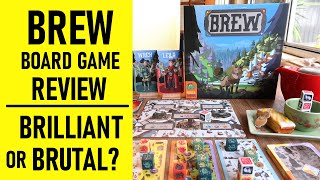
Brew has drawn considerable enthusiasm from reviewers, particularly for its distinctive visual design. The consensus centers on a game that accomplishes something tricky: combining multiple well-known mechanics into a cohesive experience that feels both strategic and accessible. Reviewers consistently praise the ease of learning, noting that despite the number of moving parts, new players can grasp the basics quickly. However, the game's direct player interaction and confrontational elements generate mixed reactions. Some reviewers embrace the blocked dice and contested forests as core to the experience, while others find this level of conflict off-putting.
Core Mechanics That Define Brew
Dice Placement and Area Control
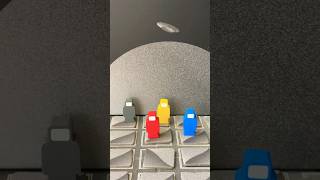
The heart of Brew revolves around placing colored dice onto forest cards and village spaces. Each player controls their own color of dice, which serve as workers in this system. What makes this mechanic distinctive is the area control component: at the end of each round, whoever has placed the most dice on a forest card claims it. This creates immediate tension. You place your dice hoping to secure a forest, but other players can block spaces or place more dice than you, forcing difficult decisions about how aggressively to compete. The dice themselves are rarely rolled, making the game far less random than it might appear. Instead, you're managing limited dice and deciding where to commit them for maximum advantage.
Resource Collection and Creature Training
Beyond the forests, players forage for ingredients used to brew potions. You can also train woodland creatures found in a shared deck. Each creature grants a persistent ability usable throughout the game, and you can hold up to three at once. These creatures become the engine-building layer. If you acquire the right combination, they work together to enhance your resource gathering or provide special powers. At game end, you release creatures into matching-colored forests to score bonus points, turning mid-game tactics into endgame scoring synergies.
The Brew Experience
Gorgeous Artistic Presentation
The first thing that strikes players about Brew is its visual appeal. The artwork creates a cohesive woodland fantasy aesthetic, and the component dice are beautiful to look at. Reviewers specifically noted the exceptional quality of the art direction and the satisfaction of handling the dice. The theme itself is thematic flavor rather than mechanical logic, but the package is attractive enough that the suspension of disbelief comes easily. The game presents a world where time is broken and all seasons exist simultaneously, where mystics work to restore balance through creature training and potion brewing. It's evocative even if the mechanics don't strictly reinforce this narrative.
Confrontational Player Interaction
Brew commits fully to direct conflict. Your opponents will manipulate dice placement, block spaces you hoped to access, and contest forests you thought you had secured. This is not a gentle game of parallel play. Reviewers emphasized that this confrontation is central to Brew's identity, not an occasional occurrence or an optional element. For players who thrive on table politics and head-to-head competition, this becomes the game's greatest strength. For others, it's reason enough to pass. The blocking and disruption generate real consequences, forcing players to adapt plans and make reactive decisions. This dynamic keeps every player engaged throughout the round, as no one's strategy is immune to interference.
What Makes Brew Stand Out
Mechanical Depth Beneath Simple Turns
Individual turns in Brew are straightforward: place a die, optionally brew or drink a potion, done. Yet rounds generate meaningful complexity. Players experience analysis paralysis despite the simplicity of individual actions because the decision of where to place one die carries cascading implications. Will this space still be available when it circles back to you? Should you use an elemental die here to deny opponents an extra ingredient, or save it for a more critical moment? The gap between simple turn structure and the actual strategic weight creates an engaging puzzle that rewards planning without requiring lengthy calculations.
Accessible Gateway Package
Brew works as both an entry point for newer gamers and a game with genuine depth for experienced ones. The ruleset is learnable in twenty minutes or less. A new player can play their first game understanding why they made decisions, rather than experiencing analysis paralysis from unknown options. Yet the interaction between dice, creatures, potions, and forest control reveals new strategic layers through repeated plays. This duality makes Brew valuable in mixed-experience game groups where some players are veterans and others are newcomers.
Potential Drawbacks
Dice in Strategy Games Can Feel Arbitrary
While Brew rarely rolls dice, the presence of dice in a strategy game raises red flags for some players who associate dice with randomness. The game does control this through limited rolling, but the psychological association persists. Players accustomed to purely deterministic euro games may feel the dice component introduces an unwanted luck element, even though the actual gameplay impact is minimal.
Direct Conflict Alienates Cautious Players
The confrontational mechanics will not appeal to every table. Some players prefer games where their carefully laid plans execute relatively unimpeded. In Brew, your strategy is constantly disrupted by opponents blocking, manipulating, and contesting your targets. If your group values harmony and cooperative play, or if you prefer individual engine building without external interference, Brew's emphasis on blocking and take-that moments may make it feel gratuitous rather than engaging.
If You Enjoy Brew
Players who love Brew often gravitate toward games balancing accessibility with interaction. You might enjoy Calico for its gentle area control and creature collection. Sushi Go Party offers card drafting and set collection in quick bursts. Cockroach Poker provides bluffing and deduction in a compact package. Dominant Species delivers heavier area control with significant player conflict. Compromat features single-use potent abilities that shift turn by turn. Rook offers trick-taking stripped to essentials. These games share Brew's commitment to either elegant mechanical combinations, memorable player interaction, or both.
What Reviewers Are Saying
"I first saw photographs of brew on Instagram and was immediately drawn in by that fantastic artwork and the beautiful dice. The theme of the game doesn't make any sense at all when playing but it's a nice world to occupy nonetheless."
— Adam in Wales - Board Game Design
"Brew has a really interesting mix of so many different mechanics but somehow it packs it into a really easy to understand package. In a game that features area control dice placement resource collection order completion and all kinds of different mechanics mashed together you'd think that the rules for this one would be really complex but actually the game itself is quite simple to learn."
— Might I Suggest A Game
"Brew features a lot of direct interaction between players and that's going to put some people off. Your plans are going to be ruined frequently by your opponents manipulating your dice and blocking spaces to take control of forest cards which you thought you had in the bag but you know what you're going to be doing it to them too."
— Adam in Wales - Board Game Design