/pic6007944.jpg)









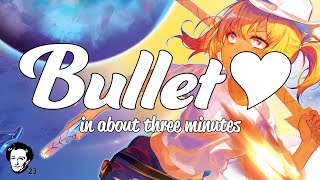





Bullet Heart Deep Dive
What the Community Thinks About Bullet Heart
Bullet Heart has earned a devoted following among board game reviewers for its distinctive blend of real-time puzzle gameplay and asymmetric character design. The game appears regularly on best-of lists, ranking high enough to be revisited and remain a favorite years after its 2021 release. Reviewers consistently praise its surprising depth within a lightweight package, though they acknowledge it is not for everyone. Its rapid pace and high-pressure decision-making create a polarizing but intensely engaging experience that appeals directly to players who thrive in competitive, time-pressured environments.
Core Mechanics That Define Bullet Heart
Real-Time Bullet Placement and Pattern Clearing
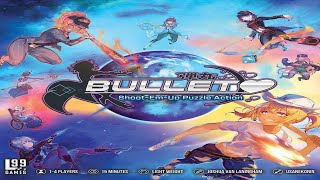
At its heart, Bullet Heart is a spatial puzzle game wrapped in real-time urgency. Players draw colored numbered bullets from a personal bag and place them on their board, where the color determines the column and the number indicates how many spaces down it travels. The central tension comes from preventing bullets from reaching the bottom of the board, where they deal damage. To survive, you must clear bullets by matching specific pattern configurations shown on your cards, spending limited power resources to maneuver bullets into the correct arrangements. The game operates within strict time limits, forcing players to balance careful pattern recognition with the pressure of real-time play. Level 99 Games designed this system to feel like a video game brought to the tabletop: fast, arcade-inspired, and genuinely tense. Multiple game modes accommodate different playstyles: Battle Royale and Team Battle for multiplayer chaos, Boss Battle for cooperative challenge, and Score Attack for solo optimization.
Asymmetric Heroine Powers and Replayability
Each of Bullet Heart's eight heroines possesses unique abilities and a distinct pattern card deck, fundamentally changing how you approach each game. One heroine might have access to an extra pattern card; another might modify how bullets move or interact. These differences extend beyond cosmetic variation. Reviewers emphasize that the characters feel genuinely distinct, creating dramatically different gameplay experiences. A character you find manageable might feel completely different in someone else's hands, and switching heroines reveals surprising depth within the game's compact 20 to 45 minute playtime. This asymmetry drives replayability, ensuring that returning to Bullet Heart always feels fresh and that there is a ton of stuff to discover.
The Bullet Heart Experience
Satisfying Tactile and Visual Feedback
The experience of playing Bullet Heart derives much of its appeal from satisfying mechanical feedback. Drawing tokens from a bag and placing them on your board creates a pleasurable, almost meditative moment, and reviewers describe the core loop as really satisfying and fun. The pattern recognition element engages the same spatial intuition that makes Tetris-style falling-block games compelling. When you successfully clear a cluster of bullets by matching a pattern, the game delivers genuine satisfaction. The art style, with Japanese-influenced character designs on a clean, readable board, reinforces the video game aesthetic without overwhelming the functional clarity players need during frantic play.
Escalating Tension and Strategic Pressure
Bullet Heart excels at creating mounting tension as the game progresses. Early rounds feel manageable; as the intensity advances and larger bullet waves arrive, player boards fill dangerously. The combination of time pressure and increasing board congestion means every decision carries weight. Players must balance immediate pattern clearing with forward planning, since sometimes you will use power to move a single bullet into position because leaving it might prove catastrophic next round. The game becomes a race against both the clock and incoming damage, creating what reviewers describe as arcade-style gameplay that pushes you to make a lot of decisions in an incredibly compressed time frame. This escalation mirrors classic video game difficulty curves, rewarding quick thinking and adaptation.
What Makes Bullet Heart Stand Out
A Unique Puzzle-Arcade Hybrid
Most tabletop games do not attempt Bullet Heart's particular combination of spatial puzzle-solving under real-time pressure. The game sits at an unusual intersection: it is not a pure speed game that ignores strategy, nor is it a leisurely puzzle game that eliminates tension. Instead, Bullet Heart fuses both. You must recognize valid patterns quickly, but also choose your moves strategically, sometimes holding bullets in less-optimal positions because moving them elsewhere will create a future problem. This hybrid approach feels genuinely novel. While tower defense games share some DNA (managing an incoming threat, manipulating pieces to survive), Bullet Heart's emphasis on pattern matching and limited power resources creates a distinct identity. The game occupies a design space rarely explored in modern board games, making it feel refreshingly different even to experienced tabletop players.
Stellar Character Asymmetry in a Real-Time Context
Including eight asymmetric characters in a real-time game is ambitious, since many designers would simplify to avoid teaching overhead. Bullet Heart nails the balance: each heroine's powers are comprehensible after one explanation, yet strategically distinct enough to reshape your entire approach. One reviewer notes that the best thing about the game is the degree of asymmetry in the characters, which really do feel quite different. This matters because it means Bullet Heart does not feel like the same game played eight times. A character's special ability might grant extra pattern cards, modify how tokens move, or provide powerful one-time actions. The presence of multiple solo modes (boss battle and score attack) alongside multiplayer options ensures every heroine has opportunities to shine, and that switching characters always feels worthwhile.
Potential Drawbacks
Real-Time Play Isn't for Everyone
The game's greatest strength is also its most significant barrier to entry. Real-time games demand comfort with making quick decisions under pressure, honesty about mistakes made in the moment, and an acceptance that luck sometimes punishes you despite good decisions. Reviewers are candid about this: real-time games are not for everyone and can be deeply confusing and frustrating when you have rules issues, and some players find this game very stressful. If you struggle with time-pressured decision-making, find real-time games anxiety-inducing, or value turn-based reflection, Bullet Heart may not align with your play style. The recommendation to start without the real-time timer, playing the physical puzzle element at your own pace before adding the timer, exists precisely because the time pressure amplifies an already demanding puzzle.
Skill and Player Honesty Create Variable Experiences
Bullet Heart's real-time rules create conditions for frustration if players approach the game casually or dishonestly. Because everything happens simultaneously, quick mistakes can cascade. Moving a bullet one column over by accident, misreading a pattern, or misjudging how many spaces a bullet travels, any of these become costly under time pressure. The game requires a high degree of trust and players who can accept when they make a bad move under pressure, and not everyone is that honest. Additionally, experienced players can significantly outpace newcomers simply through pattern recognition speed and practice, making mixed-skill tables potentially unbalanced. The game's tightness, where mistakes compound and recovery options are limited, means that player patience and group dynamics directly impact enjoyment.
If You Enjoy Bullet Heart
If Bullet Heart resonates with you, consider exploring Under Falling Skies for a solo puzzle experience with a similar incoming-threat structure, or Cascadia for a different take on satisfying spatial puzzling at a relaxed pace. For the tower defense comparison, Dice Throne combines real-time-adjacent decision-making with asymmetric character abilities, though it trades Bullet Heart's puzzle focus for combat. If you crave more Level 99 Games experiences, explore the broader Bullet series itself, which shares design sensibilities. For thinky spatial puzzles without the time pressure, Project L offers tactile, fast-playing puzzle assembly that fans of Bullet Heart's clearing satisfaction will appreciate.
What Reviewers Are Saying
"It's just so satisfying. It's relatively simple, you're just drawing these tokens out of a bag and placing them onto your board, matching the color, and then the number represents how far down it goes. You don't want these tokens to reach the bottom, so your board's filling up kind of like a tower defense game, and you're trying to manipulate these tokens into certain configurations based on cards you have so that you can clear them off your board."
— Totally Tabled
"Bullet Heart is something that's quite different, a real-time puzzle game that plays incredibly quickly and gets tense even faster. This is a game that definitely won't be for everyone, but the people it is for will have been waiting for this exact game for a very long time, and that's because of its fast arcade style that legitimately pushes you to make a lot of decisions in an incredibly compressed time frame."
— Watch Review
"What I really like about this game and the replayability is that each character is so different and unique, so you can have a different experience every time. There are many different bosses as well, and these come with a black bag for each player, because you'll be building your bag of bullets throughout the game."
— Danielle