











Carnival of Monsters Deep Dive
What the Community Thinks About Carnival of Monsters
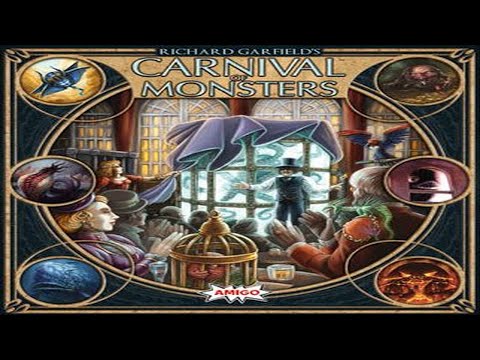
Reviewers describe Carnival of Monsters as a compact, approachable card drafting game with a distinctive monster-catching theme. Richard Garfield, the designer behind Magic: The Gathering, created the game, and Amigo published it in 2019. Several channels frame it as an older title that deserves more attention than it gets. Foster the Meeple lists it among its gateway games and says it is an older game that they hear nobody talking about.
The consensus is that the game is easy to learn but not shallow. Quackalope called it a good drafting game that plays quickly and feels challenging even though the rules are simple. The same reviewer placed it slightly above entry level because the theming and end game scoring add enough depth that players who do not grasp the scoring can fall behind. Meeple University gave a concise overview of the core loop and highlighted the risk that comes with dangerous monsters.
Opinions diverge most on luck and on the forced rules that shape each draft. Board Games UnLocked, in its group discussion, praised the keep mechanic but raised objections to how the final card of a draft must be kept, and it argued that passing only a few cards per round leaves too little room for planning. Those criticisms sit alongside broad agreement that the artwork is strong and that the game suits small groups well.
Core Mechanics That Define Carnival of Monsters
Card Drafting
Card drafting is the foundation of the experience. Players receive hands of cards, choose one to keep, and pass the rest to a neighbor, so every pick affects what other players can take. Reviewers see this as the central tension of the game. Quackalope described the draft as the part that kept them engaged through every phase, since even a passed card can still shape the board later.
In Board Games UnLocked's discussion, the group also noted that the number of cards passed per round is a key lever. They suggested that passing more cards would reduce the sense that a draft is decided by whatever happens to arrive in the hand.
Land Points and Monster Capture
Monsters are captured by paying land points that match their terrain, and the strongest creatures demand the most. Dangerous monsters add risk, because they usually offer more points but can cost the player when the round ends if the required Hunter symbols are not on display. Board Games UnLocked showed in a live playthrough that Dreamlands monsters act as wild cards, so they can be paid with any land type. That flexibility is one of the features players tend to remember once they have learned the rules.
The Carnival of Monsters Experience
Gateway Accessibility
Carnival of Monsters feels welcoming to newer players. Foster the Meeple uses it as a gateway title for its own household, which signals that the game lands well with people who are not heavy hobbyists. Quackalope said the game was easy to understand and that it played quickly, so a first session does not drag. The experience stays engaging for veterans as well, because the scoring rewards players who plan several rounds ahead, and that depth is what keeps the game from feeling like a simple warm-up.
Colorful Artwork and Monster Theme
The visual identity is one of the first things reviewers mention. Foster the Meeple compared the card art to Magic: The Gathering and said the game captures the idea of throwing a carnival full of monsters. Board Games UnLocked also praised the artwork on the cards. The result is a table presence that suits a theme about collecting strange creatures, and the illustrations give each capture a sense of discovery.
What Makes Carnival of Monsters Stand Out
The Keep Mechanic
The keep mechanic is the feature that reviewers return to most often. In Board Games UnLocked's group discussion, one reviewer said the keep mechanic was their favorite part of the game. Holding a card back gives a player room to plan ahead rather than being forced to play whatever is available immediately, which is why the mechanic reads as strategic rather than random.
Fast, Simultaneous Pacing
Reviewers consistently praise how quickly a session moves. Quackalope said the game felt fast and played quick, and Board Games UnLocked highlighted that simultaneous play keeps everyone active at once. That pacing makes the game practical for a weeknight, and it matches the relatively low direct interaction that the discussion found suited a three-player table well.
Potential Drawbacks
Forced Keeps and Loans
The keep rule is not universally liked. In the same group discussion, reviewers objected that the final card of a draft must be kept, which can leave a player holding a card they cannot use. Loans drew similar criticism. Some players in the discussion said they felt pushed into taking loans, and the consequences of carrying them into scoring can be significant. Reviewers who value freedom of choice may find these constraints frustrating.
Luck and Late-Game Dead Cards
Drafting luck is another recurring concern. Quackalope said that many drafting games leave players with useless cards by the end, and while this game avoided that for most of the reviewer's hand, a card or two still felt wasted. Board Games UnLocked also noted that the rules around Dreamlands were confusing at first, which added friction to early sessions. These issues are fair to raise, though most reviewers felt the strategic choices still outweighed the randomness of the draft.
If You Enjoy Carnival of Monsters
Players who enjoy Carnival of Monsters's card drafting will find similar satisfaction in Seven Wonders, which also rewards careful selection across a set of hands, and in Magic: The Gathering, the design lineage that Richard Garfield's name connects. Quackalope compared the game's pacing and drafting to Catan and Ticket to Ride, so fans of route and resource planning may appreciate the way the scoring rewards long-term commitments. Players who like the monster-collecting theme and the risk of dangerous creatures will find a comparable thrill in Bunny Kingdom, which Meeple University brought up for its drafting and risk-reward tension. Fans of light, competitive collection games can also look at It's a Wonderful World and Greedy Greedy Goblins, which share the sense of building a tableau under time pressure.
What Reviewers Are Saying
"This is a good drafting game. I like it because it's fast it's I think it's fun it played quick it was easy to understand it still felt challenging."
— Quackalope
"A classic one for us, one of our gateway games is Carnival of Monsters. It's a great game. It's an older game, but I hear nobody talking about it."
— Foster the Meeple
"The cards with dangerous monster icons usually gives you more points but comes with the risk of having negative points because each end of the realms the common dies rolled and need to display the number of Hunter symbols equal to dangerous monsters you're trying to collect otherwise you have to pay or get negative points."
— Meeple University