/pic6183704.jpg)

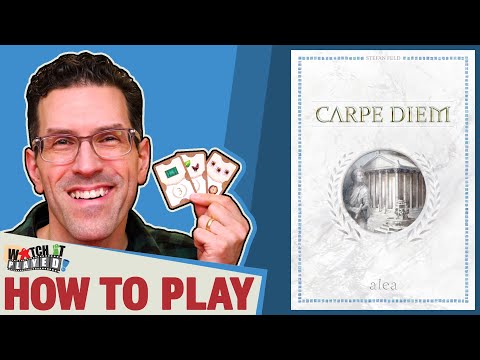


























Carpe Diem Deep Dive
What the Community Thinks About Carpe Diem
Carpe Diem has earned a devoted following within the board gaming community for its elegantly deceptive simplicity. Stefan Feld has crafted a game that looks straightforward on the surface but reveals profound strategic depth through its mechanics. The game earns respect for making what would otherwise be routine tile placement feel consequential and exciting through one of its core systems. Most players appreciate how the game scales beautifully across player counts and how it remains engaging whether someone plays for the first time or the hundredth time.
Core Mechanics That Define Carpe Diem
The Rondel and Tile Acquisition
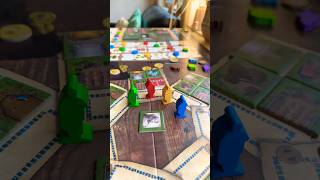
At its heart, Carpe Diem uses a modified rondel system for tile selection. Players move their patrician marker around a circular track (previously star-shaped, now a heptagon in newer editions), advancing one step per turn to an adjacent space. This movement constraint creates meaningful tension: players can only move to adjacent spaces, or they can spend bread to move anywhere. The tiles you collect are placed onto your personal board to build an ancient Roman district. While tile placement itself follows standard adjacency rules, the beauty lies in how these tiles serve as mere tools for what truly matters in the game.
The Revolutionary Scoring Grid
The scoring mechanism is where Carpe Diem becomes deviously clever. Throughout the game, a grid of random scoring cards is displayed, with intersection points where players can place their scoring markers. Four times during the game (once after each round), players bid for the right to score based on their prestige track position. Each player places a disc at the intersection of two cards, committing to fulfill both scoring conditions. Here is the twist that makes everything matter: once a disc is placed, that specific pairing of scoring cards is locked forever, preventing any other player from using it. This creates escalating scarcity and forces constant tactical recalibration as the game progresses.
The Carpe Diem Experience
Building Your Estate With Purpose
Building your city district is simultaneously a puzzle and a financial exercise. Players collect resources by completing closed structures of certain types. A pond gives fish, a garden yields herbs, vineyards produce grapes, and farmyards provide chickens. These goods become currency in two ways: you can spend them directly during forum scoring, or trade them to merchants for coins, which serve as wild resources. Completing dwellings gives you immediate benefits like bread for extra movement flexibility, coins for more options, administration buildings for prestige advancement, or craftsmen that let you grab additional tiles. The interconnection between short-term resource gains and long-term board control creates constant decision tension throughout all four rounds.
The Push and Pull of Prestige
Your position on the prestige track determines your turn order during forum phase, and this matters enormously. Being first at the forum means you claim scoring spots before opponents, securing the pairings that benefit you most. Yet building prestige requires completing silver buildings and using administration buildings, choices that compete with other board-building priorities. This creates beautiful strategic warfare where players must constantly weigh whether to advance prestige now or build infrastructure that pays dividends later. The result is a game where every tile placement connects to future scoring opportunities and every resource decision echoes through the rest of the game.
What Makes Carpe Diem Stand Out
Accessibility Meets Strategy
Carpe Diem manages the delicate balance of being extremely accessible while remaining deeply strategic. New players can understand the turn sequence: move your marker one space, grab a tile, place it on your board. Yet that same game punishes weak planning and rewards foresight. The iconography is clean and readable, making the game easy to teach. Once explained, the flow moves quickly. Despite this approachability, the scoring grid creates complex decision trees where players must anticipate what others will need and position themselves accordingly. It delivers the satisfaction of solving a puzzle while remaining quick enough for casual play.
Scoring That Demands Full Attention
The scoring system transforms an otherwise functional tile-placement game into something special. Rather than simply counting completed buildings or resources, players must carefully monitor the forum cards and plan which pairings they want to claim. The fact that you might build extensively toward a certain goal only to have an opponent claim the only scoring path that rewards it creates thrilling frustration. Blocked opportunities force pivots. Completed buildings that initially seemed less valuable suddenly match available scoring cards, rewarding flexibility. This makes every forum phase tense and every placement decision laden with consequence.
Potential Drawbacks
Visual Presentation and Component Sameness
Several reviewers note that Carpe Diem struggles with table presence and component clarity. The tiles come in shades of green and brown that can blur together at a glance, making it harder to quickly identify landscape types. The 2021 reprint improved tile differentiation with clearer artwork on the backs, but the base game's production values remain functional rather than inspiring. The game lacks the visual pop of flashier Euro releases, which can impact first impressions despite the mechanical elegance underneath.
Repetitive Game-to-Game Patterns
Despite the seemingly infinite combinations of scoring cards and border variations, some experienced players report that Carpe Diem feels similar from game to game. The game tends to reward short-term tactical decisions over long-term strategic planning, which can reduce variance in how games play out. The rondel restriction forces players into similar patterns of movement and resource gathering across plays. While the puzzle remains engaging, players seeking dramatic differences between games may find the experience somewhat formulaic after multiple plays.
If You Enjoy Carpe Diem
Players who love Carpe Diem typically gravitate toward other Stefan Feld designs that balance accessibility with economic depth, such as Rococo or Great Western Trail. Fans appreciate Dune: Imperium for its similar blend of tactical positioning and resource management. Those drawn to the tile-placement aspect might enjoy Maracaibo, which shares a sense of building economies within a constrained system. For the scoring puzzle fans, games like Concordia offer comparable satisfaction of optimizing multiple paths to victory. The game also appeals to players seeking medium-weight Euros that respect their intelligence without demanding four-hour commitment blocks.
What Reviewers Are Saying
"Scoring is so good that it makes every other aspect of this game incredibly compelling. In spite of the bajillion possible combinations of scoring cards, the game tends to reward short-term decisions over long-term strategy."
— The Cardboard Herald
"The scoring grid mechanic is really cool. You place your marker between two cards and you're required to score both of them, and once you place it, that pair of cards is done for the rest of the game. That is what makes Carpe Diem so deviously clever."
— Before You Play
"I love the tile placement in this game. The Border scoring mechanic as well as the scoring grid mechanic is really cool. Make sure that you don't get discouraged by the fact that there are negative points like I said I lost points each four rounds and I actually ended up winning the game with 83 points."
— Board Gaymes James