












Cat and the Tower Deep Dive
What the Community Thinks About Cat and the Tower
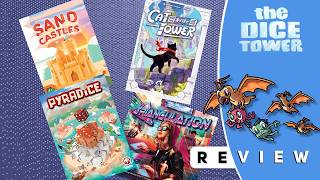
Coverage of Cat and the Tower in the available video discussions is thin, but the reviewers who covered it are consistently positive. The Dice Tower, Allies or Enemies, and Sethos each describe it as a charming dexterity game with real tension, and each treats its cute presentation as a strength rather than a gimmick. The reviewers agree that it differs from Rhino Hero more than a quick comparison suggests, mainly because it is cooperative.
Where the reviewers differ is mostly in emphasis. The Dice Tower presents it as a family-friendly dexterity title that its household's children enjoy. Allies or Enemies argues it is not quite a kids game, and places it in the later-in-the-night slot they associate with Rhino Hero. Sethos calls it one of their favorite dexterity games at the moment and expects it to stay that way for a while. None of the available discussions raise serious objections to the design itself, so the criticism that follows is mostly about the play experience rather than the game's core idea.
Core Mechanics That Define Cat and the Tower
Stacking and Balancing
The physical core of the game is building a tower out of irregularly shaped pieces. Allies or Enemies notes that the walls come in four different sizes and that the columns are very tall and destabilize the structure. Because players never get to place the same size wall twice, the tower becomes wonky quickly, and the group has to engineer around any lean by choosing the opposite shape for the next walls. The hosts single out the pillars as the worst pieces to use. They are only a little less than twice the height of the other walls, yet they disproportionately destabilize things. The Dice Tower describes the wobble as built into the design: pieces that fall off become debris, and the whole tower can collapse.
Cooperative Play
Players build the tower together from a shared pool of pieces, and the cooperative version is the default way reviewers describe the game. Each turn a player chooses one of two action cards and carries out its instruction, which may add walls, floors, or cats to the tower. The tower then checks the goal cards, and if one is complete, Toto moves up. The Dice Tower explains that the goal is to reach the 10th floor to finish the first chapter. Allies or Enemies frames the cooperation as a shared problem: the group discusses which direction to build, and the hosts describe themselves as engineers around the table. The competitive version gives each player a personal cat, two secret goal cards, and three action cards to choose from, with the players racing up a ranking chart. Allies or Enemies notes that this version moves faster and produces more cats on the tower, while still tracking the player who reaches the highest before the tower falls.
The Cat and the Tower Experience
Nervous, Shaky Tension
Much of the fun comes from the physical act of placing pieces. Allies or Enemies describes one action card that asks players to add a cat and then pet every cat on the tower. The hosts say that the motion turns into a jerky poke at poor cats that never see it coming, and that the group has lost a few towers that way. The tension is paired with a constant sense of planning, since each wall choice has to account for what the tower will do next. The Dice Tower sums up the feel as a mix of charm and frustration, noting that the frustration is part of the appeal.
Cozy, Story-Driven Charm
The presentation makes the tension easier to enjoy. The Dice Tower calls the game very cute and adorable, with cats in lazy poses across the components. Allies or Enemies describes a story with more emotional weight than expected: the player is Toto, who has been told that his mother has gone to the stars and is climbing the tower to find her. Reviewers say the story unfolds as the group progresses, so the cute art and the melancholy theme sit together rather than conflicting.
What Makes Cat and the Tower Stand Out
Components and Presentation
The component quality is the feature reviewers praise most often in specific terms. Allies or Enemies says the brick walls pop out and have an extra dimension, and that the cats are chunky and differently shaped, so some of them sit neatly on others when a card calls for it. The hosts say they have no complaints about the production overall, and that the cards are very clear. Sethos calls the components nice, and singles out the tower that remains at the end of the game as a satisfying payoff.
A Campaign That Keeps Going
Reaching the 10th floor completes the first chapter, but the game does not stop there. Allies or Enemies explains that the story continues at milestones, reaching a final narrative stage around level 20, and that a player who reaches level 24 has reached the rulebook's highest tier, where nobody loses. The rulebook also states that a toppled tower sends the group back to zero. The Dice Tower describes the game as campaign style, and Sethos describes the story as sad but a great story in its own right. The result is a sense of progression that reviewers connect to the game's theme and to its tower payoff.
Potential Drawbacks
Cat Availability Can Stall a Game
The most specific complaint comes from Allies or Enemies, who describe games where the group needed two purple cats stacked together and could not find them. In one game the group saw plenty of cats on the first level and then did not see another cat from level one to nine. Goal cards restrict which actions are useful at a given moment, so a missing color can slow the tower considerably. The hosts note that the cards are split between cat and action halves, and that some cards show a cat on one side and an action on the other, which limits how often a player is fully stuck.
Fragility and Frustration
Reviewers consistently point to the physical fragility of the tower as both the charm and the challenge. The Dice Tower notes that the components are card stock and cardboard, which makes them hard to balance, and calls the game slightly frustrating for that reason. Allies or Enemies observes that the tower is almost never level, and that a single fall can bring the entire structure down. Sethos does not raise fragility as a concern, and praises the game's cooperative play and theme.
If You Enjoy Cat and the Tower
- Rhino Hero: Allies or Enemies describes Rhino Hero as a competitive tower builder with Uno-like card play, and says the two games fill different roles. The hosts say they could see themselves bringing Cat and the Tower to the table right alongside Rhino Hero rather than replacing it.
- Super Rhino Hero: Allies or Enemies says that people who already love both Rhino Hero and Super Rhino Hero are a likely audience for Cat and the Tower, since they want more games in that style.
- Bookshelf: The Dice Tower compares Cat and the Tower to Bookshelf, describing it as a similar dexterity game in the same vein that is also fun to play.
What Reviewers Are Saying
"Slightly frustrating because again, you are working with cardboard components or card stock components really. So, it's kind of hard to balance them sometimes, but I guess therein lies the charm and frustration sometimes, but it is really really fun game."
— The Dice Tower
"But boy, do they destabilize things. I feel like I've learned more about engineering from playing this game than from anything else."
— Allies or Enemies
"This is amazing. This is like one of my most favorite dexterity games at the moment and I think it will stay like that for a while."
— Sethos