/pic3864115.jpg)




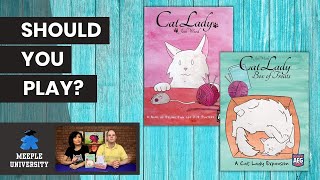



















Cat Lady Deep Dive
What the Community Thinks About Cat Lady
Cat Lady has earned a warm reception from the board game community as one of the most beloved set collection and drafting games of the past decade. Reviewers consistently praise it for filling a niche that few games occupied in 2017, when cat-themed tabletop gaming was sparse. The game resonates strongly with both experienced gamers and newcomers alike. What makes the consensus particularly striking is that players appreciate the game not despite its approachable nature, but because of it. The elegant simplicity masks a cleverly designed experience that rewards careful planning while remaining accessible to casual players. Even those who don't identify as cat enthusiasts find the gameplay and presentation charming enough to enjoy repeated plays.
Core Mechanics That Define Cat Lady
Card Drafting Through Grid Selection
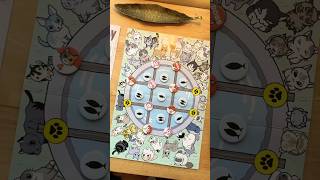
Cat Lady's signature mechanic is a distinctive drafting system that stands out in the crowded field of collection games. Players face a three-by-three grid of cards and must select an entire row or column on their turn, taking all three cards in that line. This grid-based approach is both intuitive and strategic. Once a player claims a row or column, they place a cat token to indicate that the same row or column is blocked for the next player, forcing constant repositioning and preventing anyone from securing the perfect set of cards consecutively. Reviewers describe this system as exceptionally smooth and fresh for tabletop gaming, citing its origins in Magic: The Gathering draft conventions while praising how naturally it translates to the tabletop experience. The mechanic creates meaningful tension without overwhelming players with complex rules.
Set Collection and Resource Management
Beyond drafting, Cat Lady employs layered set collection scoring. Players draft not only cat cards but also supporting components: food to feed their cats, toys for the cats to play with, costumes to dress them in, and catnip for additional bonuses. Each cat card specifies its dietary requirements, represented by colored food cubes. A cat without proper food contributes negative points rather than positive ones, creating a constant tension between collecting many cats and securing enough resources to support them. Additionally, specialty cards like lost cat rescues and various bonuses reward specific collections, encouraging players to pursue multiple scoring paths rather than a single dominant strategy. This creates a rich decision space where luck of the draw matters, but player choice determines the final outcome.
The Cat Lady Experience
Cozy and Whimsical Charm
Cat Lady wraps its mechanics in a warm, inviting aesthetic that immediately signals its tone. The artwork is deliberately naive and childish, featuring whimsical cat illustrations with a soft pink watercolor backdrop. This design choice might limit the game's appeal to some audiences, but it authentically represents the game's identity. The theme isn't just window dressing; the game consistently reinforces its cat-care premise through thematic touches. Feeding cats, collecting toys, putting costumes on them, and even managing a spray bottle mechanic to block other players creates a cohesive narrative of cat ownership. Players find themselves genuinely engaged in the fantasy of being a cat lady, announcing their cats' names and tallying points for their whimsical pets. The components and artwork combine to create an experience that feels like inhabiting an idyllic world of pet ownership, stripped of real-world complications.
Breezy and Accessible Gameplay
Cat Lady plays with remarkable lightness and speed despite the multiple card types and scoring categories. Most drafting games award one card per turn, but Cat Lady generously awards three cards whenever a player takes their action, creating a satisfying sense of constant progress and rewards. The baseline stress of the game remains low; while players need to gather the right food combinations, the cards arrive frequently enough that scarcity rarely feels punitive. Players have many other cards to pursue while waiting for that vital can of tuna. The game sustains engagement through accidental player interaction more than direct conflict, as players taking cards prevents opponents from grabbing the same ones. This means the experience avoids the analysis paralysis that plagues heavier games, and downtime stays minimal even with full player counts. Games conclude within 30 minutes, maintaining momentum from start to finish.
What Makes Cat Lady Stand Out
Innovative Grid-Based Drafting System
The grid selection mechanism represents a genuinely fresh approach to the familiar drafting paradigm. Rather than selecting individual cards or managing hand positions, players see all available options displayed openly and make decisive, visible choices about rows or columns. This transparency removes the memory game that plagues other drafting systems, where players must remember which cards disappeared from public view. The blocking mechanic of the cat token adds strategic depth without requiring players to memorize complex rules. Reviewers frequently mention this system as exceptional and smooth, noting that it feels like something they had never encountered before in tabletop gaming despite being mechanically elegant. For a design from 2017, this drafting approach remains as fresh and appealing as it was upon release.
Perfect Thematic Integration
Cat Lady achieves something many games struggle with: every mechanic reinforces the theme rather than existing in parallel. The feed your cats rule isn't a flavor-text wrapper around abstract scoring; it makes intuitive sense that unfed cats subtract points. The cat token that blocks the next player isn't arbitrary grid manipulation; it's thematically a cat in your way. Even the specialty cards like lost cats that offer additional bonuses when paired correctly reflect real pet owner logic. This integration means new players understand the game's purpose immediately upon reading the rules. There is no disconnect between what the game says it's about and what players actually do at the table. This harmony between mechanics and theme elevates the experience and makes the game memorable in ways that purely mechanical systems rarely achieve.
Potential Drawbacks
Limited Replay Variation and Long-Term Engagement
Because the card deck remains fixed across plays, each game of Cat Lady tends to feel similar to previous ones. Players report that the experience varies very little from one session to the next, which is perfectly fine for a casual game but limits appeal for committed gamers seeking long-term novelty. The foundational system is so streamlined and slick that expansion content feels somewhat bloated and unnecessary rather than enriching. While some additional content exists, notably the Box of Tricks expansion, reviewers note that the base game stands best as a self-contained experience. Players serious about endless variation may feel they have exhausted the game's potential relatively quickly compared to more complex systems.
Component Fiddliness and Setup Requirements
Cat Lady requires players to remove cards from the deck based on player count before shuffling and playing. This busy work is a minor but real friction point for some reviewers, who note that every time they consider pulling Cat Lady from the shelf, the deck sorting requirement makes them slightly less likely to actually play. The presence of cubes representing different food types adds tactile engagement but also increases the number of components to organize and manage. While not prohibitively fiddly, the setup overhead is higher than it needs to be, and some modern players increasingly resist games requiring card removal or other pre-game sorting. This factor alone might dissuade occasional players who want to shuffle and immediately play.
If You Enjoy Cat Lady
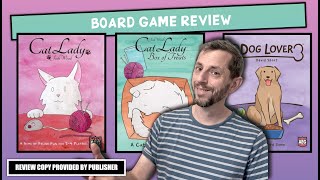
Players who love Cat Lady often gravitate toward its direct sequel, Dog Lover, which shares the same grid drafting foundation while introducing trick cards that let players take differently shaped selections from the grid. Though it adds complexity, Dog Lover appeals to those who found Cat Lady's simplicity appealing but want slightly more tactical depth. Point Salad similarly rewards set collection and open drafting but with a simpler rule set focused on vegetable cards with dual purposes. Sushi Go represents another accessible set collection game with a passing mechanism that creates satisfying chain reactions of card combos. For those drawn to the cozy aesthetic and manageable complexity, Isle of Cats offers a heavier cat-themed alternative with tile placement and pattern building. Finally, Sushi Girl brings back the open drafting pleasure in a slightly more involved package, perfect for players who enjoyed Cat Lady's transparency and want to graduate to something with more moving parts.
What Reviewers Are Saying
"It's so smooth and intuitive. If I recall correctly it's based on a draft system used by Magic gathering players but nonetheless it's something I hadn't seen before in a tabletop game so it feels really fresh."
— Adam in Wales
"The brilliant thing here is that draft an entire column or an entire row. When I take the entire column or the entire row, I put a little marker next to it which means the next player cannot take that row or that column. So you can't just keep taking from the same place over and over again as the grid refills."
— Adam in Wales
"If you're not a cat lover you will still love cat lady because the kittens are so cute. You got to feed the cats in order to get those points, and what I like about it, it's so thematic that you have a spray bottle like you can spray that little cat thing and get it out the way."
— Our Family Plays Games