/pic6035609.png)
Game Info
Year
2022
Players
1-5
Age
14+
Playtime
90 min
Collection
Ratings
Creator Score
Mechanic profile
Not enough video data yet
Vibe profile
Not enough video data yet
Description
Cellulose: A Plant Cell Biology Game is a worker placement game that puts 1-5 players inside a plant cell, where they will compete over limited resources in order to undergo photosynthesis, produce carbohydrates, and build the cell wall. With everyone vying for the same actions, players must time their use of proteins, hormones, and cell component cards in order to diversify their strategies and outplay the competition.
Cellulose is the standalone sequel to Cytosis (2017). It has some of the same DNA, but Cellulose expands familiar game systems, allowing players greater control over available resources, strategic paths, and even game length.
—description from the publisher
Featured Videos


Ask a Rules Question
All mentions
Browse transcript mentions, sentiments, pros/cons, mechanics, topics, quotes, and references.
Total mentions: 8
This page: 8
Sentiment:
pos 7 ·
mix 0 ·
neu 1 ·
neg 0
Showing 1–8 of 8
Video PDuiLeAa4qo
Grant Lyon Listicle at 6:41 sentiment: positive
video_pk 89794 · mention_pk 239101

Click to watch at 6:41 · YouTube ↗
Overall sentiment (raw)
positive
Pros
- Educational without feeling like a chore
- Genuinely fun games that educate
- Interesting gameplay
Cons
none
Thematic elements
- Plant cell biology
- Plant cell
Comparison games
none
Mechanics (from transcript analysis)
- Worker Placement — A worker placement game that takes place within a plant cell.
Video topics + discussion points
No key topics recorded for this video.
Quotes (from this video)
- I'm Grant with Grant's gamerex back with my monthly video on the best games coming to retail uh this is the month of March 20122
- I guarantee I pronounce that wrong but I did my best okay founders of taakan
- You know so you can play you can play how our Health Care system is flawed here in America hey we want to treat patients but we want to make money doing it we don't care if you're healed if we don't make money so do you want to be frustrated by America's Health Care System then play Clinic
- if you've never played flux it is a small card game that is wacky and wild and always changing and that is the point of the game
- so if you're looking for a sort of Stone Age theme uh that involves a bunch of luck but is very accessible to all family members then check out fire and Stone from Pegasus
- it's sort of a murder mystery mixed with an escape room Style game
- this is actually a revised version of a game that came out in 2012 and a lot has changed here it is not the same game that came out in 2012
- they are educational publisher they publish educational games but they don't feel like educational games the whole you know the point of the game is to be a good game and to have a fun game and to have interesting gameplay all while educating you on a particular theme
- I love the community of board games and we help each other find good games
References (from this video)
No references stored for this video.
Video xJeP4MxxJ_I
Meeple University Discussion at 47:05 sentiment: positive
video_pk 88535 · mention_pk 233627

Click to watch at 47:05 · YouTube ↗
Overall sentiment (raw)
Positive
Pros
- Fun game
- Has area control
Cons
none
Thematic elements
Comparison games
none
Mechanics (from transcript analysis)
- Area Control — Has an area control element.
Video topics + discussion points
No key topics recorded for this video.
Quotes (from this video)
- Pantera that was Prototype so I'm able to be bought just taken or whatever a peaceful garden obviously the one that I showed and here is the um the wind farms in Argentina correct correct well not volcano I'd like to probably sorry if I was in Uruguay yes so for on a volcano we just feel like a Harding's game I like to try it still
- nucleum this is also a prototype that I saw this is coming David Torchy's next one yes yes by um by ball and dice so this is one that the same day is actually nuclear but they make it in the alternative world because otherwise you'll probably too controversial for nuclear
- and then the um Star Trek Discovery black alert team assistant yeah that'll be the first Star Trek game in the in the new discovery Universe yep I'll just be um Spore driving all over the place
- and then there's a game called armelo now this there is a video game called amelo and they're making the board game so it'll be exciting I don't know if you play have you played our Melo I haven't actually played I'm a lawyer yet myself have you okay it seems like a good like artwork as well it wasn't on Sega Mega Drive I probably haven't played it
- it seems like a good like artwork as well
References (from this video)
No references stored for this video.
Video pjz1jyUwo9I
Review at 0:06 sentiment: positive
video_pk 72646 · mention_pk 172015
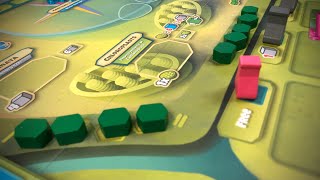
Click to watch at 0:06 · YouTube ↗
Overall sentiment (raw)
positive
Pros
- Great fun
- Nice little solo challenge
- Good points value for cards
- Interesting resource management
Cons
- Can feel expensive to use certain resources
- Gamble on drawing cards didn't pay off
- Loss due to very close scoring/tiebreaker
Thematic elements
- Plant cell biology
- A plant cell
Comparison games
none
Mechanics (from transcript analysis)
- Card Drafting — Players seem to be able to draft cards from a central pool or a display.
- Engine Building — Playing cards that grant ongoing benefits or allow for more efficient actions later in the game.
- Resource conversion — Converting basic resources (like CO2, water, carbohydrates) into other resources or victory points.
- Set Collection — Collecting different types of cards (e.g., enzyme, protein, starch) to play for effects and points.
- Track Advancement — Players advance on tracks such as the central vacuole track for scoring or tie-breaking.
- Worker Placement — Players place 'flasks' on action spots on the board to take actions.
Video topics + discussion points
No key topics recorded for this video.
Quotes (from this video)
- that's six points that's eight points
- wow that was close
- great fun
- well done genius games i like it great fun nice little solo challenge
References (from this video)
No references stored for this video.
Video bn0bvPq7Y70
Rules Teach at 0:06 sentiment: positive
video_pk 72647 · mention_pk 172016
Click to watch at 0:06 · YouTube ↗
Overall sentiment (raw)
positive
Pros
- Educational aspect, learning about plant cell biology.
- Interesting mechanics like enzyme chaining for engine building.
- Fun despite being abstract.
- Solo mode against an AI opponent provides variety.
- Components can be collected for victory points.
Cons
- Can be abstract.
- Costs associated with some actions/cards.
Thematic elements
- Plant cell biology and growth
- Inside a plant cell
Comparison games
- Cytosis: A Cell Biology Game
Mechanics (from transcript analysis)
- Area Majority — The player who contributes the most water to the central vacuole gains an extra flask.
- Engine Building — Players acquire enzyme cards that provide ongoing effects and can be triggered by playing subsequent enzyme cards.
- Player Progression — Growth markers for roots and shoots advance on tracks, unlocking benefits.
- Resource Management — Players collect and spend resources like water, CO2, proteins, carbohydrates, and ATP.
- Set Collection — Collecting water and protein for protein storage vacuoles, or collecting specialization cards.
- Solo opponent AI — The game includes an AI opponent named 'Ivy' driven by a deck of cards and a strategy map.
- Variable Player Powers/Scenarios — Different player sides for the board, specific scenarios (like mangrove or cactus), and AI opponent variations (easy, medium, hard) influence gameplay.
- Worker Placement — Players place 'flasks' (workers) on various spots on the board to perform cell activities.
Video topics + discussion points
No key topics recorded for this video.
Quotes (from this video)
- We're playing Cellulose a plant cell biology game from Genius Games.
- I love Genius Games, Genius Games present us with all sorts of different games, they're kind of these science based games where I always tend to learn loads of stuff.
- Proteins help you do stuff they're like the the fuel for reactions inside the plant cell and these proteins that catalyze reactions are known as enzymes.
- And as this builds up you become more and more effective.
- The abstract nature of the game was mentioned as 'very abstract' but also 'great fun all the same'.
References (from this video)
No references stored for this video.
Video NHRm6H-H13E
Review at 0:33 sentiment: positive
video_pk 70979 · mention_pk 168150
Click to watch at 0:33 · YouTube ↗
Overall sentiment (raw)
positive
Pros
- Engaging worker placement with card play
- Good educational component with science book
- Satisfying combos and engine building
- Interesting balancing act of resources and objectives
- Appreciates the abstract player role
- Cool artwork and components
- Good playtime around 60-90 minutes
- Enjoyed with 2-3 players
Cons
- Solo game is not recommended
- Solo bot lacked real competition
Thematic elements
- Photosynthesis and plant cell biology
- Inside a plant cell
Comparison games
- Lords of Waterdeep
- Viticulture
Mechanics (from transcript analysis)
- Area Majority — Players place water cubes into a central vacuole, competing for majority control to advance on a track and score points, potentially gaining an extra worker.
- Card Drafting — Players can acquire cards from a central display, with costs increasing for more desirable cards. Cards are refreshed at the end of the round.
- Engine Building — Players play enzyme cards (orange) which can be activated later by spending ribosomes (red cubes), creating synergistic effects and combos.
- Set Collection — Players collect specific resources like water cubes and carb cubes to convert into cell wall markers or other components.
- Track Advancement — Players can move markers up or down on tracks representing plant growth (leaves/roots), which can unlock income or grant points.
- Worker Placement — Players place action markers (workers) on board spaces to perform actions. Some spaces allow multiple players if they are different colors, and a neutral worker can also be used.
Video topics + discussion points
No key topics recorded for this video.
Quotes (from this video)
- this is a plant cell biology game
- they kind of make these educational euro games sort of thing
- players are going to be building cell walls collecting water you know activating rna and mitochondria and all this kind of stuff
- the iconography is not too bad once you kind of get into it it's okay
- i really did not really like the solo game especially after playing with players
- worker placement games kind of just a personal thing are better with you know probably aren't that three four maybe five player uh counts
- it's not a really complex game it's right at that middleweight kind of middle euro um you know worker placement game
- i really like work replacement games k-list is one of my all-time favorite games
- you've got the enzyme cards the orange cards that you can make a big old stack of those sometimes if you want and then you can trigger all those
- it's like you're this unseen sort of like mystery wizard behind the cloak and the veil of of you know of what the plant is trying to be
- the mechanics and the science part really really cool
- really fun game great work replacement game hits my sweet spot
- great little kind of educational tool cool artwork cool components i definitely recommend it for just about anybody you know probably like 12 and up something like that
References (from this video)
No references stored for this video.
Video ZU9rwxFUww4
Meeple University Rules Teach at 0:12 sentiment: neutral
video_pk 63994 · mention_pk 157503

Click to watch at 0:12 · YouTube ↗
Overall sentiment (raw)
neutral
Pros
none
Cons
none
Thematic elements
- Plant cell biology
- Plant cell environment / classroom framing
- educational
Comparison games
- Cytosis
Mechanics (from transcript analysis)
- Action markers and spaces — Two types of spaces (large and small); placing markers can block spaces and gray markers are treated specially.
- Card play / hand management — Draw, hold, and play cell component cards with various effects; some cards enable chaining.
- Card types and chaining — Different card types (protein storage, starches, enzymes, pink specializations) with possible chaining of effects.
- Cell Wall building endgame — Progress along the cell wall track; the game ends when the track is completed.
- End of round scoring — Players score points from growth, wall progress, cards, and resources.
- Phase structure of rounds — Rounds consist of Sunrise (income), Daytime (actions), and Evening (resolution).
- Resource Management — Players collect and spend resources (water, CO2, proteins, hormones, ATP, etc.) to take actions.
- Solo play variant — Solo play setup with helper cards.
- Themed action spaces around cell organelles — Actions are themed after plant cell parts (xylem, stomata, chloroplasts, mitochondria, ribosomes, cytoplasm, etc.).
- two-player variant — In two players, each gets four action markers (instead of three) and uses gray markers with special rules.
- Variable Phase Order — Rounds consist of Sunrise (income), Daytime (actions), and Evening (resolution).
- Worker Placement — Players place action markers on the board to resolve actions in each round.
Video topics + discussion points
No key topics recorded for this video.
Quotes (from this video)
- Cellulose is played in rounds and each round is played in three phases: Sunrise, Daytime, and Evening.
- Standalone sequel to Cytosis which allows for more control over some elements of the game.
- Players are plant cell organelles trying to grow their plants as best they can to earn the most health points in this worker placement game.
References (from this video)
No references stored for this video.
Video FEYfW0ZpjOo
Ryan and Bethany Board Game Reviews Review at 0:07 sentiment: positive
video_pk 62320 · mention_pk 154826
Click to watch at 0:07 · YouTube ↗
Overall sentiment (raw)
positive
Pros
- Excellent production quality with chunky components and a thematic score tracker
- Strong engine-building and resource conversion feel; rewarding optimization
- Paced by sunrise/day/night loops, keeps game moving
- Deep card synergy via enzyme cards enabling complex combos
- Educational value; integrates science concepts; optional reading enhances understanding
- Accessible: can be played as a standard worker-placement game without focusing on science
Cons
- The science companion book The Science Behind Cellulose may add complexity and extend setup for some players
- Rulebook and science background might be overwhelming for casual players
Thematic elements
- cell wall construction and cellular processes
- Inside a plant cell; educational biology context
- educational with pragmatic explanations
Comparison games
none
Mechanics (from transcript analysis)
- Card-driven actions — enzyme and other cards provide actions and enable card-based combos
- End-of-round progression / end-game trigger — carbohydrate tokens on the cell wall push the game toward completion
- Engine Building — resources are converted and used to advance tracks and generate points
- Income track / phased play — sunrise/day/night phases; income and replenishment cycle drive pacing
- resource conversion / engine-building — resources are converted and used to advance tracks and generate points
- Resource Management — manage water, CO2, carbohydrates, proteins, and hormones to progress
- Worker Placement — players place pawns on actions to gain resources and trigger effects
Video topics + discussion points
No key topics recorded for this video.
Quotes (from this video)
- the production quality of this game was exactly what i would expect from genius games
- i would play it again i'd play it right now
- it's just a really solid worker placement game
- i absolutely love that and how the player piece is because it's you know plant cell biology
References (from this video)
No references stored for this video.
Video XwRQxYx1CVk
3 Minute Board Games Review at 0:00 sentiment: positive
video_pk 13388 · mention_pk 39255
Click to watch at 0:00 · YouTube ↗
Overall sentiment (raw)
positive
Pros
- Silky smooth pacing with minimal downtime between turns
- Strong integration of biology-driven theme into core mechanics
- Engaging engine-building through enzyme chains and card interactions
- Accessible for a broad audience of gamers and non-gamers
- Notable mini-game of placing water to gain an extra worker adds bite and interaction
- Compact footprint with clear paths to victory
Cons
- Overall design feels safe and sensible; may not surprise seasoned gamers
- Lacks dramatic twists or novel mechanics for players seeking novelty
- Some players may wish for deeper mechanical innovation beyond the theme
Thematic elements
- Biology-inspired engine-building and resource management in a cellular context
- Plant cell environment focusing on growth of branches and roots, with a progressing cell wall
- Theme-driven progression where players influence the cell's growth and resource flow
Comparison games
- Cytosis
- Genotype
Mechanics (from transcript analysis)
- card_management — Four types of cards can be used to unlock actions, draw more cards, and influence endgame scoring.
- cell_wall_building — Carbohydrate tokens are added to the cell wall; completing the wall ends the game on the current turn.
- Cooperative Actions — Enzymes and PSV cards grant effects; some abilities trigger when other cards are played, creating combos.
- first_player_mechanic — The top space yields the first-player marker and allows drawing a card, affecting turn order.
- Multi-Use Cards — Four types of cards can be used to unlock actions, draw more cards, and influence endgame scoring.
- progression_tracks — Advancing along branches and root tracks changes income and unlocks new scoring opportunities.
- Resource Management — Managing resources such as water, CO2, carbohydrates, ATP, proteins, and hormones to perform actions and score points.
- resource_exchange — Carbohydrates can be traded for ATP tokens to enable further actions.
- resource_management — Managing resources such as water, CO2, carbohydrates, ATP, proteins, and hormones to perform actions and score points.
- specialization_and_enzymes — Enzymes and PSV cards grant effects; some abilities trigger when other cards are played, creating combos.
- Track Advancement — Advancing along branches and root tracks changes income and unlocks new scoring opportunities.
- Worker Placement — Players place workers on board spaces to gain benefits; large spaces allow multiple workers per space while smaller spots are limited.
- worker_placement — Players place workers on board spaces to gain benefits; large spaces allow multiple workers per space while smaller spots are limited.
Video topics + discussion points
No key topics recorded for this video.
Quotes (from this video)
- cellulose is a sequel to cytosis, the worker placement game inside an animal cell, this time it's a plant cell but the games share a whole pile of DNA
- it's a silky smooth game that moves at a great Pace
- I was really impressed with how quickly it moved along, there is such very little downtime between turns
- overall a slick well-designed game that leans into its theme really well and could be a staple for just about any group of Gamers
- the best thing about this game is the mini game of placing water in the middle to get the extra worker, it's actually really engaging
- almost all the game is very safe and sensible design work
- asides from the novel theme and the water game it's all very normal resource conversion and worker placement
- genius games have built a great niche with their science Games, check out genotype
- and also the original game in this series cytosis
- cellulose: it's grown on me
References (from this video)
No references stored for this video.
Transcript Navigation
Showing 1–8 of 8