/pic4175159.jpg)































Chai Deep Dive
What the Community Thinks About Chai
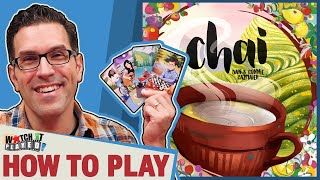
Chai is a beloved entry point into modern board gaming that has captured the hearts of casual players and strategy enthusiasts alike. The game centers on the cozy, accessible theme of running a tea merchant shop, and reviewers consistently praise how the theme and mechanics work in harmony. Rather than feeling like an abstract puzzle wrapped in window dressing, Chai makes players feel like they are genuinely building tea blends and fulfilling customer orders. The game appeals broadly because it manages to be both simple to teach and deep enough to reward strategic play across multiple sessions.
Core Mechanics That Define Chai
Set Collection and Order Fulfillment
At its heart, Chai is about gathering tea flavors and pantry items to complete customer orders. Reviewers note that this order fulfillment mechanic forms the satisfying core of the game. Players collect specific combinations of ingredients to match what customers are requesting, then place those ingredients into shared teacups to receive tip tokens. The elegance lies in the fact that players can pursue multiple customer orders throughout the game, and there is real tension in deciding which orders to prioritize and when to complete them. This creates a lightweight puzzle where every action feels purposeful.
Market Mechanics and Tile Drafting
The market board stands out as one of the most novel and praised mechanics in modern board gaming. Rather than simple card selection, the market uses physical tiles that must be purchased in groups based on adjacency and pricing. When players select a tile, they take all connected matching tiles for the cost of the rightmost one in the group. This creates beautiful spatial puzzles where players can chain together purchases and slide tiles down to create new groupings, reminiscent of tile-matching video games brought to a tabletop. The drafting system in the pantry, by contrast, offers pure selection of three items either from display or blind from a bag, giving players different ways to approach ingredient gathering.
The Chai Experience
Gorgeous, Tactile Components
Reviewers consistently emphasize the sensory pleasure of playing Chai. The production quality is exceptional, with upgraded metal coins and chunky tiles that feel substantial in hand. The teacups themselves are beautiful ceramic pieces that serve both mechanical and aesthetic purposes. The artwork on the customer cards showcases remarkable diversity, and the overall visual presentation creates a warm, inviting aesthetic. Players comment that the components feel good to move and manipulate, which elevates the entire experience. This attention to tactile and visual detail makes Chai feel premium without requiring overwhelming complexity.
Lighthearted and Welcoming Accessibility
Chai maintains a breezy, cheerful tone that makes it accessible to players of all experience levels. New players can learn the rules quickly and play competitively against experienced players without feeling outmatched. The game does not require heavy spatial reasoning or familiarity with modern mechanics to enjoy. It serves as an excellent gateway for people who might not think of themselves as board gamers, particularly those drawn to the tea theme. The theme itself feels thematic and integrated, not pasted on, which matters for immersion and retention of the rules.
What Makes Chai Stand Out
The Market Tetris Mechanic
The market board with its sliding tile mechanism is genuinely novel in board gaming. Reviewers had never seen this kind of spatial purchasing mechanic before Chai, and it functions both as a clever system and a source of satisfying strategy. Players must think ahead about how removing a tile will shift the board and whether that creates better combinations for future purchases. This single mechanic elevates Chai above typical worker placement or drafting games, giving it a distinctive identity at the table.
Beautiful but Balanced Simplicity
Chai manages the difficult balance of being easy to teach while remaining engaging across multiple plays. Players encounter no trap where the game reveals itself to be boring after the first play. Instead, the interplay between player order, customer availability, and tile configuration creates enough variety that strategies can shift. The game teaches newcomers and rewards repeat players, making it a genuine bridge between casual and hobby gaming.
Potential Drawbacks
Light Depth for Hardcore Strategy Players
For players seeking heavy economic games or deep engine-building, Chai may feel too lightweight. One reviewer explicitly stated the game is too basic and lacks the complexity that some gamers expect from hobby titles. The absence of engine building means seasoned players see the full strategic landscape relatively quickly. While the market mechanic and customer selection create meaningful decisions, the overall scope feels intimate and constrained compared to games like Splendor or Viticulture. Those seeking months of evolving tactics will find Chai satisfying for shorter bursts rather than as a long-term strategic obsession.
Table Footprint and Setup Demands
Despite its friendly facade, Chai is actually a table hog. The market board, pantry board, customer pool, ability cards, and individual player boards require substantial space. One reviewer noted that for a game marketed toward families and casual gamers, the setup and table requirements feel at odds with that positioning. The game comes with a hobby-gamer price tag and presentation, which may set expectations for scope beyond what the actual play experience delivers. Players with limited table space or those seeking something truly portable may find logistics challenging.
If You Enjoy Chai
If Chai resonates with you, consider exploring Splendor for a related order fulfillment and resource management experience with more engine-building depth. Viticulture offers similar themes of creating something beautiful and managing production with more complexity. For lighter, beautiful games with simple rules, Santorini provides elegant spatial gameplay. Chai Tea for Two delivers a worker-placement variant on the original concept with more involved mechanics for two-player sessions. All these games reward the same appreciation for thematic coherence, accessible rules, and production quality that makes Chai special.
What Reviewers Are Saying
"The market board with its tetris puzzle for selecting flavor tiles is just clever and novel, and the way it all slides down to reveal new possibilities is really rewarding."
— Ryan and Bethany Board Game Reviews
"Chai is a beautiful looking lightweight drafting game with a family friendly theme where the idea of running a tea shop is cute and combining all the ingredients together to fulfill orders keeps the theme and mechanics nicely linked together."
— 3 Minute Board Games
"The components feel good, the game is light and fun, it's gorgeous to look at, and I can always play it with someone who normally won't play games. I don't have to convince them. It just works."
— Ryan and Bethany Board Game Reviews