/pic5921448.jpg)
The initial quakes were only minor tremors, but as the land began to unravel, so did our sense of security. We watched the cliffs of Hytazch fall into the sea. Mighty trees of old, swallowed up by the caverns below. As the waters rose, a great roar was heard across the plains. This was no cry of disbelief or heartache, but of jubilance. Songs began to fill the air as our once peaceful hosts, now readied themselves for war. Suddenly on the horizon, what appeared as huge bolts of energy shoot out into the depths of space, before disappearing again. Despite the inevitable shock wave heading our way, the clans continued to cheer as they made haste towards the origin of the blaze. What could cause such elation? Why abandon caution in favour of chaos? Had we missed something - some crucial misunderstanding of this planet and its inhabitants? Upon reaching the site, we were immediately plunged into combat. Across the landscape lay six massive structures, towering over the forces fighting below. They seemed to pulse and flicker with a golden haze. Could these be the ancient relics the Oxataya spoke of? There is so much we still do not understand, but we cannot concede to indecision. Will we stay and fight, or retreat back to Moontide?
In Circadians: Chaos Order, players take on the role of 1 of 6 asymmetric factions. Each faction has their own means of winning the game, unique leaders, attribute cards and other abilities.
—description from the publisher



- strong asymmetry and faction variety
- engaging area control with relic mechanics
- clear multiple win paths and variability
- warfare, control of relic spaces, and faction-specific strategies
- asymmetric factions competing in an area-control environment with relics
- factions with unique leaders and abilities influence the evolving battle for relics
- Paladins of the West Kingdom
- Wayfarers
Mechanics (from transcript analysis)
- Area Control — Relic spaces are controlled by a single player; battles resolve control over spaces.
- area_control — Relic spaces are controlled by a single player; battles resolve control over spaces.
- Asymmetric Mechanics — Six factions with unique leaders and abilities drive different strategies.
- asymmetric_factions — Six factions with unique leaders and abilities drive different strategies.
- battles_and_negotiation — Battles occur to control spaces; players negotiate and maneuver for advantage.
- faction_tips_booklets — Two-sided booklets provide tips and counters for each faction.
- multiple_win_conditions — Each faction can pursue different paths to victory; fame is a common track.
- Negotiation — Battles occur to control spaces; players negotiate and maneuver for advantage.
Video topics + discussion points
Quotes (from this video)
- Tyler's number one game of all time is Paladins of the West Kingdom
- wayfarers was close absolutely fantastic
- the hidden aspect of the displacement
References (from this video)
- Interesting change of direction for the publisher.
- Enjoyed the first game (Circadians: First Light) quite a lot.
- Flies under the radar for the publisher.
- Six alien factions battling for control of the planet.
- Planet Rē
- Kemet
- Crocodile
- Space Hawk
- Cuba Libre
Mechanics (from transcript analysis)
- Area Control — Six alien factions battle for control of the planet.
- Asymmetric powers — Each faction has their own asymmetric power, unique leader, attribute cards, and other abilities.
Video topics + discussion points
Quotes (from this video)
- i love when people describe games with a good mashup that will get me tantalized about a game
- i've never felt more like a puppet master pulling strings from behind the scenes than in this game
- this game perfectly recreates the feel of the minigame within the video game
- the games inside the video game are good enough to be games
- it's a big box social deduction game it claims to be
- this game has all the euro mechanisms including hand and resource management worker placement set collection and area majority which all impressively fit together into a smooth playing experience that seamlessly ties into the theme of crafting the historic terracotta army
- it's inviting and it's the coziest looking game out there
- dragons aren't just using their fire breath just to destroy cities like they've gotten a bad rap over the years here they're actually heating your coffee
References (from this video)

- Highly asymmetrical gameplay
- Dynamic player interaction
- Clever design with multiple win conditions
- Engaging even in defeat
- May require multiple plays to fully understand
- Not immediately appealing if not brilliant on the first play
- Asymmetrical factions
- Game of Thrones: The Board Game
Mechanics (from transcript analysis)
- Area Control — Players compete to control relics on the map, with one relic removed each round.
- asymmetrical factions — Each player controls a faction with a unique win condition.
- Negotiation — Players must negotiate and form temporary alliances.
- timed rounds — The game features a timed element where relics are removed each round, leading to a final round with one relic.
Video topics + discussion points
Quotes (from this video)
- You know, you know what's not a grumpy Lance for the rest of it and then I'm like you know what was not a grumpy
- When you have people that like actively work against the grain to make it less fun that just drives me absolutely crazy
- It's just like you you you you contact me you tell me to do this or else you can't do this so I do this and you still can't do what you told me but apparently they must have got a hold of them or something
- The whole thing was is that you had you had your order tokens where and they looked all they all faced down they all faced down and so you talk to people it's like look you need to like we need to work on like you know like sh up the yeah Shoring up this
- I don't know man what did I do where that happen recently
- You know it's like if look you know I'll give you a break or once you know you know we can try to like send this stuff out to you but you got to pay the you obviously trying to fleece me or or like it was your mistake you screwed up and you're looking for a way to try to like make it my fault so then like I'll send you some I'll send you something on the cheap
- I just don't care about the animals I mean I kind of did at at the beginning like oh wow there's so many cool different animals but there really that many different yeah yeah they're kind of almost there's a lot of the same stuff but it's starting slow then going yeah you got slow on this made a bunch of unique buildings which are that's not that's not a good strategy yeah unique buildings are not good because you only get the one bump from them when you buy them and never and never again
- It just it's it's it's very Vivid In My Memory because and it was like a couple of years ago but it it pisses me off that I that it happened
- You know it's like when um other people are just like oh yeah something came up what what okay you know just like and it's always like something that just you know doesn't seem I mean we're adults you just say okay fine I understand but it's just like you know it's like really you you you just found out your wife was going to be out of town going to a concert with her friends and and it's just like you know it's like you know I just and what do I know I mean my wife is very understanding about like my time and I say I'm going to go do this and she's like that's fine go ahead you know I mean like and I don't I can't speak to anybody else's you really sh that just drives me crazy and what really drives me crazy is that like when the person that is actually like in charge of the person the referee the game master the dungeon master when they're the flake and when they're like it's like when you we can't pin you down to a time and of you showing up and being available on a regular basis it like we can't play without you if you're the Lynch pin dude
- I would have rather he had just done his mind Hunter yeah sure I mean then I mean I don't I mean
- it's a pirating game and it's a choose your an adventure game that's pretty good
- my most favorite game of uh of space space base was when I was at the in California at the with the AG folks and we and we we busted out two copies and put them together and we had a game of uh 12 people crazy
- I don't like the the second expansion I think it adds Pointless Stuff to it
- man that chaos order game it's like good about it it's like every single person's little um your your faction has its own way of winning it's totally asymmetrical
- I ruined a book club with playing diplomacy
- Game of Thrones is good Kabuki
- I was taken aback by the massive amounts of intrigue that I didn't enjoy
- Chinatown is a fantastic game
- everything's binding you can't undo something
- Santiago I love Santiago
- that one's not binding either right no it is not binding at all you have to trust that people will give you the water
- Hegemony so if it if it's it's something you negotiate that can be fulfilled done right that now it's binding anything promised in the future is is not is not yeah
- the number one hot podcast in Hobbies was a knitting podcast
- the NFL is liable for 4.7 billion in Sunday Ticket
- the lawsuit claimed the league broke Anti-Trust laws by selling the package at an inflated price
- Deadpool and Wolverine oh Deadpool yeah
- Twisters comes out July 19th
- Inside out two anybody watch that
- The Right Stuff is a is a classic
- money in the bank you suspend a briefcase above the ring and 10 wrestlers fight it out for the briefcase
- McMahon still part of w no he's gone he's G he's gone yeah something happened with him he got disgraced or something
- well yeah he he he had arrested for sex trafficking so yeah
- everybody said oh it must be awesome working in board games no it's it's stressful and it is tough and it is I have I like every other job on the planet yeah it's just get over yourself
- hegemony so if it if it's it's something you negotiate that can be fulfilled done right that now it's binding anything promised in the future is is not is not
- I was taken aback by the uh massive amounts of intrigue that I didn't enjoy
- it literally took him like 60 70 hours to make and he said it just wasn't worth it because he wasn't getting paid for it
- I don't know man we we there was all kinds of that's also a game that had a this was my early days of gaming with my Dallas game group so
- I think patreon is really the the way of the future for that that kind of stuff
- YouTube is killing this Channel or this isn't working anymore or whatever
- The subscribers say the league restricted compensation by offering competition by offering Sunday Ticket only on a satellite provider so you basically had to buy satellite to get the Sunday Ticket
- I just don't care about the animals I mean I kind of did at at the beginning like oh wow there's so many cool different animals but there really that many different
- It's not that many yeah I don't know you know one person tells you out of like what 10,000 miss the booth
- so many companies are sending stuff so early to to people that people like it used to be that that the first time you you would see the game
- 90% of the people who came up were like big fans of the video game and and you know they're they're board gamers they're didn't even know the game existed
- I don't know what the hell the game is hold on let me see I can figure
- The problem is is David Fincher always has like other stuff going on it's the same reason why mind Hunter like ended which was like supposed to be five seasons long and they only got like two
- Enjoy the birthday of your country by blowing a piece of it up
- Vince McMahon is like million pages long
- Money in the bank you suspend a briefcase above the ring and 10 wrestlers fight it out for the briefcase need to need to get a ladder need to climb the ladder you need to grab the the the the briefcase inside the briefcase is a contract that guarantees a chance to to to to wrestle the champion and you can turn it in at any time you want
References (from this video)
- Really like Circadians First Light.
- Don't know why I back a asymmetrical war game.
- asymmetrical war game
- Circadians: First Light
Mechanics (from transcript analysis)
- Asymmetrical — asymmetrical war game
Video topics + discussion points
Quotes (from this video)
- So many games and we can't play them all because we're not robots. We have to eat and sleep and do other things as well.
- I really enjoyed the concept of this. It's a co-op game. This we got even before I started going to say hating co-op game, but understanding they weren't for me.
- It sounds okay, but it also big and we don't need it.
- This is actually not sad. It's actually a positive thing getting these out of the house so we can get more games into the...
References (from this video)

- Sounds amazing
- Asymmetric factions with unique abilities and winning combinations
- Nobody knows it exists
- Seems too heavy (120-240 minutes)
Mechanics (from transcript analysis)
- asymmetric factions — Factions with their own abilities and winning combinations.
- Trick-Taking — Mentioned in the context of trying to get answers about game mechanics.
Video topics + discussion points
Quotes (from this video)
- Factions that win that have their own abilities that have their own winning combinations.
- It's too heavy for me.
- Yeah, it sounds absolutely amazing.
- Yep. And nobody knows it exists.
- I played Circadian First Light and I liked it.
- Scrolling through this thing with you said with the 300 responses and the people arguing about this game and I s there and it's like it's so amusing. The best part about it is you have these people arguing about Marxism and and uh and democratic socialism everything like that and then you have the people that are just trying vainly to get answers about the mechanics of the game. How does this work with the tricks when you do the thing? And it's just people going back and forth about, you know, screaming about uh, you know, like like how they're going to fix the world or whatever, which I I get it, you know, just it's it's who doesn't do that? But that's that's the part it it reminds me of.
- I watched in disbelief as businessmen voted for a repeat bankrupt, laborers for a boss infamous for stiffing his workers. Evangel evangelicals for a serial adulter for an admitted sexual assaulter. Patriots for a draft dodger who would sell his country's secrets for trivial gain. educated men for an ignoramus. But they did so with fierce gladness in their hearts because what their chosen one had done was open Pandora's box. Yes, the old one filled with the ancient calamities of race hatred and rage and cruelty and blood lust and infinite greed. and tell them that these things were the remedy for all of their grievances, that all their anger was justified, and most important, none of what ailed them was their own fault or ever had been.
- That is like the best paragraph I've ever uh Greg Isles in his book Southern Man.
- That is that is one of the that is uh yeah that was that is one of that is poetry.
- I played it and I could not remember anything. And that's it was such a quarter eater because they would like you'd be dead and it would like make you repeat the the move again and be like, 'Okay, is it left or right or up or down?' And you hit the button.
- No, it was free play, but it was like I played it and I'm like, 'Man, I really loved this back in the day and now I don't like it at all.'
- Everything but the ninjas is easy. The ninjas were like the the the And the ninjas just went on and on and on. You had to defeat like a thousand of them. It felt like
- Happy birthday, Bruno.
- It's just a It's just a It's just a virtual reality pinball.
- The elbow back. It was the most powerful move in the game.
References (from this video)

- quite excited
- great game
- Dune
Mechanics (from transcript analysis)
- Area Control — Kind of has some flavors of OG Dune.
Video topics + discussion points
Quotes (from this video)
- in my opinion is the better game between Champions of Midgard and Reavers of Midgard.
- I have a hand in the creation of you know, I mean, it's close to 100 games, you know, between all the stuff that TMG published and all the stuff Grey Fox has published.
- It's just it's it's they're they're trying to Like what's it cost for a WrestleMania?
- I literally thought I was going to have to throw down.
- When I die, it's going to be because I was sarcastic or mouthy to the wrong person.
- My favorite By the way, it is Jack Nicholson's birthday today. He is 89 years old.
- And then, you know, you get to the end of the movie, it's like, 'Oh my god, I have watched something.'
- You can’t handle the truth.
- We're going to use you as the We're going to use you as the decoy.
- The thing that always gets me is when Gandalf comes over the mountain.
- This is the best image I could get for this scene.
- I know, but I I feel like it's like I I'm I'm stumbling upon the truth of the situation.
- What I think this this what this administration is doing has nothing to do with anything.
- I mean, it's like, you know, my kids will never grow up in a world where they can't just turn on whatever they want to watch at any given time.
- It's like, you know, we had landlines. We had...
- Don't don't trust it. 100% don't trust it.
- Do you think that's like the entirety of all the heavy gamers in the country?
- For yeah, 37,000 Nobody's going to and and how many of those are they're never going to play it?
- It's like you know, because they And that and it's like they'll cut they'll do super short cuts to commercial. And when they come back, they'll just recap the last minute or so that you've watched.
- I mean, was that show actually legit, though?
- He's like, "What is this? Beethoven's piano? I'll give you $100."
- So, the only reason I actually And this is I'm I'm probably wrong here, but I all I always feel like the Antiques Roadshow is more real because of the fact that it's like what Cuz wasn't it on PBS to start with?
- I mean, once we whitebeard out and go away, like I think I think physical media stuff like that will not be
- It's like, okay, you buy it's like you pay you pay $25 for a pack of these like digital cards. They give you then it's like, oh, and it's completely random. Yeah, I'm sure it's [ __ ] random.
References (from this video)
Mechanics (from transcript analysis)
Video topics + discussion points
Quotes (from this video)
- it's the sequel to first light
- it's a very very different game
- this is circadian's chaos order
- it's highly interactive
References (from this video)
- High degree of interactivity and player agency through pricing and negotiations.
- Strong asymmetry between factions, offering robust replayability.
- Relic-driven endgame creates tension and multiple routes to victory.
- Foundations provide meaningful, permanent upgrades throughout the game.
- Engaging combat system with tactical depth and card-based decisions.
- Solo mode is not currently available; potential future expansion but not present now.
- Game length and complexity can lead to a high cognitive load and long play sessions.
- Power struggles between asymmetric factions over relics; multi-path victory conditions
- Planet with six relic regions after an earthquake; relics of immense power rise and fracture relations between factions
- Dudes on a map; highly asymmetric factions with distinct goals
- Risk
- Circadian First Light
Mechanics (from transcript analysis)
- Combat wheel and battles — Combat is resolved region by region using a combat wheel where players reveal strength, attack, and shields; cards can modify outcomes; weak and strong interactions determine who survives in a region.
- Fame tracks and faction-specific win conditions — Each faction has a fame track; reaching the end of the track causes an immediate win for that faction. There is also a global relic-based win condition.
- Foundations and permanent abilities — Foundations give permanent abilities when built. They can be gem-locked and provide ongoing bonuses; foundations unlock new capabilities for future rounds.
- Income — At the end of each round, players gain income based on buildings and controlled regions. If a faction reaches the end of its fame track, it can flip an attribute to upgrade, changing future interactions.
- Income, relics phase, and attribute flips — At the end of each round, players gain income based on buildings and controlled regions. If a faction reaches the end of its fame track, it can flip an attribute to upgrade, changing future interactions.
- Intel cards — Circadians own intel cards that can be earned and used to influence incomes, regions, and attribute flips; these cards interact with other factions and provide advantages.
- Leaders, fighters, and recruitment — Each faction has leaders and fighters; recruitment points determine how many fighters/leaders can be deployed from the base to the map, with special rules for some factions.
- Movement and pinning — Units move across regions with movement points; stacking and pinning rules restrict how many units can pass and require leaving behind as many units as the opponent has if moving through a region.
- Pricing phase — Actions in the research area are priced by players with energy gems; the top price determines who can take the action for free, and others may pay to take it as well. There is also an auxiliary action that can be bought later with gems or energy.
- Relic regions and relic check — There are six relic regions; controlling all relics yields a win. If no one controls all relics by round end, the relic being contested in that round is claimed by the controller of the relevant region and provides research benefits.
- Resource economy and buildings — Two currencies exist: energy (main currency) and gems (luxury). Actions cost energy/gems; buildings and outposts generate income and unlock further actions.
- Resource Management — Two currencies exist: energy (main currency) and gems (luxury). Actions cost energy/gems; buildings and outposts generate income and unlock further actions.
- Terrain and map layout — Movement is constrained by terrain (mountains, lakes). Tunnels connect regions, and some regions (swamps) interact with specific factions. Outposts and bases influence reach.
Video topics + discussion points
Quotes (from this video)
- it's the sequel to first light
- it's a very very different game
- this is circadian's chaos order
- it's highly interactive
References (from this video)

- faction warfare with relics and fame as win conditions
- set among the different factions within the circadians universe
- asymmetrical tactical war game
Mechanics (from transcript analysis)
- build phase — Players can build foundations or buildings on controlled hexes; some tiles may have gem locks that increase costs.
- casualties resolution — Casualties are determined by attack/defense icons and dice results; leaders can be removed and buildings destroyed.
- circadians drop ship — Circadians replace a base with a drop ship that can move units onto the ship and drop them onto adjacent hexes, and can harvest nearby hexes.
- Combat wheel — Combat is resolved with a combat wheel, combining wheel results with tactics cards, and possibly a wedge that imposes a gem cost to roll.
- Harvest phase — Harvest yields energy and gems; production spaces grant resources, and multiple icons must be used on different gears.
- Income — Income is counted from hex control; relics get removed or awarded each round, influencing victory conditions.
- income and relics — Income is counted from hex control; relics get removed or awarded each round, influencing victory conditions.
- morale and intel tokens — Morale tokens grant bonuses and can influence combat; intel cards can affect future battles and give temporary advantages.
- move phase — Movement uses movement points to relocate units; there are numerous restrictions (mountains, lakes, bases) and pinning mechanics.
- pricing tokens — Each player has six pricing tokens used to set the price and turn order for actions in the next five phases; tokens can be in hand or in a vault.
- Recruit phase — Recruit points move fighters to the board; leaders can be deployed to base, with some factions having fast-track options.
- research tracks — Five research tracks indicate how strong each action will be; moving up on tracks costs resources and can be gated by gems.
- set prices phase — During the five priced phases, players resolve costs and determine turn order for actions by placing pricing tokens.
Video topics + discussion points
Quotes (from this video)
- circadian's chaos order is an asymmetrical tactical war game for two to five players with a euro style engine set among the different factions within the circadians universe
- chaos order is played in a maximum of six rounds
- we'll be teaching you how to play circadian's chaos order
References (from this video)

- diverse play styles
- stunning thematic presentation
- intimidating learning curve
- asymmetric factions with grand conflict
- cataclysmic upheaval across a fractured world
- epic, lore-rich confrontation
- Twilight Imperium
Mechanics (from transcript analysis)
- asymmetric factions — Each faction has its own path to victory and unique abilities.
- leader cards and attributes — Distinct leaders grant different advantages.
- Once-Per-Game Abilities — Factions leverage unique abilities to swing outcomes.
- special ability utilization — Factions leverage unique abilities to swing outcomes.
Video topics + discussion points
Quotes (from this video)
- this game is so fun and it's really easy to learn how to play
- adorable robot minis
- rich narrative with intuitive yet unique game mechanisms making every game a new adventure
- i love role play i can't wait for this campaign-style game
- beautiful and clean abstract game
- epic cataclysm that shakes the foundations of the entire circadians world
- secret personality with specific victory conditions
- the only thing i love more than somewhat abstract 3d worker placement is something else
References (from this video)

- interesting mashup of genres with Euro backbone
- asymmetry and tech-track elements work well
- long setup and heavier play; difficult to run with larger groups
Mechanics (from transcript analysis)
Video topics + discussion points
Quotes (from this video)
- review is more of a snapshot of a game in time than something that will last forever
- Cult of the new we get a new game in from Kickstarter... we want to play this
- it's evergreen for us probably like Ultimate Railroads
- the app integration in Return to Dark Tower is probably the best board game app I've seen
- Return to Dark Tower... the toy factor is strong, but the new expansion Covenant didn't change how I feel about the base game
References (from this video)
- Euro game with high player interaction and conflict
- Asymmetric character abilities create varied gameplay
- Multiple victory paths increase replayability
- Good for euro game lovers who find typical euros boring due to low interaction
- Requires comfort with conflict and direct interaction
- Territorial control and conflict
- Abstract sci-fi/fantasy
- Mechanical
Mechanics (from transcript analysis)
- asymmetric characters — Each player has different character abilities
- Euro-conflict hybrid — Combines Euro game mechanics with direct conflict
- Multiple victory conditions — Various ways to achieve victory
- Territorial control — Fight for control of territories and towers
- Variable boards — Each player has board with special powers working differently
Video topics + discussion points
Quotes (from this video)
- we each gonna present to you five games we have almost never talked about
- really nice filler game for the whole family
- I think the best rolling right cover I've ever seen
- this is one of the most narrative driven War Games I've ever played
- very cinematic is the word I'm looking for
- one of the first tens I gave to a game ever
- it's actually a different game altogether it's absolutely different game except name is the same
- Super stressful but in a good way
- I get ticket Drive vibes from it but like next level
- this is the one you'd like the most because you don't have to play with me because it's a solo game
- if you like Euro games but find them boring because there's not a lot of interaction that's me then this might be for you
- the writing here is very good very good I mean sleeping God's level of good if not better
- very accessible it's very colorful it has nice components
References (from this video)

Mechanics (from transcript analysis)
Video topics + discussion points
Quotes (from this video)
- it's a beautiful kind of story
- you need to play with the right group
- it's not cute
- it's like comfort food games
- the rules are simple
- oh my god it's so good
- it's a ramp... chaos
- this is an easy one to just flick some discs around
References (from this video)
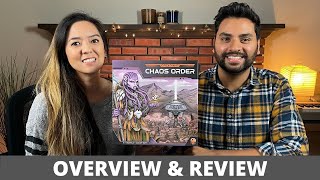
Mechanics (from transcript analysis)
Video topics + discussion points
Quotes (from this video)
- This game is a long heavy game
- You are never fully out of the game
- The energy economy is super interesting
- This is a combat heavy game
- I hate this combat die
- The asymmetry is excellent
- Engrossing and very long
References (from this video)
- Engrossing and deeply strategic with strong asymmetry
- Relic system creates meaningful late-game tension and decision points
- Energy economy and action-pricing mechanic is conceptually clever and influential on pacing
- Diverse faction design yields high replayability and varied strategies
- Combat system with cards and dials offers tactile, tactical depth
- Very long games with potential for significant analysis paralysis
- Steep learning curve due to asymmetry and intertwined mechanics
- Combat dice can introduce frustrating randomness and disrupt meticulously planned turns
- Not ideal for casual players; best with a dedicated group and time commitment
- Asymmetric faction warfare, relic-driven conquest, and faction-specific asymmetrical capabilities on unique boards.
- A fantasy land where six rival factions contend for control of relics, territory, and influence; asymmetry drives location, power, and victory paths.
- Emergent, strategic conquest with heavy emphasis on battle, territory control, and relic-driven endgames.
- Root
- Scythe
- Terra Mystica
- Gaia Project
Mechanics (from transcript analysis)
- asymmetric faction boards — Each faction has a unique board and leader abilities, shaping distinct playstyles and strategic options.
- combat system with dials and combat cards — Battles are resolved with adjustable dials (strength, attack, defense) and combat cards that modify outcomes; dice can introduce randomness via a combat die.
- foundations and buildings — Buildings are placed on hexes atop foundations; foundations may grant bonuses, and buildings provide ongoing effects or end-round benefits.
- movement with pinning — Movement is constrained by a 'pinning' rule, where entering a hex with enemies forces leaving behind a number of troops equal to the opponent's force, slowing advances.
- pricing/action auction — At the start of each round, players price actions with tokens; priced actions are more or less available to others, shaping round strategy and energy economy.
- recruit and leaders — Troop recruitment uses points; leaders are stronger units with unique abilities that can shift combat efficacy.
- relic control and endgame conditions — Holding relics contributes to endgame victory; relics incentivize aggression and strategic timing to maximize control at round ends.
- resources: energy and crystals — Two primary resources used to pay actions and unlock abilities; energy is the workhorse resource, crystals unlock locked upgrades on boards.
- tech trees / action tracks — Actions are arranged on tracks; advancing along a track unlocks more powerful actions and rewards, driving long-term planning.
Video topics + discussion points
Quotes (from this video)
- This game is a long heavy game
- You are never fully out of the game
- The energy economy is super interesting
- This is a combat heavy game
- I hate this combat die
- The asymmetry is excellent
- Engrossing and very long