/pic570518.jpg)








Claustrophobia Deep Dive
What the Community Thinks About Claustrophobia
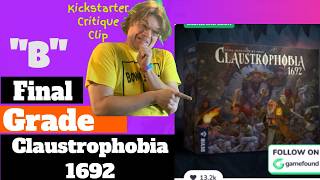
Claustrophobia has earned consistent praise from the tabletop gaming community as one of the finest two-player dungeon crawl experiences available. Reviewers across multiple channels award it top honors: Board Game Coffee gave it their seal of approval with an enthusiastic endorsement, while Board Game Bollocks ranked it among their favorite two-player games. The game's reputation has driven it into the hands of serious gaming partnerships, with some players taking entire days off just to play it repeatedly. What emerges from these reviews is a clear picture of a game that transcends the typical dungeon crawler formula, offering instead a tense, predatory asymmetric struggle that favors neither side.
Core Mechanics That Define Claustrophobia
Dice Allocation and Action Economy
At the heart of Claustrophobia lies a dice-driven action system where players roll dice and allocate them to different actions on their player boards. This mechanic creates a moment-to-moment tension: each die spent on movement is a die not spent on defense, each die used for an attack is a die withheld from survival. Reviewers highlight this as the game's mechanical backbone, noting that the system creates meaningful choices without overwhelming complexity. The action economy favors neither player inherently, allowing for competitive balance that keeps both sides engaged throughout the struggle beneath the catacombs of New Jerusalem.
Asymmetric Two-Player Combat
One player commands the small band of human Redeemers and condemned warriors pushing deeper into the darkness, while the other controls the demon swarm hunting from the shadows. This asymmetry fundamentally reshapes how players approach the game. As Watch It Played's Rodney Smith explains, one player pilots the group of heroes while the other controls the monsters trying to kill them. This is not cooperation pretending to be conflict; it is genuine opposition where victory means the other player's defeat. The competitive dungeon crawl is rare in tabletop gaming, making Claustrophobia's design particularly distinctive for players accustomed to cooperative experiences.
The Claustrophobia Experience
Death by a Thousand Cuts
The game's arc creates a narrative of human desperation. Heroes begin strong but grow progressively weaker as they descend deeper into the catacombs. Board Game Bollocks describes this progression as a death-by-a-thousand-cuts dynamic, where heroes do not face a single catastrophic defeat but rather accumulate damage and exhaustion until they can no longer survive. This creates an emotional shape to each game: early confidence giving way to mounting pressure, then desperation as survival becomes the only remaining objective. The demon player, by contrast, grows in strength relative to their foes, creating a seesaw of dominance that rewards tactical flexibility and punishes overcommitment.
Chess-Like Exploitation
Multiple reviewers compare Claustrophobia to chess. What they identify is a game where superior positioning and board awareness directly translate to victory. Board Game Coffee note it is almost chess-matchy in the sense that your opponent can exploit your mistakes. This is not about randomness forgiving poor play. A hero player who leaves a corridor undefended or commits to an attack without sufficient support will find their opponent mercilessly punishing that error. The game rewards players who study their opponent's position, anticipate threats, and leave no openings for exploitation. For competitive players, this creates a satisfying strategic depth where victory feels earned rather than lucky.
What Makes Claustrophobia Stand Out
Truly Balanced Asymmetry
Unlike many asymmetric games that tilt toward one side once players understand optimal play, Claustrophobia achieves genuine balance. Board Game Coffee report from personal experience that, unlike some other crawlers, this feels fair, with their win record landing close to an even split across dozens of plays. This balance emerges not from complexity but from mechanical elegance: each side has distinct tools that counter the other's strengths. The human player's ability to move and focus firepower checks the demon player's numbers. The demon player's mobility and reinforcements check the human player's durability. This equilibrium is rare enough that reviewers specifically call it out as a defining achievement.
A Game for Dedicated Partnerships
Claustrophobia belongs to a small category of games designed exclusively for two players, and reviewers celebrate this focus. As Watch It Played's Rodney Smith puts it, the game is specifically designed for two players and that is the only way to play it. This singular focus allows every design decision to serve the two-player experience. There are no compromises for scalability, no dummy players, no complicated rules for different player counts. For two people wanting a game they can return to again and again, learning its subtleties and finding new angles of attack, Claustrophobia offers a focused, deep experience that rewards mastery.
Potential Drawbacks
Strict Two-Player Requirement
The game's greatest strength becomes a limitation for groups larger than two. Many gamers own extensive collections designed for flexible player counts, and Claustrophobia's refusal to accommodate larger groups restricts its utility. This means purchase decisions rest entirely on how often a gamer will find themselves with a single opponent and the time to devote to multiple plays. For casual collectors or groups that rotate through participants, this represents a real disadvantage.
Learning Curve and Aggressive Competition
The game's depth emerges through play, but that depth is pursued through direct opposition. A beginning hero player faces an experienced demon player who knows exactly where vulnerabilities exist and will exploit them mercilessly. Board Game Coffee describe moments where overconfidence led to swift, decisive losses. The game does not provide catch-up mechanics or rubber-banding to let an inferior player stay competitive. Players must be willing to lose while they learn, accepting that their opponent will take full advantage of their mistakes. This creates a high engagement ceiling but a steep entry path for new players joining an experienced opponent.
If You Enjoy Claustrophobia
Reviewers situate Claustrophobia alongside other competitive dungeon crawlers and asymmetric games. Board Game Bollocks specifically mentions Descent and Imperial Assault as games with similar aesthetics but different mechanics, noting that Claustrophobia offers a purer two-player experience than either. Those who appreciate tactical positioning games like Memoir 44 or deduction-heavy asymmetric games like 7 Wonders Duel will find similar strategic satisfaction. The closest spiritual cousin may be Hive, another two-player-only game where superior positioning and tactical foresight determine victory. If you are drawn to games where one player hunts while another survives, Claustrophobia stands among the finest expressions of that dynamic.
What Reviewers Are Saying
"This is a fabulous game, fabulous, so fabulous. Board Game Coffee seal of approval. It's a competitive dungeon crawler which you don't see a lot of. Usually most dungeon crawlers are like a cooperative thing."
— Board Game Coffee
"It's almost chess-matchy in the sense that, like, once it gets down, like, your opponent can exploit your mistakes. You start pretty strong, and the more you're going it's a harder idea because it's death by a thousand cuts in that game."
— Board Game Coffee
"It's basically a two-player dungeon crawling game that has some wonderful, wonderful pre-painted miniatures. If you like games like Descent and Imperial Assault, all those very basic dungeon crawling games, but you've only got two players, then Claustrophobia is probably the one to have a look at."
— Board Game Bollocks