/pic7275386.jpg)




























Coffee Rush Deep Dive
What the Community Thinks About Coffee Rush
Coffee Rush has earned a reputation as a deceptively punishing barista simulator that reviewers can't stop recommending. Players consistently praise its elegant theme execution and high-quality components, but also acknowledge the mounting tension as orders pile up. The game transforms from relaxed setup into controlled chaos roughly a quarter of the way through, creating what one reviewer described as a shift from "smooth sailing" to scrambling. Multiple channels have added it to their regular rotation, with reviewers likening it to the cooperative video game Overcooked, though Coffee Rush delivers the stress of rush hour through turn-based planning rather than real-time action.
Core Mechanics That Define Coffee Rush
Resource Scarcity Under Pressure
At its heart, Coffee Rush revolves around a deceptively tight resource management puzzle. Players operate with only three cups at a time, and each cup can hold a limited combination of ingredients. The spatial puzzle of the ingredient board forces players to carefully plot two or three turns ahead, knowing they can move at most three spaces per turn unless they spend rush tokens earned from completing specialty orders. The choice between discarding ingredients to start a fresh cup or carefully planning which orders to prioritize becomes increasingly fraught. This tension is the game's greatest strength, and reviewers universally cite it as the source of the game's thematic resonance.
The Cascade Effect
Coffee Rush uses a clever feedback mechanism that transforms competitive play into a pressure cooker. Every time a player completes orders, the next two players in turn order receive new orders equal to the number completed. When multiple players finish three orders in quick succession, the cascade creates a backlog that forces opponents into impossible choices. This system is the game's secret to making a turn-based game feel like a real-time rush. The cascade effect ensures that aggressive players are immediately punished, creating a natural equilibrium that keeps the table engaged.
The Coffee Rush Experience
Upgrades and Tactical Gambles
After completing three orders, players can spend those order cards to unlock one of four specialty upgrades providing ongoing abilities like moving diagonally, collecting double ingredients from corners, or doubling resources when passing through occupied spaces. The upgrade decision carries weight: trading three completed orders for a single upgrade means spending one victory point to gain a two-point upgrade, a net gain of one point. But timing matters enormously. If the game is ending soon, the upgrade may never generate value. Reviewers noted that this creates satisfying decision points where players must gamble on future payoff versus immediate scoring.
The Spatial Puzzle Layer
Coffee Rush's ingredient board is a grid with multiple ingredient types arranged throughout. Each specialty ingredient appears only once, requiring strategic navigation. Players can move through other players' tokens but cannot end their movement on an occupied space, which creates subtle blocking opportunities. The board becomes almost like a puzzle because you need to figure out how to reach the rare ingredients while planning around opponent positions. This adds spatial reasoning to the resource management puzzle, requiring players to trace paths and calculate whether they can reach multiple ingredients in a single turn given their movement allowance.
What Makes Coffee Rush Stand Out
Production Quality and Accessibility
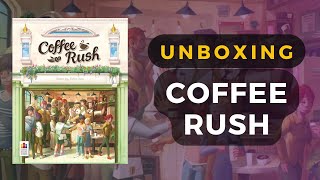
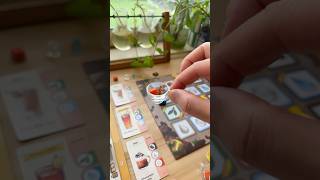
The game's physical components, particularly the small ceramic-like cups and textured ingredient tokens, elevate the experience beyond what was mechanically necessary. One reviewer noted that the 3D cup elements absolutely did not need to happen since the game could have used cardboard player boards instead, but their inclusion adds tactile satisfaction to the experience. Reviewers appreciated that despite the production quality, the game remains affordable and teaches easily. The rule overhead is light, making it accessible to newcomers, yet the depth emerges during play as players discover how desperately they need special abilities and how carefully they must sequence their actions.
Player Count Sweet Spot
The game was designed with higher player counts in mind and shines at three or four players. At two players, reviewers found that by the final third of the game, the pace slows as fewer orders cascade into the queue, reducing the tension that makes the game memorable. The first time one reviewer played at full capacity, they scored zero points, a rare experience that created a special memory. The game's sweet spot is clearly at higher player counts, where the order cascade keeps everyone perpetually scrambling.
Potential Drawbacks
Intensity Not for Everyone
The game's primary drawback is its psychological weight. Despite lacking real-time mechanics, the constant pressure of orders sliding down your board and customers leaving when orders aren't fulfilled creates genuine stress. One reviewer explicitly warned that this is not a zen coffee shop experience. Players actively watching the central board for planning opportunities experience constant low-level anxiety. The downside of feeling rushed is that some players may find the experience exhausting rather than exhilarating. Players expecting a relaxing experience will be disappointed.
Low Scoring Can Feel Unsatisfying
The game's typically low final scores of two to ten points across all players initially struck some reviewers as unsatisfying, as if high-number scoring would feel more rewarding. However, this low-score system actually mirrors the game's theme: customers are demanding and the margins are thin. Additionally, solo play requires fan-made variants, as the base game is built for multiplayer interaction.
If You Enjoy Coffee Rush
Reviewers frequently compared Coffee Rush to Overcooked, making it a natural recommendation for fans of cooperative time-pressure games seeking a competitive alternative. The spatial puzzle of collecting ingredients from a shared board appeals to fans of games like Carcassonne or Azul. The order fulfillment cascade and cascading order delivery mechanisms will resonate with players who enjoyed the push-your-luck tension of games like Calico. The game also works for players seeking lighter economic games with a clear theme and genuine strategic depth.
What Reviewers Are Saying
"When you finish orders, there's that cascade effect and then the people that would go next are now even more stressed out than before. You can have somebody with four very difficult recipes to complete and you only have three cups."
— kovray
"It's stressful and anxiety-ridden, but it's very clever in that way that you get this coffee rush feeling in a real-time mindset without actually being in a real-time game."
— Ryan and Bethany Board Game Reviews
"I loved that stress working in that setting. The more customers coming in, you're just scrambling. You're calling out 'I need more coffee beans' or whatever it is. You're just scrambling to get it all done. This game gave me all of those vibes and I really dug it."
— Ryan and Bethany Board Game Reviews