/pic5801984.jpg)




















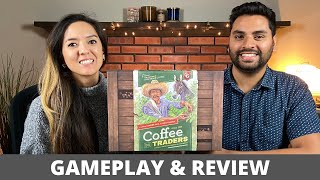
Coffee Traders Deep Dive
What the Community Thinks About Coffee Traders
Coffee Traders occupies a unique space in the modern board game landscape. It is a game that exists, has its design merits recognized, yet struggles to capture sustained attention from the broader gaming community. The game's lengthy ruleset and economic complexity mean it attracts players seeking brain-burning challenges, but the conversation around it remains relatively muted despite its ambitious theme and production values. For those who engage with it, Coffee Traders delivers a complete economic simulation. For those wondering whether to acquire it, the relative silence in gaming discourse presents a meaningful consideration when deciding shelf space.
Core Mechanics That Define Coffee Traders
Worker Placement and Multi-Phase Action Economy
Coffee Traders is built on a worker placement framework that unfolds across six distinct phases each round, creating a rhythm that feels both methodical and rewarding. The Work Phase forms the foundation, where players spend action cubes to build plantations across five coffee cooperatives, manage donkeys and trucks to create expansion routes, hire workers, or stockpile resources. The Workers Phase provides a second staffing opportunity, letting players place their own workers before penalties hit. This two-pass system for worker placement creates meaningful decisions: do you secure your own infrastructure early, or leverage the community action to help opponents while advancing track benefits? The Traders and Contractors Phase introduces a different action currency, trader and contractor meeples, allowing players to position themselves in trading houses, construct buildings for long-term bonuses, or sacrifice traders for rapid track advancement. Each phase runs until all players consecutively pass, rewarding both opportunism and strategic patience.
Contracts, Tracks, and Modular Scoring Paths
The game layers multiple scoring vectors over its three-round structure. Players maintain six personal contracts demanding specific coffee combinations, each offering immediate rewards and end-game bonuses. Simultaneously, they compete to fulfill public coffee bar orders for area majorities. Five arabica tracks provide constant incentive structures, reaching milestones grants coins, donkeys, trucks, extra traders, and premium end-game point bonuses. The Counter Track on each player board, where players stack collected animal tokens to climb toward 25 points, introduces a satisfying stacking mechanic for those who pursue token collection focus. Harvest produces coffee through manned plantations, with trading house positions and fair trade posts determining coffee allocation. This layered reward system ensures multiple viable strategies: pure plantation majority, track dominance, contract fulfillment, coffee bar coverage, or some blend of these paths.
The Coffee Traders Experience
The Beauty and Burden of Scale
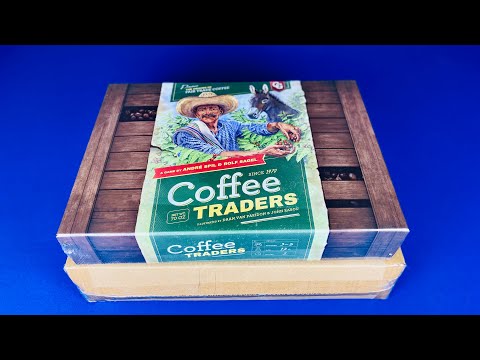
The board for Coffee Traders is horizontally expansive and visually striking. Component quality reflects the production values reviewers noted, meeples, cardboard tokens, and wooden resources convey a certain lavishness. Setup and explanation demand respect; this is not a game for teaching in five minutes or playing in an hour. Players should expect two to three hours even with experienced groups, more on first play. The sheer number of moving parts, plantations being built in real time across five regions, workers being distributed, traders occupying houses, creates rich visual board state feedback. Each round, the cooperatives visibly develop, creating palpable progression and a sense of world-building around fair trade coffee commerce.
Crunchy Economics and Negotiated Resource Tension
Coffee Traders earns its "crunchy" designation through relentless economic tension. Money is perpetually scarce. Workers are precious. Donkeys lock paths and force difficult routing decisions. Truck availability caps expansion options. The Bonus Supply system, containing one action cube, one meeple, and three coins that players may draw from but cannot fully empty in a single round, creates a loan mechanic with real teeth. Taking coins from the bonus supply triggers debt repayment at round's end; shortfall incurs negative three-point tokens. This system forces continuous financial calculation and trade-off evaluation. Should you expand aggressively now and gamble on profit, or play conservatively? The game provides no easy answers. Coffee values, trade rates, and fair trade post control all flow into contract completion decisions. A player short the right coffee color faces meaningful choices: purchase at inflated round-three prices, trade unfavorably, or pivot strategies entirely.
What Makes Coffee Traders Stand Out
Fair Trade Mechanics and Cooperative Layer
The thematic integration of fair trade cooperatives creates a distinct mechanical flavor. Players are not simply competing to exploit regions; they are competing to develop them. Building in a cooperative that another player also invested in doesn't feel punitive, it is part of a legitimate alternative strategy. The fair trade post building type, which grants a guaranteed coffee siphon during harvest regardless of trading house position, introduces a defensive building option that rewards player foresight. The worker placement system, where placing workers on opponents' plantations generates track advancement, weaves beneficial cooperation into the competitive fabric. The game constantly rewards making opponents' economies slightly more functional, which feels thematically aligned with the fair trade framing and mechanically novel in hobby gaming.
Expansion and Long-Term Replayability
Official expansions have been designed for Coffee Traders. The Cultivate expansion has been tested and exists in playable form. A Roast expansion is scheduled for publication in 2026, signaling publisher confidence in sustained player engagement. For groups seeking deeper variety and extended strategic depth, these expansions promise substantive additions without necessitating a game redesign. This trajectory contrasts with many hobby titles that receive only cosmetic expansions or none at all.
Potential Drawbacks
Table Presence Demands and Teaching Overhead
Coffee Traders requires significant table real estate and teaching commitment. The board is long. Player mats are large. Component tracking demands attention. First-time players will benefit from a rules consultation, and teaching the six-phase turn structure, track advancements, contract fulfillment logic, and specialized scoring (cooperatives majority, arabica track bonuses, counter track stacking, coffee bar area control) cannot be rushed. New players often feel overwhelmed by the decision density. This game is not welcoming to casual drop-in players or groups seeking a relaxing evening. It demands focus, calculation, and genuine engagement with economic optimization.
Limited Cultural Penetration and Unfamiliar Footprint
Coffee Traders occupies modest presence in the broader gaming conversation. Unlike flagship economic games that generate sustained discussion, content creation, and community enthusiasm, Coffee Traders remains known primarily to deep economic game enthusiasts. This means finding active player communities online or at conventions may prove challenging. For collectors considering acquisition, the relative quiet around the title raises legitimate questions: will I find players? Will streamer content exist if I want to learn beforehand? Will expansions release on schedule? While not indicators of design quality, these practical concerns affect real-world play accessibility. A player with a large group of avid hobby gamers may find Coffee Traders becomes a regular hit. A casual player acquiring it based on theme alone may find it gathering dust, a fate that has befallen many solid economic games that failed to capture sustained enthusiasm.
If You Enjoy Coffee Traders
Players drawn to Coffee Traders likely gravitate toward mid-to-heavy economic simulations with multiple scoring vectors. The comparison point is Wildcatters, which shares designer DNA through Rolf Sagal and Andre Spiel, and similarly balances area control, stock manipulation, and resource scarcity. Games like Agricola, Puerto Rico, and newer economic titles like Food Chain Magnate appeal to similar player profiles, those comfortable with resource bottlenecks, calculation-heavy turns, and indirect competition through economic pressure rather than direct conflict. Players who relish watching their economic engine grow across three rounds, who enjoy contracts and objective tokens as strategic scaffolding, and who value thematic coherence in their economic simulations will find much to appreciate in Coffee Traders. Solo players seeking challenge should note that the game offers no official solo mode, making it purely a multiplayer experience.
What Reviewers Are Saying
"The game is about the fair trade coffee industry around the world. Three to five players play the role of fair trade coffee companies, they will work to increase the quality of five different fair trade cooperatives around the world, building new plantations and buildings, earning points for how much they improve a specific cooperative as opposed to their opponents, and separately they'll trade with those same cooperatives. The player who earns the most points from building cooperatives and trading in coffee over three rounds of play will win the game."
— Meeple University
"This game is all about building our plantations in these different co-ops, growing coffee and then trading it away. Over the course of only three rounds but it is quite a lengthy game. It's also a little bit heavy and there's a large area control component to it, which you'll see. At the end of the third round whoever has the most points wins."
— Before You Play
"I never really hear anyone talking about it. I've had this game for a very long time because of the idea of coffee, but honestly, I never hear anyone talking about it. It's been like six, seven years now that I've had this and I haven't played it. So, Coffee Traders is out."
— BoardGameCo