/pic560068.jpg)
Colonia in the Middle Ages. The largest city of the Holy Roman Empire is renowned for its famous cathedrals and versatile trade. Reputable patrician families hold influential positions in the City Council and are in control of the city’s fortune. They are always striving to increase their riches and to consolidate their power. Each family wants to be the most influential - but only one may achieve this goal!
The players take on the role of influential patrician families in Medieval Colonia. They strive to lead their family to the most powerful position by acquiring precious relics. In order to achieve this, players must buy commodities and produce and sell goods. Only families selling their goods for a high price can afford expensive relics. The player owning the most valuable collection of relics at the end of the game will be the winner.

- Fantastic
- Great when playing all eras
- Long playtime
Mechanics (from transcript analysis)
- Game length — Can play just one or two of the eras, but playing the full four eras is recommended.
Video topics + discussion points
Quotes (from this video)
- my only fear is that it runs too long
- it's so much but now I am
- it is the most feudum stress biotics looks at feudum says ha hold my beer it's a lot but it is about as heavy of a Euro as you're ever going to get in your life and if you want just an insane theme and the kitchen sink it's a lot of fun and I cannot wait to play it more
- heaviest game I've ever played non war game
- my take on nucleum was it's fine um I don't think it was as good as it seems a lot of the critical world out there thought um I don't think nucleum is going to be uh played in five years
- perfectly forgettable in a sense that it's just the same old
- the lack of respect is staggering to me but I welcome it because I guarantee Dan Lanning is going to find a way to use this and I cannot wait till tomorrow and I think Oregon houses them
- The Bear oh my God that is the most stressful I've ever or most stressed I've ever felt watching the show
- if you've ever wanted to watch me cry yes 100% I cry at the end of Great British baking show almost every episode it is wonderful
- it's a lot of work and a lot of fun
- I would love to have you over maybe in the summer when you're up at at the cottage over on the cape I would love that
- it's the most surreal place I've ever been to weatherwise and if you ever get a chance it's worth making a drive
- half y'all still don't subscribe I don't I I just don't get it
- my Cowboys are atrocious but good God do do I have everything riding on my ducks tomorrow
- it is a lot but it is about as heavy of a Euro as you're ever going to get in your life
- I'll tell you what I don't drink beer and I'm still down to make that bet that's fine that works done book it
- I think the concept in the theme of Cerebria is fantastic
- Nemo's War that's a great way to end the year
- The Colonist that's a game I could get back into I miss that
- stress biotics Odyssey somebody make one so I don't have to try and help design it I would love that You' be my best friend ever
- stress spox Odyssey heaviest game I've played n war game honestly it might be the heaviest game I've played
- Three Kingdoms Redux bought and got it to the table this year Hidden Gem needs more awareness
- just a fantastic great game that if you play with three players and you enjoy heav your it's a game that should be in your collection
- Mount Washington is the weirdest place on Earth weatherwise that I've ever experienced
- happy New Year everybody I hope everyone H uh be safe if you go out on amateur night tonight be safe don't drink a drive please
References (from this video)

Mechanics (from transcript analysis)
Video topics + discussion points
Quotes (from this video)
- It looks visually amazing. I personally like the color palette of the game, and I think it does look really good.
- The game is a heavy game. It's a Some people will call it a medium game, right? It's a 45-minute teach.
- Agemonia, still fantastic, still really good.
- It's all three of our number one games of all time.
- Does it fit with the Marvel theme? Absolutely. It it really does.
- I
- Magnate: The First City designed by James Naylor and I'm going to be doing a giveaway for it.
- So, good luck for that and I'll announce the winner next month.
- all of my advertising revenue from all of my videos every month goes to charity.
- So yeah, Solar Titans is going to get three play throughs on the channel in December.
- It's going to be January and February. In fact, February's looking like a good month for me at the moment.
- Talisman Nemesis is the latest expansion for fifth edition that turns the game into a one versus many game.
- And me and Rick on a Tuesday night we're starting playing the Arnak cooperative campaign. So that is another series of play throughs, Lost Ruins of Arnak the cooperative campaign.
References (from this video)

Mechanics (from transcript analysis)
Video topics + discussion points
Quotes (from this video)
- I love Klask.
- it's all about luck in Flip Seven.
- It's a two-player game.
- Goa and it's my number three.
- We got to play Goa. It's not on my list, but no, it is because it's really fun.
- Fields of Arle is a game we played many years ago.
- You're trying to get the peat away.
- My number one is Keyflower.
- Probably it is one of my favorite cooperative games.
References (from this video)

- Really enjoyed it.
- A solid game to put in your collection.
- A good 1-hour euro.
- Definitely a 1hour euro.
- Has depth to it.
Mechanics (from transcript analysis)
- simultaneous bidding — The game involves players bidding at the same time.
- Worker Placement — The game is a worker placement game with simultaneous bidding.
Video topics + discussion points
Quotes (from this video)
- Anything with Lord of the Rings attached to it. I'm interested.
- It was great. This was great. I'm ready to play this again.
- Frenzy is a good word for it, right?
- This has got a Seven Wonders feel to it.
- This is much better use of those cards.
- This is much better than the two-player version of Seven Wonders.
- This game sounds good. We're bringing it out at Mother's Day and we're going to play that with my family.
- I love deduction games.
- This is Got Five from Blue Orange.
- I love those things.
- Y'all, let's flip this around. Instead of an office desk, if you were to get one of these E-Win desk, and they're good size, 62 in long, 24 in deep, you could raise this up. This could become your gaming table, especially if you put a game topper on it.
References (from this video)
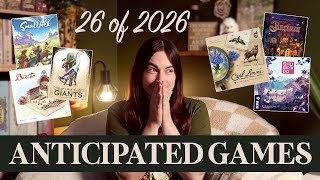
- visually striking
- solo mode present
- strategic placement and resource management
- simultaneous worker placement with hidden decisions
Mechanics (from transcript analysis)
- Compound Scoring — scoring based on revealed placements and availability
- Dynamic scoring — scoring based on revealed placements and availability
- Simultaneous action selection — players secretly decide where to place workers behind a screen
- Simultaneous Actions — players secretly decide where to place workers behind a screen
- Worker Placement — reveal and resolve worker placements with placement priority
Video topics + discussion points
Quotes (from this video)
- Stem and Branch is in a different language here on the box.
- Three Sisters the Harvest Edition includes a solo campaign, which I am so excited about.
- Compania is a very cool game where you are placing out your workers and revealing behind a screen.
References (from this video)

- Strong, dense action economy; good production value; supports up to six players
- Late-stage crowdfunding concerns; may be wait-for-retail release strategy
- hidden dice placement and bidding across a grid-based board
- medieval or early industrial scaling of a propriety company in a fantasy setting
- Euro with strong engine-building and tile-driven decisions
- Android: Netrunner
Mechanics (from transcript analysis)
- Auction / Bidding — Bidding with dice values to claim actions and resources.
- dice bidding — Bidding with dice values to claim actions and resources.
- Dice Placement — Players secretly place dice to determine worker actions.
- grid-based action selection — A grid matching mechanic drives which actions are available.
- hidden dice placement — Players secretly place dice to determine worker actions.
- Tile-based building — Tiles represent buildings and enable resource generation and scoring.
Video topics + discussion points
Quotes (from this video)
- this is a DC version of Marvel United, which is one of my favorite games of all time.
- I think it does look okay.
- You're a mad scientist. Use your laboratory robots and trusty assistant eager to gather the resources and inventions you need.
- you draft dancers from the central dance floor to train their own personal dance troop.
- The board looks very involved. Lots of symbology.