



Cursed!? Deep Dive
What the Community Thinks About Cursed!?
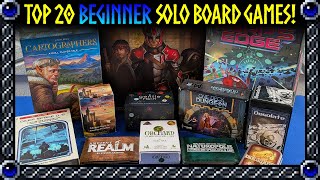
Reviewers tend to describe Cursed!? as a small, surprisingly sharp solo game. Tabletop Tokki came in expecting to dislike luck-heavy designs, then found that the game "really works out" because each draw forces tight decisions about when to keep pushing. Sir Thecos had a similar arc, first finding the design "way too luck driven" before concluding that its push-your-luck loop works well. Robert of AzureDeath placed the game among the best introductions to solo board gaming, praising how much it accomplishes with one deck of cards.
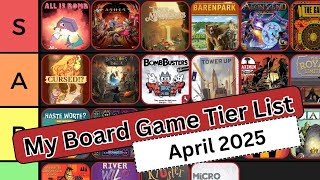
The shared view is that Cursed!? is quick, compact, and engaging, and that its losses usually feel close enough to be satisfying rather than arbitrary. The main point of disagreement is how much of the outcome belongs to skill and how much to the shuffle. Sir Thecos's later review rated the game an A rather than an S, specifically because of how heavily it leans on luck.
Core Mechanics That Define Cursed!?
Push Your Luck
The central loop is a push-your-luck contest against a monster's health. Each round a monster is drawn, and the player flips cards from the deck to find weapons, adding up damage as they go. Sir Thecos explained that the player can stop at any time, aiming to land as close to the monster's health as possible without going over. A card that would push total damage past the monster's health is discarded and wasted.
Stopping short has a cost. The player discards cards from the top of the draw pile equal to the difference between the monster's health and the damage dealt, and that discard drains life. Because the draw pile also serves as the game's clock, running out of cards means losing, so every failed attack and every forced discard brings the end closer. Monster abilities add further pressure: Tabletop Tokki faced an evasive monster where even-value weapons deal no damage, and Sir Thecos encountered one that allowed only a single strike of a given strength. The game was designed by Jacob Hel, and Tabletop Tokki credits Goblin Hour Games with publishing it.
Item Timing as Resource Management
Items are the game's scarce resource, and reviewers focused on when to spend them. Items are earned by defeating certain monsters or by taking treasure from chests guarded by monsters. Their effects vary: a shield blocks up to three damage, and a Big Turkey Dinner reshuffles the discard pile and places three cards at the bottom of the draw pile. Sir Thecos used the dinner mid-game and called the extra cards the difference between winning and losing.
The same decision cuts the other way when it is mistimed. Tabletop Tokki lost a close game by a single card and reflected that the soul crystal could have turned the outcome, saying, "we really should have used that soul crystal." Reviewers consistently describe items as the place where the game's strategy lives, because each one is a limited chance to change a bad draw.
The Cursed!? Experience
Tense Near-Miss Tension
Much of the game's emotional texture comes from how close each fight feels. Tabletop Tokki noted that the game "has always been super close," and that even a defeat usually leaves the player able to see what they could have done differently. Sir Thecos described the same pull at the table, admitting "I need to push it" as a monster's health loomed, then deciding where to stop. The result is a steady run of small, high-stakes choices in which one card can decide the session.
Reviewers describe this tension as addictive in short bursts. Because a full session takes only a few minutes, a near miss tends to prompt an immediate rematch rather than a feeling of being stuck.
Storybook Fantasy Charm
The theme gives the game a distinct personality. The premise is a grim one: the player has been cursed by a witch, is quickly dying, and must capture eight monster souls to earn release. Tabletop Tokki praised the art as "really charming and illustrative," with an old fantasy storybook quality that suits the setting. Sir Thecos likewise described the art as clean and attractive, and the card-based presentation makes each monster and weapon feel like an illustration in a small book.
What Makes Cursed!? Stand Out
Multi-Use Cards That Pack Depth Into a Small Deck
Nearly every card in Cursed!? does double duty. Sir Thecos explained that the cards are multi-use: one side shows a monster with its health and sometimes an ability, while turning the card reveals a weapon with its attack value and whether it is melee or ranged. Some items go further, letting the player attack with the monster side of a weapon card instead of its weapon value, which Tabletop Tokki found a clever twist. Robert of AzureDeath singled out this economy as the reason the game feels so large for its size.
A Solo Game Small Enough for Anywhere
Portability is a consistent point of praise. Tabletop Tokki called the game one of the perfect travel games, noting that the tin format and the minimal component count make it easy to carry, and that it could almost be played entirely in hand. Sir Thecos timed a full game at roughly three to six minutes and observed that the game takes no real table space, making it easy to play on a train or a plane. Reviewers see this speed as a feature that encourages repeat play rather than a shortcut.
Potential Drawbacks
Luck Can Outweigh Strategy
The most frequent criticism concerns how much the draw decides the outcome. Sir Thecos described the game as very basic and very simple in terms of strategy, and very luck based, which is acceptable for a short game but caps how deep the decisions can go. Sir Thecos's first impression was that the design felt too luck-driven before the push-your-luck loop won them over. Tabletop Tokki, who usually dislikes luck-based designs, acknowledged the same tension but found enough meaningful choices to enjoy it. Players who want a deeper strategic puzzle may find the design thinner than they hope.
Print-On-Demand Availability
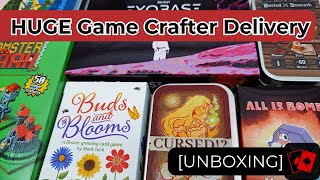
Cursed!? is not a conventional retail release. Robert of AzureDeath noted that it is not something most players can buy from a typical board game store, and that copies are produced through The Game Crafter, with print files also available from PMP Arcade for players who want to print at home. Sir Thecos recommended the print-and-play route, stressing that it is worth doing if the files are available. The tin and print-on-demand model means supply can be limited, so players who want a physical copy should expect to order directly from the producer.
If You Enjoy Cursed!?
Players who enjoy Cursed!?'s push-your-luck loop will find similar satisfaction in Dungeon Solitaire. Robert of AzureDeath described it as a deck-based dungeon crawl in which the player delves deeper while pushing their luck and must exit before time runs out, a structure that mirrors the way Cursed!? uses its draw pile as a clock.
Desolate, the sci-fi dungeon crawler by Jason Glover that AzureDeath ranked as a favorite, shares Cursed!?'s solo-only design and its compact print-on-demand format. Its tension between health, ammo, and oxygen rewards players who enjoy balancing scarce supplies against hostile encounters, much as Cursed!? rewards careful item timing.
Players who like the loot-driven rhythm of Cursed!? may also enjoy Dungeons of Doria. Sir Thecos described it as a very loot-driven dungeon crawler with single scenarios and a campaign, and the steady flow of new items gives it the same satisfaction of turning a bad draw into a useful reward.
What Reviewers Are Saying
"Typically luck-based games for me don't quite sit well, but with this one it really works out. There are some great tight decisions as far as pushing your luck with those weapon cards, using items at the right time."
— Tabletop Tokki
"Yeah, it is like a lot of push your luck, but it's push your luck that works really well. Um, and the game really you can play it in three, four, five minutes."
— Sir Thecos
"But it really is crazy how much this game does with just a deck of cards and the multi-use of them, how quick it plays. If this doesn't blow you away and demonstrate how amazing solo board gaming can be, I don't know what will."
— Robert, AzureDeath