/pic6435146.jpg)






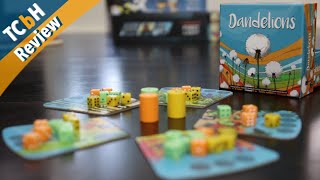





Dandelions Deep Dive
What the Community Thinks About Dandelions
Dandelions, a light area-control dice game published by AllPlay, draws a surprising range of opinions across the board game community. Most reviewers, including Before You Play and Our Family Plays Games, celebrate it as an elegant, fast-playing experience that rewards tactical decision-making, while one notable critic, Chairman of the Board, calls out its mechanical simplicity as a missed opportunity. What emerges is a game that succeeds brilliantly at what it sets out to do, but only for players who appreciate light, snappy dice games.
Core Mechanics That Define Dandelions
Dice Allocation and Pawn Movement
The heart of Dandelions is elegant constraint. Players begin with a set of dice in their color and roll them all at once, making them visible to opponents. On each turn, a player selects one die and moves their pawn that many spaces clockwise around the garden. If the pawn lands on another player's pawn, the moving player continues forward by that same die value, potentially leapfrogging to higher-scoring areas. Whenever a player places their die on a garden, they have committed a piece to that location for the rest of the game. The tension comes from diminishing choices: as players deploy dice across the gardens, their options narrow with each turn, forcing increasingly difficult calculations about risk and reward.
Area Control Through Displacement
Dandelions layers area majority onto its core movement system. When a player places a die on a garden that already contains dice matching that value, those matching dice get displaced to an adjacent garden of the current player's choice. This twist creates tactical depth: players can deliberately push opponents out of high-value gardens by shoving their dice into lower-scoring spaces. At game end, the player with the most dice on each garden scores both the pips (sum of face values) on their own dice and the static points printed on the garden tile itself. The higher-value gardens offer fewer spaces, so capturing and defending them requires careful planning. With gardens worth escalating point values, every placement ripples forward, turning what initially appears straightforward into a game of interlocking spatial puzzles.
The Dandelions Experience
Accessible Yet Tactical
The beauty of Dandelions lies in its teaching speed and play time. Reviewers consistently note that the core loop can be explained in minutes, yet each decision carries weight. A player might spend a round pushing opponents around to secure area control, then pivot to gobble up lower-value tiles. The game completes in roughly 15 to 20 minutes, making it ideal as a filler between heavier games or as a family-friendly introduction to area majority mechanics. The theme is delightful, spreading dandelion seeds on the wind, but it is the mechanical elegance that keeps players coming back. There is enough gamesmanship to stay interesting without overwhelming players who want something quick and clever.
Social and Competitive Depth
Dandelions encourages table interaction without requiring cutthroat aggression. Players naturally interfere with each other when pursuing gardens, but the small board and limited dice ensure that games remain friendly. At two players, the game is tight but lacks some of the competitive richness that a third player brings. At three players, every move lands differently because the board tension multiplies: one player's displacement can cascade into unexpected opportunities for the third. The game rewards those who calculate the final positions and lock in their advantage early, but it also forgives mistakes because awkward rolls and forced placements happen to everyone.
What Makes Dandelions Stand Out
Elegant Dice Drafting Twist
Dandelions inverts the traditional roll-and-move formula. Rather than rolling on your turn, dice are rolled at the start and then allocated strategically. This decision-forward design eliminates the randomness excuse: every placement is yours. If a player ends up with an awkward die distribution, they must own the choices they made with those values, not blame the dice gods. The opportunity to cycle dice becomes a precious resource, making the decision to refresh your pool a genuine strategic moment rather than a reset button.
Scalability Without Padding
The two-to-three player design is unusual but deliberate. Two players still offer meaningful competition, while three players unlock the game's full dynamic: the triangular tension and political implications of who benefits from each displacement. Remarkably, the game length and complexity do not balloon at three players; the same snappy runtime applies. There are no artificial turn-extension mechanisms or clunky automa systems. This is efficient game design that respects players' time.
Potential Drawbacks
Mechanical Simplicity as Limitation
Not all reviewers are convinced by the lightness. Chairman of the Board argues that Dandelions overshoots accessibility at the cost of agency, describing it as more mechanical than strategic. The complaint is that once dice are deployed, the outcome can feel somewhat determined; players move their pawn according to the die they selected, then watch placement rules resolve mechanically. Unlike games where placement itself opens new possibilities, Dandelions can feel as though meaningful decisions cluster early and the rest unfolds inevitably. For players seeking puzzle-like depth in a short span, this minimalism may feel hollow.
Player Interaction Variance by Count
The two-player experience, while functional, pales beside three-player games. At two players, there is less board chaos and fewer opportunities to exploit crowding. Some groups report that the two-player version, though playable, feels more like a parallel race and less like a competitive clash. Those committed to the game often recommend reserving it for three players whenever possible, which limits its flexibility. Additionally, the single-space high-value gardens mean that blocking opportunities are binary, either a space is open or occupied, leaving less room for subtle maneuvering than games with larger tile populations.
If You Enjoy Dandelions
Fans of snappy area control games with elegant dice mechanics should explore Rumble Nation, which combines dice selection with region control and adds push-your-luck deployment timing. Mountain Goats provides an accessible, family-friendly route to the same quick-decision space with its goat-climbing twist on Can't Stop. For those drawn to the garden theme and gentle strategy, Cascadia delivers beautiful production and tile-laying with more spatial depth, while Scout offers micro hand management with surprising tactical bite in a similarly short footprint. Each shares Dandelions' commitment to teaching fast and playing quickly.
What Reviewers Are Saying
"The aspect that if you use a die to land in an area, all the dice that are there now get moved, creates enough gamesmanship and strategic depth to make you say okay, I want to compete for this area. There's just enough cleverness going on, and like I said, it doesn't overstay its welcome."
— Before You Play
"It's a 15 minute dice driven filler where you are basically moving your player pawn on these different petals and deploying dice on them. It can be a little cutthroat, but it's such a fast game that you just want to play it again and again."
— Our Family Plays Games
"For me this game is a little bit too mechanical in the sense that there's no real fun and there are no real decisions to be had here. You just kind of end up moving your piece around deploying dice. I actually think this game is surprisingly boring for a 15 minute game."
— Chairman of the Board