









Dark Moon Deep Dive
What the Community Thinks About Dark Moon
Reviewers describe Dark Moon as a streamlined hidden traitor game that keeps the accusation and bluffing of Battlestar Galactica in a much shorter package. Designed by Evan Derek and released by Stronghold Games, it grew out of the print-and-play title BSG Express. Reviewers who know the earlier game tend to treat Dark Moon as a refinement of that idea rather than a replacement for it.
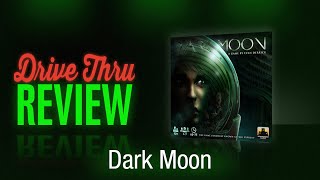
The most enthusiastic assessment comes from Drive Thru Games, whose reviewer says the new game is one they like better than BSG Express, a title that had long sat near the top of their personal list. Drive Thru Games stresses that the game works with three players, contrasting it with heavier hidden traitor titles where accusations take time to develop. In that reviewer's view, players start throwing accusations immediately, so the game does not depend on a slow build.
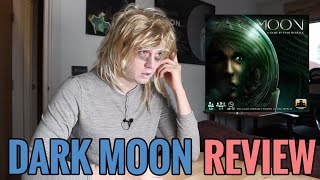
The reviews are more measured on the question of whether Dark Moon can replace the original. John Perkus, Actualol calls it a really fun game that delivers the accusation, argument, and deception that this genre should have in a streamlined format. Perkus still keeps Battlestar Galactica for its theme and for the way its sabotage stays hidden, while Dark Moon places sabotage in the open. A shorter appreciation comes from Watch It Played, which praises the game as a fantastic example of deduction, backstabbery, and dice rolling.
Core Mechanics That Define Dark Moon
Hidden Roles
Each player is secretly dealt a status card that marks them as uninfected or infected. Drive Thru Games explains that infected players can reveal themselves to unlock stronger abilities, and the rules ask everyone to pretend to read their cards so that checking a card does not give away who is infected. John Perkus frames the core problem as one of inference: in a five-player game there are three uninfected and two infected players, and nobody knows who else is on their team. Players must read loyalty from behavior, and the dice make that reading difficult. Each player rolls behind a screen and must submit at least one die, so honest players are often forced to show negative results. Perkus notes that the odds are weighted roughly two-thirds toward negative, which means that how a player reacts to a bad roll becomes a tell in its own right.
Voting
Voting in Dark Moon works less like a single decision and more like a recurring pressure point. Drive Thru Games describes a suspicious activity marker that advances until it forces the captain to call a vote, so the table must name a suspect whether or not anyone feels ready. Votes are cast with hidden black or red dice. A black die says the target is uninfected, a red die says infected, and a player who reveals an empty hand abstains. A player voted into quarantine loses two dice, which means that spending dice on repairs can leave someone without the dice they need to vote or to resist. The same reviewer calls the forced vote one of the best ideas in the design, noting that simply calling a vote becomes the start of the accusations and the name calling. Perkus makes a similar point, saying that every aspect of the game is designed to provoke discussion.
The Dark Moon Experience
Social
Reviewers describe Dark Moon as a game where the talking is the point. Perkus says the deception happens publicly, unlike in most games of this kind. A player who wants to sabotage a repair has to do it while staring their opponents in the face, then insist that the dice simply came up badly. Drive Thru Games observes that the accusations begin on the very first turn, which gives the table an energetic, argumentative opening. The experience is less about quiet calculation and more about performing innocence, reading the room, and deciding who to trust out loud.
Interactive and Dynamic
Dark Moon is also built around the way players alter one another's plans. On a turn, a player can issue an order that gives another player two actions instead of one, which Perkus describes as a decision about who to trust with those actions. Task cards add direct confrontation. One conflict task asks a player to request a die from another player permanently, and if the other player refuses, the task fails and a damage token is drawn. Drive Thru Games calls these conflict tasks a really cool little dynamic that keeps coming up, since a player has to justify giving up a die they would rather keep.
What Makes Dark Moon Stand Out
A Shorter Route to the Battlestar Galactica Feeling
Both reviewers return to the length of the game. Drive Thru Games describes a session of about an hour or less for three to seven players, and says the game plays right in the hour mark without overstaying its welcome. Perkus describes the design goal as distilling the best aspects of Battlestar Galactica into a much shorter time frame, and concludes that the game delivers that accusation and deception in a streamlined format. For tables that want the hidden loyalty experience without a five-hour commitment, reviewers see this as the main appeal.
Tasks and Forced Votes That Create Conflict
Drive Thru Games argues that the task deck is a clear improvement over the earlier game. Instead of a single target number, many tasks create conflict between players, such as asking a teammate for a die or forcing a vote. The event cards also give the game a narrative thread, since the commander draws events that add problems the group must solve. The reviewer says this extra layer of theme makes the game feel like more than a quick filler, while keeping the decisions tense and social.
Potential Drawbacks
Repetitive Task and Event Decks
Perkus raises the most consistent criticism. Perkus says the task and event decks could use more content because the same cards tend to come up in each game, and suggests that an expansion adding new ideas would help keep the game fresh for groups who play it often. For players who expect a deep card-driven experience, this limited variety is the main reason to hold back.
Physical Components
Perkus says the player screens are flimsy and fall over too easily, which Perkus finds disappointing from a publisher known for sturdy screens in its other games. Perkus also says the character art lets the game down compared with the board, which Perkus finds attractive. Drive Thru Games was working from an early copy and notes that the screens in that copy had been cut out by hand, so the production version may differ. Still, both reviews indicate that the presentation is not the strongest part of the package.
If You Enjoy Dark Moon
Reviewers consistently point to related titles that scratch a similar itch, each with its own tradeoffs:
- Battlestar Galactica Express: The print-and-play predecessor that Dark Moon refines. Drive Thru Games calls it a favorite trader team game and says the new version improves on its task design.
- The Resistance and One Night Ultimate Werewolf: Quick social deduction games that Drive Thru Games compares to Dark Moon, though that reviewer notes that both need larger groups to work well, while Dark Moon also plays with three.
- Dead of Winter: A heavier cooperative game with betrayal at its core. Drive Thru Games places Dark Moon between the quick social deduction games and Dead of Winter, which that reviewer says runs about an hour and a half.
- Battlestar Galactica: The longer, more thematic original. Perkus recommends owning both, because the hidden sabotage of the original gives it a different character from Dark Moon's open sabotage.
What Reviewers Are Saying
"You're going to have it every game, and just by calling the vote, that's a point of discussion to start the accusations and the name calling and all that stuff. So I love that."
— Drive Thru Games
"Dark Moon is a really fun game that offers accusation, arguments, deception, all the things that games like this should have in a streamlined format. Looking at it on its own merits, I highly recommend it, and I'll definitely be keeping it."
— John Perkus, Actualol
"I love Dark Moon. I think a Dark Moon fantastic game of deduction and backstabbery and rolling dice, and you say, oh, I haven't got any fours. I do have a four, I'm also a traitor."
— Watch It Played