




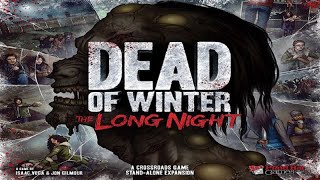

















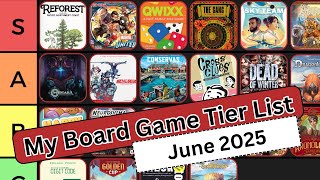

"Crossroads" is a game series from Plaid Hat Games that tests a group of survivors' ability to work together and stay alive while facing crises and challenges from both outside and inside. Dead of Winter: A Crossroads Game, the first title in this series, puts 2-5 players in a small, weakened colony of survivors in a world in which most of humanity is either dead or diseased, flesh-craving monsters. Each player leads a faction of survivors, with dozens of different characters in the game.
Dead of Winter is a meta-cooperative psychological survival game. This means players are working together toward one common victory condition, but for each individual player to achieve victory, they must also complete their personal secret objective, which could relate to a psychological tick that's fairly harmless to most others in the colony, a dangerous obsession that could put the main objective at risk, a desire for sabotage of the main mission, or (worst of all) vengeance against the colony! Games could end with all players winning, some winning and some losing, or all players losing. Work toward the group's goal, but don't get walked all over by a loudmouth who's looking out only for their own interests!
Dead of Winter is an experience that can be accomplished only through the medium of tabletop games, a story-centric game about surviving through a harsh winter in an apocalyptic world. The survivors are all dealing with their own psychological imperatives, but must still find a way to work together to fight off outside threats, resolve crises, find food and supplies, and keep the colony's morale up.
Dead of Winter has players making frequent, difficult, heavily-thematic, wildly-varying decisions that often have them deciding between what's best for the colony and what's best for themselves. The rulebook also includes a fully co-operative variant in which all players work toward the group objective with no personal goals.
Dead of Winter : EP03
- clear integration of theme with mechanics (crossroads, morale, and choices)
- high replayability due to variable crossroads and survivor combos
- scales well with different player counts
- less of a pure trader-deduction game than Unfathomable
- can slow down at higher player counts
- emotional storytelling through crossroads and hidden objectives
- zombie apocalypse survival scenario with a colony
- narrative-driven crisis management with personal vs group goals
- Unfathomable
- The Thing
Mechanics (from transcript analysis)
- crossroads cards — narrative moments that provoke moral and strategic decisions
- dice-based actions and crisis contributions — actions and crisis responses rely on dice, with hidden contributions to crises
- hidden roles — players have secret goals that may conflict with the group’s needs
- hidden roles and personal objectives — players have secret goals that may conflict with the group’s needs
- Narrative choice — narrative moments that provoke moral and strategic decisions
- resource and survivor management — manage survivors, resources, and timing of personal versus group aims
- Resource management — manage survivors, resources, and timing of personal versus group aims
Video topics + discussion points
Quotes (from this video)
- Unfathomable uses this skill check system where every time a crisis happens, all players secretly contribute cards face down. Then we shuffle them together and reveal.
- The cooperation bonus rule, where you play characters together, was written so confusingly that we had to dig through Arata to figure out which character actually lays down.
- Dead of Winter is not trying to be a pure traitor game. It's using hidden roles as a vehicle for emotional storytelling.
- Buy Dead of Winter for most groups. It's flexible on player count, the rules are clear enough, the thematic experience is strong, and it generates those emotional moments that you end up talking about afterward.
- Unfathomable's learning curve is steep because you have multiple skill decks, a mythos deck, travel progress, deep one attacks, and all these conditional abilities based on which character you chose.
References (from this video)
- Strong atmosphere
- Good for thematic play with groups
- Requires careful planning and player buy-in
- Cooperative survival with a morale mechanic
- Zombie apocalypse
Mechanics (from transcript analysis)
- Cooperative play with betrayal elements — Players work together under a shared objective with potential hidden loyalties.
Video topics + discussion points
Quotes (from this video)
- It's not personal, it's business, okay?
- We need to remedy that and quickly.
- I am going to be cutthroat with some of these games.
- I feel better prepared already for Spiel.
- This shelf is absolutely beautiful, but we have to make space.
References (from this video)
Mechanics (from transcript analysis)
Video topics + discussion points
Quotes (from this video)
- The podcast life chooses you.
- The content gods that making all the content.
- Pub Meeple is a website that you can link your board game collection.
- Return to Dark Tower is uh I want to play this game more often than we do.
References (from this video)
- Strong thematic integration
- Replayability through crossroads
- Can be long and complex
- Traitor mechanic can frustrate some players
- Cooperative survival with hidden traitor mechanics
- Zombie apocalypse in a winter colony
Mechanics (from transcript analysis)
- cooperative play with crossroads — Story-based decisions drive outcomes and tension.
- traitor/hidden roles (optional) — Possible hidden traitor to add suspicion.
Video topics + discussion points
Quotes (from this video)
- This is going to take a little while if we go through all of the 72,000 people.
- The space was interesting. It felt like one big room, massive.
- The best thing about our hobby is you can take somebody who's never been to the expo before and they found somebody to play a game with.
- Memoir 44 looks good. Looks fun solo game.
- Take Time which is absolutely beautiful.
References (from this video)
- Looks and feels great with strong visual design and components
- Clear, concise rulebook and excellent player aids
- Crossroads event cards add excitement and replayability
- Lots of unique survivors with thematic abilities
- Hidden objectives create narrative variety and tension
- Semi-cooperative vibe with occasional traitor drama
- Expansions like Long Night add variety and goofy sci-fi twists
- Betrayer power can be overbearing and lead to abrupt late-game wins
- Downtime can be long, especially with groups; analysis paralysis risk
- Some personal objectives can be too easy, reducing conflict
- Crossroads novelty fades after multiple plays; replayability limited
- Tonally inconsistent at times due to goofy elements vs grim setting
- High randomness can extend playtime and require heavy planning
- Not a true fully cooperative game; betrayal disrupts flow
- Array
- Winter apocalypse in a frozen wasteland
- Semi-cooperative storytelling with hidden objectives and occasional betrayals
- Battlestar Galactica
- Left 4 Dead
- Call of Duty: Zombies
Mechanics (from transcript analysis)
- Betrayer / Traitor — A potential traitor undermines the group, with exile votes and a variety of sabotage tools.
- crisis / event cards — Crisis and event cards drive danger and complications during play.
- crossroads — An 80-card event deck drawn each turn to trigger unexpected events and choices.
- End conditions — The game ends when morale collapses or the main objective is completed; winners depend on secret objectives.
- end game bonuses — The game ends when morale collapses or the main objective is completed; winners depend on secret objectives.
- Events — Crisis and event cards drive danger and complications during play.
- Exile / removal — Players can exile others from the colony as a group action.
- Exposure die — An exposure die introduces risk when attacking zombies, with possible deadly outcomes.
- First-player rotation — Turn order can rotate and a betrayer can get extra turns due to round structure.
- location-based actions — Players move survivors to locations to perform scavenging and actions.
- Resource management — Morale, food, and other resources must be managed to keep the colony alive.
- Search deck / items — Searching locations yields items and weapons from a central deck.
- Secret objectives — Each player has a hidden objective that can require different actions to win, creating personal goals.
- Traitor Game — A potential traitor undermines the group, with exile votes and a variety of sabotage tools.
Video topics + discussion points
Quotes (from this video)
- the betrayer is broken
- it's a fantastic idea because everyone including the trader is working towards their own hidden agendas
- downtime is egregious in this game
- the long night expansion is goofy but fantastic
- dead of winter thrives as a zany ameritrash story-driven game
References (from this video)
- Array
- Zombie apocalypse
Mechanics (from transcript analysis)
- Cooperative with Optional Betrayal — Players work together with possible traitor elements
- Traitor Game — Players work together with possible traitor elements
Video topics + discussion points
Quotes (from this video)
- house rules are in my opinion one of the best parts of board games as a medium
- we almost never do house rules this isn't because we're like opposed to them
- it's really easy to break something and destroy a game's balance
- i encourage you all to think about what you're looking for in board games
- it's technically possible to be playing a board game incorrectly because you got rules wrong
References (from this video)
- Strong thematic horror atmosphere
- Miniatures and visual presentation enhance immersion
- Array
- Frigid Iceland during a zombie outbreak
- Story-driven with character interactions and tension
- HeroQuest
- Eldritch Horror
- Star Wars Rebellion
- Twilight Imperium Fourth Edition
- Gaia Project
- Eclipse
- Castles of Burgundy
Mechanics (from transcript analysis)
- Cooperative Game — Players work together to survive and achieve objectives against a zombie-filled setting
- cooperative gameplay — Players work together to survive and achieve objectives against a zombie-filled setting
- Social dynamics / potential traitor elements — Players must assess others' movements and motives within a group
Video topics + discussion points
Quotes (from this video)
- ameritrash games are just better than euro games they just are
- minis the minis
- this is ameritrash
- you might as well just all play your little crossword puzzle or just play actual solitaire
- dead of winter this is this frigid iceland there's so many things to fight other humans zombies mutated monsters
- twilight imperium the fourth edition
- i can control imperial star destroyers atats and there's even a death star
- you travel across the globe from london to rome to africa to solve these mysteries to defeat the legendary Shub
References (from this video)
- Atmospheric theme and tension
- Replayability through varied scenarios
- Traitor mechanic can be divisive or confusing
- Some players feel randomness can overwhelm strategy
- Array
- Zombie apocalypse winter survival
- Story-driven with traitor elements
Mechanics (from transcript analysis)
- Cooperative play with traitor element — Players work together to survive, but traitor-like dynamics can undermine efforts.
- hidden roles — Players are assigned roles with potential secret agendas impacting group goals.
- Hidden roles/traitor mechanics — Players are assigned roles with potential secret agendas impacting group goals.
- Traitor Game — Players work together to survive, but traitor-like dynamics can undermine efforts.
Video topics + discussion points
Quotes (from this video)
- ameritrash games are just incredibly inefficient
- euro games are just objectively better than ameritrash games
- I'm a board gamer not a doll painter
- Remember time is money so if you're gonna spend two hours learning a game it better be worth it
- why would we bother with such a degenerate gambling tool in this modern society
- there is something exceedingly satisfying about building something up and watching a strong robust engine grow
References (from this video)
- immersive theme with tense social dynamics
- memorable betrayal mechanic that drives negotiation and tension
- strong thematic moments that stick with players
- rules complexity can be intimidating
- outcomes can feel random due to event cards
- cooperative survival with potential betrayal among players
- Zombie apocalypse era with a wintery, remote settlement
- crossroads-style story events that react to player choices
- Nemesis
Mechanics (from transcript analysis)
- cooperative with betrayal — players work together toward shared objectives, but a betrayer can undermine the group
- crossroads_events — story-driven events triggered by actions and card draws
- Events — story-driven events triggered by actions and card draws
- worker placement — survivors are assigned to gather resources and fulfill tasks
- worker_placement — survivors are assigned to gather resources and fulfill tasks
Video topics + discussion points
Quotes (from this video)
- Dead of Winter, a crossroads game.
- it's nostalgic.
- the campaign ends on the final draw.
- I think this puzzle to me is more crunchy and satisfying than something like Cascadia.
- Cascadia is pretty chill.
- What a good game.
References (from this video)
- strong atmosphere and thematic resonance
- traitor mechanic adds tension
- can feel heavy for casual gamers
- cooperative survival with traitor mechanic
- Zombie apocalypse with a cold, tense atmosphere
Mechanics (from transcript analysis)
- cooperative strategy — Players work together to survive while possibly competing due to traitor rules
- hand-management / resource management — Manage survivors and mutations to gather resources and complete goals
Video topics + discussion points
Quotes (from this video)
- it's a war game for all intents
- Love Letter is the game I think I've probably played the most
- Cascadia is a fantastic game
- Heat is amazing
- Undaunted is fabulous
- It's pure fun
References (from this video)
- dense thematic feel
- strong replayability through varied events
- can be heavy/complex
- setup and components can be involved
- community survival under pressure with potential traitor dynamics
- Zombie apocalypse with a survival colony scenario
- story-driven with event and Crossroad-like cards
- Elder Sign
- Summoner Wars
- Star Realms
Mechanics (from transcript analysis)
- cooperative play with potential traitor mechanic — players work together but some may secretly undermine the group
- event/cards-driven storytelling — cards drive emergent narratives and dilemmas
- Traitor Game — players work together but some may secretly undermine the group
Video topics + discussion points
Quotes (from this video)
- I think I'm going to have to consider going to my gaming group and my family and saying listen I'd like to explore some of these games a little more deeply
- think about you know personally what do I like in games that help make them more replayable for me
- I imagine that at least a couple my selections will be games that have that scenario based play, event decks, things that have narrative story elements that change each time that you play
- I want us to think what is it about games that makes us want to play them over and over again
- think probably a couple my choices will be something in the living card game format as well because this will offer the benefits of repeated play and getting better at a game
References (from this video)
- great thematic tension
- crossroads mechanic adds meaningful choices
- multiplicity of rules can be overwhelming
- Zombicide
Mechanics (from transcript analysis)
Video topics + discussion points
Quotes (from this video)
- Number one ranked game is of course Azul.
- Number one is Dead of Winter, a crossroads game. I get 27 points.
- The Crew Mission Deep Sea is the number one trick taking game on board gamegeek.
- Number one is Root.
- Calico.
- Thunderbirds.
References (from this video)
- Tense cooperative play with meaningful decisions
- Narrative Crossroads add replayability and tension
- Character-specific abilities allow varied play styles
- Complex rules can be daunting for new players
- Balancing risk vs. resources can be challenging
- Poor dice luck can derail planned strategies
- Survival under crisis with distrust, resource scarcity, and moral choices.
- A post-apocalyptic winter in a zombie-infested colony where survivors must collaborate while facing the threat of a hidden traitor.
- Crossroads-driven narrative with branching events and character-specific arcs.
- Solitaire
Mechanics (from transcript analysis)
- Action dice — Survivors roll action dice to perform actions; some characters' abilities modify dice or actions.
- Colony development — Decisions influence the colony's survival and ability to fulfill crises and win the game.
- crossroads cards — Narrative event cards trigger based on actions and choices, shaping story and difficulty.
- Exposure and frostbite — Some dice rolls expose survivors to frostbite; wounds accumulate and can threaten the group.
- Resource management — Players manage food, fuel, ammo, and junk to meet crisis requirements and keep the colony alive.
- Search and combat — Locations are searched for equipment; found items enable combat or other actions against zombies.
Video topics + discussion points
Quotes (from this video)
- no barricades
- planning a turn ahead
- we're doing okay
- we've learned a few things since round one
References (from this video)
- strong survival theme with paranoia-driven decisions
- deep character abilities and asymmetry
- emergent narrative through crossroads and events
- dramatic traitor mechanic enhances replayability
- rule complexity and learning curve
- sometimes heavy downtime due to simultaneous turns
- dice-heavy randomness can hamper strategic planning
- paranoia, trust, private objectives vs team goals
- Winter, zombie apocalypse, remote colony
- crossroads-driven vignette with flavor text
- Mysterio
- King of Tokyo
Mechanics (from transcript analysis)
- character abilities and dice — Survivors have attack and search values; dice are spent to perform actions; some abilities modify rolls.
- crises each round — Each round reveals a crisis requiring resources to resolve.
- morale and starvation — Morale tracks stability; feeding affects end conditions.
- private objectives — Each player has a secret goal to achieve for extra win conditions.
- traitor card / betrayer — A hidden traitor card can exist; traitor acts against group while others try to survive.
Video topics + discussion points
Quotes (from this video)
- this is a game of paranoia and survival
- the dead of winter turns into a test of trust
- we are such contrarian players this is ridiculous
- the best part is the crossroads cards
References (from this video)
- strong thematic feel and tense atmosphere
- replayable due to multiple crossroads scenarios
- creative tension between cooperation and suspicion
- traidor mechanic can create imbalance or frustration
- steep rule learning curve for new players
- survival, paranoia, cooperation with hidden betrayal
- Zombie-infested world where a group of survivors must endure winter conditions and deal with potential traitors.
- story-driven with crossroads events that shape the game state
- Arkham Horror
- Dead of Winter: The Long Night
Mechanics (from transcript analysis)
- cooperative with tension — players must cooperate while dealing with suspicion of betrayal
- Crossroads narrative cards — story-driven events that alter board state and player goals
- traitor mechanic — a hidden traitor among survivors who may work against the group
- Worker placement / resource management — players allocate survivors to gather resources and build toward objectives
Video topics + discussion points
Quotes (from this video)
- it's a hard game
- the trader always win
- I definitely want to try Dracula versus van Helsing
- Final Girl solo game so I love be playing it
- sometimes you don't have to outrun the bear you just outrun your friends
- this is a cute Halloween game
- I love mysterium years ago I didn't get it then I still don't get it now
- it's horror, it's terror, it's big on table presence
References (from this video)
- Creates intense social tension and paranoia
- Secret agendas add layers of suspicion and conflict
- Multiple win conditions create strategic depth
- Traitor mechanic works even without actual traitor
- High replayability
- Sold out immediately upon release
- Cooperative survival with possible traitors
- Zombie apocalypse winter survival
- Post-apocalyptic group survival narrative
Mechanics (from transcript analysis)
- Character Special Abilities — Unique survivors with distinct abilities and resource requirements
- Cooperative Base Management — Players work together to secure supplies and accomplish objectives
- hidden traitor — Potentially one player is a secret traitor sabotaging group efforts
- Secret Agendas — Each player has hidden personal objectives potentially conflicting with group goals
Video topics + discussion points
Quotes (from this video)
- if you enjoy deck combat games like like Magic the Gathering or anything like that but you don't want the effort of building your own custom deck each time and you just want to kind of level the playing field try out key Forge
- tapestry is one of the newer games on the list and honestly it made it on the list as soon as I played it
- I love the theme I loved having these giant robots going through this 3d city the table presence is amazing
- it's like reverse settlers of catan because basically you're the spirits of these of the island
- we have yet to lose but it always feels like you're gonna lose it's always one of those like it starts off well we're doing great then all things are going really bad
- the story in this game is just amazing
- anything these two do you tell Ian is just gold
- we're getting into the part of the list where like every game is my favorite
- do not judge a game by its box cover
- I'll play mysterium any time of the day
References (from this video)
- Rich theme and tense, high-stakes decisions
- Crossroads storytelling adds replay value
- Hidden traitor mechanic creates paranoia and social deduction elements
- Bantery, entertaining watch even when losing
- Complex rules and heavy planning required
- Long play sessions; downtime between turns
- Risk of stalemate or rapid collapse in some scenarios
- Cooperative survival with traitor dynamics and crossroads storytelling
- Post-apocalyptic winter wasteland; survivors in a zombie-infested colony
- Crossroads-driven branching stories; secrets and betrayals
- Age of Angra
- Deception: Murder in Hong Kong
Mechanics (from transcript analysis)
- action_dice — Each survivor rolls a die to perform actions; dice values determine success in tasks like searching, fighting, and barricading.
- colony_phase — Each round ends with a colony phase where food, waste, and crisis are managed; zombies can overrun spaces.
- combat_cards_and_medicine — Characters can confer with medicine cards to heal or to kill multiple zombies; special weapons improve damage.
- crossroads — Story cards triggered by actions, secretly controlled by players, shaping the narrative.
- morale_and_round_tracks — Morale and round tracks determine game over conditions; managing morale is critical.
- outsiders_and_helpless_survivors — New followers and helpless survivors join or are forced to the colony, affecting resources and danger.
- zombie_mechanics — Zombies spawn, attack and affect locations; exposure risks and infection dynamics create tension.
Video topics + discussion points
Quotes (from this video)
- it's just a game
- this is dead of winter in a nutshell
- the fate of the world is at stake, it's just a game
- Crossroads cards are little bits of story that are added to the game
- this is not a game it's an intervention