/pic4650725.jpg)
































Dead Reckoning Deep Dive
What the Community Thinks About Dead Reckoning
Dead Reckoning captures something rare: a pirate-themed game that honors both historical exploration and modern Euro design. Reviewers consistently praise it as a game that delivers thematic coherence alongside meaningful mechanical depth. The consensus is that Dead Reckoning succeeds because it offers multiple valid paths to victory while maintaining a cohesive narrative of crew advancement and nautical discovery. Players describe it as a game that never forces your hand into one direction, whether you prefer economic engine-building, tactical combat, or exploration-driven play, Dead Reckoning accommodates all three without compromise.
Core Mechanics That Define Dead Reckoning
Card Crafting and Crew Evolution
Dead Reckoning employs a distinctive card crafting system where your crew members improve not through deck acquisition but through targeted enhancement. Rather than accumulating new cards into an ever-expanding deck, you strategically purchase clear card upgrades that slide into card sleeves, granting your crew members additional icons and expanded abilities. Each time you use a crew card, you're accessing a more capable version than before. This creates a satisfying sense of specialization: your crew genuinely feels more skilled as the game progresses, and this thematic progression mirrors the logical reality of sailors gaining experience at sea.
Exploration and Adaptive Strategy
The board reveals itself gradually as players venture outward, discovering uninhabited but resource-rich islands and uncovering what the ocean holds. This exploration layer gives Dead Reckoning a wandering quality that matches its thematic spirit. You're not locked into a predetermined strategy from turn one. Instead, the game invites you to meander, choosing whether this round will focus on discovering new territories, upgrading your crew's capabilities, or contending for control of valuable islands. Reviewers note this adaptability as a strength: no two games follow the same rhythm because the ocean you explore determines your opportunities.
The Dead Reckoning Experience
Thematic Immersion Through Meaningful Choice
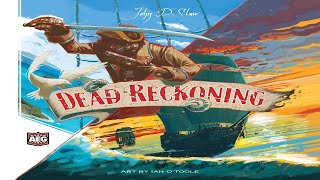
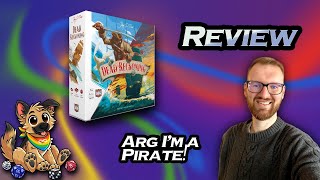
Dead Reckoning's greatest achievement is how thoroughly it weaves theme into mechanism. The cover art, striking pirate imagery that first drew many reviewers' attention, isn't merely window dressing. Your crew genuinely improves through experience. The progression of your ship, from basic vessel to customized explorer with expanded cargo capacity and firepower, reflects rational escalation. When you upgrade a crew member's abilities, you're not manipulating an abstract economy; you're developing a character with growing competence. This coherence between narrative and system is why players describe Dead Reckoning as achieving that rare quality where mechanics and theme reinforce each other completely.
Multiple Valid Paths Without Compromise
Dead Reckoning presents genuine strategic forks. You can become an economist, focusing on trade and resource accumulation. You can become a raider, attacking other players and NPC characters through the cube tower's randomized combat. You can be an explorer, pushing into the deepest reaches of the board to discover what lies there. Or you can blend these into something entirely personal to your table. What's remarkable is that none of these approaches feels suboptimal. A crew focused on economic engine-building can prosper as thoroughly as one optimized for combat. This balance prevents Dead Reckoning from calcifying into a single dominant strategy, keeping each playthrough genuinely open.
What Makes Dead Reckoning Stand Out
Ship Customization as Emergent Identity
Beyond crew development, your vessel itself becomes a character. You customize your ship by adding cargo space, upgrading your arsenal, and modifying capabilities that align with your evolving strategy. This ship customization layer adds another dimension of progression and decision-making. Some players lean into becoming fearsome raiders with heavy armament. Others prioritize holds and trading capacity. Your ship becomes a visible expression of your strategic identity, and this personalization deepens engagement with the game world.
Campaign and Saga Systems for Long-Form Play
Beyond the core game lie special powers tied to specific captains and saga expansions that reviewers have glimpsed but not yet fully explored. These systems appear designed to unlock deeper gameplay layers for committed players, offering ongoing narrative progression and variable captain abilities that shift how the game feels. The existence of these unexplored depths excites the community: there's more game to discover, and that promise of discovery mirrors the exploratory spirit of the game itself.
Potential Drawbacks
The Meandering Pace Isn't for Everyone
Dead Reckoning's openness and exploration-focused design means the game unfolds at a contemplative pace. Reviewers describe it as one that “meanders,” and while they intend this positively, it's worth noting that players seeking aggressive, high-pressure competition or tight time constraints may find this pacing leisurely. The game prioritizes letting you explore options rather than forcing immediate commitment. Groups that prefer tight, swift decision-making may want to ensure Dead Reckoning's strategic rhythm aligns with their preferences.
Component and Resource Management Complexity
Dead Reckoning involves many moving pieces: crew cards with clear upgrades, ship customization tokens, resource tracking, island control, and combat resolution via the cube tower. This wealth of systems, while thematically coherent, means the game carries genuine mechanical complexity. Players new to the system need time to internalize how these layers interact. The first few plays involve more rules navigation than seasoned players might prefer, though reviewers universally report that the complexity pays off in strategic depth rather than unnecessary busywork.
If You Enjoy Dead Reckoning
Players who love Dead Reckoning also gravitate toward Merchants & Marauders for its similar pirate economics and exploration. Xia and Mage Knight appeal to those who love the combination of exploration and engine-building. Eclipse and Spirit Island attract fans of variable player powers and deep strategic asymmetry. Forgotten Waters offers pirate theming with cooperative storytelling, while Oath delivers negotiation and political maneuvering in a sandbox setting. Each offers a different flavor of the openness and player agency that make Dead Reckoning special.
What Reviewers Are Saying
"This is a game where you're managing your crew of pirates as you kind of go and explore around, find these uninhabited but resource-rich islands, try to vie for control of those islands, go attack other players. It uses John Declair's kind of card crafting mechanism where it functions like a deck builder, but you're never really adding cards to your deck. You're just upgrading and augmenting the abilities of your cards."
— Meeple University
"I wanted to play this for so long and then we were finally at Gen Con and went into the library and got it played and I fell in love with it. The fun story is I was at a dinner that night and actually won this copy at the dinner after falling in love with it that morning. While there are some battles, there's so much else to do. You get to go exploring, which I love. You're going into the ocean, you're opening new cards up, and you get to be pirates in really a mostly Euro game."
— Board Gaymes James
"It's a kind of pirate Euro. Very Scythe-like in many ways if you've played that, but it has a really cool like kind of deck building element. You have this deck and it doesn't change, but what does happen is you can kind of buy upgrades for your crew. So instead of having one action, maybe they have four actions now or you know something like that. You're defending islands, you're collecting treasure, there's like all different ways you can go. You can just grease people. You can become like an economist in terms of farming money. It's a lot of fun."
— Neon Gorilla