/pic3169827.png)



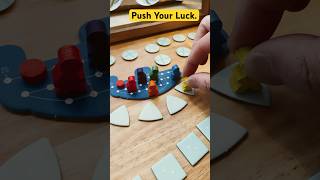







































Deep Sea Adventure Deep Dive
What the Community Thinks About Deep Sea Adventure
Deep Sea Adventure has earned consistent praise from board game reviewers across multiple channels. The game is celebrated as an accessible entry point into push-your-luck mechanics while offering surprising strategic depth. Reviewers frequently highlight its ability to work across player skill levels, from casual family gatherings to experienced gamers seeking quick, tense moments. The shared submarine oxygen mechanic has become the defining feature that sets it apart in a crowded push-your-luck landscape, generating the kind of table talk and dynamic group interactions that define memorable game nights.
Core Mechanics That Define Deep Sea Adventure
Push-Your-Luck in Miniature Form
At its heart, Deep Sea Adventure is a masterclass in accessible push-your-luck design. On each turn, players roll two custom dice (limited to values 1-3) and move that many spaces deeper into the ocean. The tension arrives not from high-variance rolls, but from a calculated decision: continue diving for better treasure, or turn around and retreat to the submarine before oxygen runs out. This choice repeats every single turn. Do you risk going one space deeper? Do you turn back now? The deliberate pace of the game forces players into constant deliberation, creating opportunities for strategic thinking rather than pure chance.
What makes this push-your-luck feel fresh is the penalty structure. When you carry treasure, your dice rolls become worse: you subtract one space of movement for each token you hold. This creates a thematic feedback loop where greed literally slows you down, a mechanic reviewers have highlighted as both clever and intuitive. The system discourages hoarding without removing the temptation to grab just one more piece of loot.
The Shared Oxygen Tank as Social Pressure
The communal air supply transforms Deep Sea Adventure from a solo optimization puzzle into a social negotiation. Every turn, if any player has collected treasure, the oxygen level decreases by the number of tokens they hold. This single rule creates cascading tension: one greedy player carrying four tokens will deplete oxygen by four per turn, affecting everyone. The mechanic forces players to monitor each other's greed levels and respond accordingly. Some groups use this to goad opponents deeper. Others form temporary alliances to manage the shared resource. Reviewers consistently note that this mechanic generates table talk and banter that wouldn't exist in a purely solo push-your-luck game.
The Deep Sea Adventure Experience
Intensity That Builds Each Round
The game's three-round structure creates a natural progression of pressure. Early rounds feel manageable as players cautiously explore. By the midgame, multiple divers carrying treasure cause oxygen to plummet rapidly, transforming a leisurely descent into a frantic scramble for the exit. Late-game rounds see divers stacked together fighting for survival, with empty spaces filling in from collected treasures. The board physically shrinks as rounds progress, making it easier to reach the deep-value treasures but harder to retreat. This mechanical progression ensures the tension rarely plateaus.
Failure as Spectacle
Drowning in Deep Sea Adventure is dramatic. When oxygen reaches zero while a diver is still underwater, that player loses all collected treasure. It sinks to the ocean floor in piles, where it becomes a single token for movement purposes. Reviewers note this creates an interesting end-game dynamic: earlier failed divers' treasure becomes accessible to later players, potentially rewarding bold deep dives. The visual and narrative consequences of running out of air make failure feel thematic rather than punitive, and the laughter that follows a player's oxygen miscalculation has become an expected highlight of the experience.
What Makes Deep Sea Adventure Stand Out
Elegant Miniaturization
Deep Sea Adventure arrives in one of the smallest board game boxes on shelves. Yet it contains everything needed for compelling 30-minute experiences. The production quality matches its price point: directional meeples so clearly marked that orientation never confuses players, thick cardboard tokens in different shapes so color-blind players can distinguish loot tiers, and a rulebook that uses bold text and diagrams to guide learning. Reviewers appreciate how the small footprint makes this a travel-friendly option, pocketable for flights, road trips, and restaurant tables. The compact form factor contradicts the game's capacity to entertain: a small box that delivers outsized table impact.
Accessibility Across Demographics
One reviewer noted they had brought Deep Sea Adventure to countless game sessions and never seen it fail to resonate. Non-gamers grasp the diving theme instantly. The turn structure is transparent: roll, move, decide. Families appreciate games where younger children can compete without special rules or handicaps. Experienced players find the oxygen math satisfying and the group dynamics unpredictable. Few games serve such a broad audience without compromise. The shared resource and simple turn structure make it universally teachable; the strategic depth in oxygen management and decision timing keeps experienced players engaged.
Potential Drawbacks
Limited Replayability and Stagnant Rulesets
The ocean floor is deterministic. Loot positions remain fixed; only the randomness of who collects what and when varies between plays. After several sessions, the board layout becomes familiar, and the optimal treasure routes become apparent. Reviewers note that while the push-your-luck decisions stay tense, the lack of variable board states or ruleset twists means later plays feel similar to earlier ones. Some groups crave modular variants or different oxygen levels to sustain long-term engagement. The game invites repeated plays during a single evening but may not maintain novelty across months.
Scaling Problems at Extreme Player Counts
Deep Sea Adventure plays 2-6 players, but reviewers emphasize it works best with three or more. With only two divers, the shared oxygen mechanic loses impact; there's less group pressure and table talk. The leapfrogging rule (when moving through other players' spaces, you don't count their position) becomes more powerful at higher counts, sometimes preventing weaker-positioned divers from making deep runs. At six players, oxygen depletes so rapidly that conservative play becomes the dominant strategy, reducing the appeal of the risk-taking that defines push-your-luck games. Most reviewers recommend treating three-player sessions as the sweet spot.
If You Enjoy Deep Sea Adventure
Fans of Deep Sea Adventure often gravitate toward other short-form push-your-luck experiences. Incan Gold delivers similar risk-reward tension with a card-driven structure and a wider range of dramatic outcomes. Clank! offers push-your-luck in a deck-building wrapper with deeper strategy. Tower of Destiny uses a spinning spinner instead of dice, adding a different tactile element to the push-your-luck moment. For those drawn to the shared-resource aspect, The Resistance and Coup explore social deduction mechanics. For fans of the compact form factor, Love Letter and Skull deliver similarly outsized experiences from tiny packages.
What Reviewers Are Saying
"This game is a really elegant push-your-luck game that never overstates its welcome due to the shared air supply. Everything you're doing is kind of like diving—you're using oxygen every turn, straining your diver as he carries more and more loot—and you gotta backtrack to swim back to the sub. This is impressive how cleanly it depicts a literal deep sea adventure in 30 minutes or faster."
— ShelfSide
"This is just a great example. It's so easy to teach. It scales very well. You can play it at two, three players all the way up to six players with very easy rules to explain and it's just a lot of fun. Simple choices, just a bit of dice rolling, but with some little twists where the more you collect, the slower you're going to move. You're reducing pit values from the dice that you're rolling for each piece of loot you've collected."
— Chairman of the Board
"It has this cute little idea where you're kind of descending down and you're trying to take all these treasures, and you have a little bit of screwage where you can take more treasures that you necessarily even want or maybe should—in order to deplete that oxygen supply faster so that your opponents can't even get back to the submarine. But by doing that, maybe you now can't get back to the submarine. It's just fun."
— Getting Games