/pic2561229.jpg)








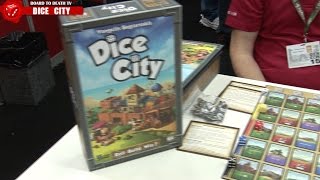


Dice City Deep Dive
What the Community Thinks About Dice City
Dice City occupies a unique position in the hobby: a game light enough to teach in minutes, yet strategic enough to reward careful planning. Across multiple playstyles and player counts, reviewers consistently praise the game's elegant balance between randomness and player control. Foster the Meeple call it fun and easy to learn, Tabletop Turtle relish its optional aggression, and DaniCha enjoy the satisfaction of upgrading an entire city. The core appeal lies in how Vangelis Bagiartakis and AEG turned the dice themselves into a resource to manage, creating a deeply personal engine-building experience.
Core Mechanics That Define Dice City
The Dice-as-Currency System
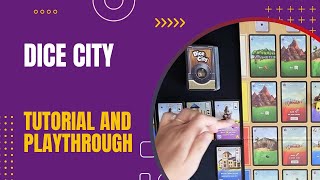
At Dice City's heart is a deceptively simple premise: roll your dice and place them on a personal grid where they activate location cards. Each location produces different resources based on the die value and color. Rather than fighting the randomness, players leverage it. Some locations allow you to spend resources to reroll dice or manipulate their placement, giving you agency even when fortune is unkind. Over a game spanning many turns, this tension between rolling what you get and spending resources to change your fate creates the game's rhythmic pulse.
The Engine of Resource Management and Card Drafting
Resources gathered from your locations let you purchase new location cards from a shared market, continuously upgrading your city grid. You can deactivate locations to refresh them, build trade ships for end-game bonuses, and gather armies for defensive points. The card market operates on a clean push-your-luck economy: as cards are purchased, the market refreshes, so timing your acquisitions matters. This card-drafting layer transforms what could be a purely solitary puzzle into a game where tracking what others are buying becomes valuable intel.
The Dice City Experience
Accessibility and Rapid Play Loops
Dice City is visually straightforward and plays fast. A single turn consists of rolling your dice, taking actions with them, and triggering the market refresh. Games complete in roughly forty-five minutes to an hour, making it accessible to both newcomers and experienced players. Foster the Meeple emphasize how easy it is to learn and play. The rules are intuitive enough that setup-to-first-play can happen quickly, yet the decision space remains genuine throughout. This combination accounts for why Dice City appears on recommendation lists for teaching new players: it teaches dice manipulation, engine building, and resource optimization without feeling like a teaching game.
Building Your Personal City Engine
What makes Dice City memorable is the satisfaction of watching your city develop. Each location you purchase is a permanent part of your tableau, and upgrading them creates a visible engine of synergies. Unlike games where take-that elements dominate the experience, Dice City lets you build quietly if you choose. You can focus on your own economy, crafting a city optimized for your dice rolls, or you can pivot toward aggression and attack opponents' resources or locations. This optionality means players at the same table can have entirely different experiences, one engineering victory through pure resource generation while another wages economic warfare.
What Makes Dice City Stand Out
The Optional Take-That Mechanic
In a crowded landscape of aggressive games, Dice City's restraint is its strength. The take-that elements exist but are not forced. You can attack an opponent directly to disrupt their resources, or target the buildings they have constructed to deactivate part of their engine. Yet nothing compels you to do so. Tabletop Turtle appreciate this design choice, noting they enjoy both building strong structures and tearing down an opponent's, which gets people more engaged. Unlike games where aggression is baked into the scoring system, Dice City rewards competent city building regardless of whether you ever target an opponent. This flexibility allows the game to scale from cutthroat to cooperative depending on the players.
Dice Engagement Without Dice Frustration
A game built entirely on dice rolling risks feeling punishing when luck turns cold. Dice City sidesteps this through a clever reward economy. While you cannot control what you roll, you can always control what you do with your rolls. If you need a specific outcome, spending a resource to reroll or manipulate your dice placement is always an option. The design philosophy respects both the drama of the dice and the player's agency to adjust their plan. This makes the game equally playable whether you are in a streak of fortune or fighting through a rough sequence of rolls.
Potential Drawbacks
High Variance and Market Dependency
Dice rolling inevitably introduces variance, and some turns will deliver far better resources than others. A player who rolls poorly for several turns might struggle to catch up, depending on how aggressively others build. Additionally, the game's economy rewards building wide and upgrading locations repeatedly. If you prefer games with tighter scoring or less reliance on which market cards appear when, Dice City might feel unpredictable. The drafting element, while elegant, also means you are partly dependent on what others leave in the market and what the card flow gives you.
Dice Rolling as a Sticking Point
For players with dice aversion, Dice City's core mechanic is unavoidable. While the game mitigates bad luck through reroll options, you are still rolling dice every single turn. Some players report feeling frustrated when they need a specific die result and do not get it, even with mitigation. The game's speed and accessibility can mask the luck factor until a run of poor rolls compounds. If you have had negative experiences with dice-heavy games in the past, be aware that Dice City's appeal depends partly on embracing dice as a core tension rather than resenting them.
If You Enjoy Dice City
Dice City's design philosophy aligns with Machi Koro, which similarly turns dice results into a city-building economy with optional interaction. If you love building personal engines, try Roll Player, where dice placement drives character construction. For players drawn to the aggressive elements, Catan and Imperial Settlers offer interaction with more structural conflict. Those seeking dice with more player control might explore Dice Throne, which ramps up the confrontation. And if the engine-building-from-dice theme appeals, Quarriors delivers a similar blend of luck and tableau development.
What Reviewers Are Saying
"I like games where I focus on building my best structure or mechanisms, and I like destroying those structures. It's fun because there's a little bit more action, it gets people more engaged and more invested."
— Tabletop Turtle
"It's fun and easy, really easy to learn, easy to play. You're basically just building up a city by using dice and getting cards and upgrading your city."
— Foster the Meeple
"I do find playing two players is more fun with the attacking aspect, because your locations might end up being attacked by your opponent, which could deactivate some of them. You feel good and accomplished because you've just upgraded your entire city."
— DaniCha