/pic2880939.jpg)












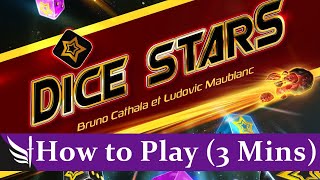




Dice Stars Deep Dive
What the Community Thinks About Dice Stars
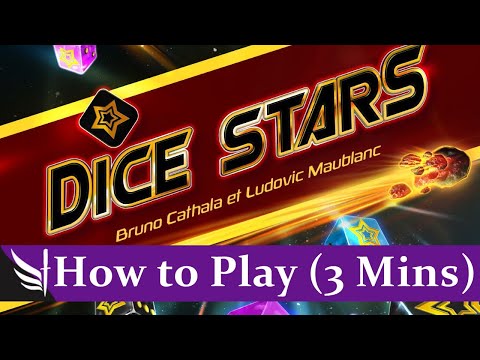
Reviewers consistently describe Dice Stars as an engaging, accessible roll-and-write that delivers quick gameplay without demanding heavy decision-making. Adam in Wales places it on a countdown of favorite fillers and recommends it warmly, while JestaThaRogue walks through its rules as a clean, teachable design. The game appeals to players seeking a breezy experience that works across multiple player counts and solo play, making it a reliable choice for both casual game nights and as a palate cleanser between heavier games. Its pedigree, designed by Bruno Cathala and published by WizKids, signals the kind of approachable, well-tuned design Cathala is known for.
Core Mechanics That Define Dice Stars
Rolling, Drafting, and Committing Dice
At the heart of Dice Stars lies a straightforward loop that JestaThaRogue lays out clearly: the active player draws dice from the bag and rolls them, then everyone drafts from the result. From the rolled pool, a player chooses a grouping, selecting either all dice of one color, all dice of one number, or all dice showing star icons. This constraint forces meaningful decisions about which dice to claim each turn. Adam in Wales highlights this selection step as the core tension, noting that you either take all the dice of one number, all of one color, or all the dice showing stars. The chosen results are then marked onto the player's sheet.
The Grid and the Multiplier System
Players record their drafted dice across a sheet organized by colors and numbers. Adam in Wales points out that some columns multiply the scores of other columns, which turns a simple act of writing numbers into a layered scoring puzzle. The decision of where to commit each result, chasing a multiplier or playing it safe, gives the game its quiet strategic texture. Each game runs for a fixed sequence of rolls, with DaniCha noting in her playthrough that the game consists of a set run of rolls that you track on the sheet. This built-in clock ensures snappy pacing and keeps the game from overstaying its welcome.
The Dice Stars Experience
Portable and Light
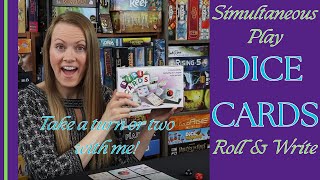
DaniCha's unboxing emphasizes how compact and travel-friendly the package is, with the dice, bag, and reusable score sheets fitting into a small box. The lightweight rules and rapid turn structure invite casual play without requiring a heavy investment of time or attention between turns. The result is a game that sits comfortably at the lighter end of the spectrum, easy to bring along and quick to set up, which is exactly the niche these reviewers place it in.
Solo Play with Simple Elegance
Dice Stars includes a solo mode, and both DaniCha and Adam in Wales single it out as a highlight. Adam in Wales specifically recommends the game in part for its good little solo mode, and DaniCha demonstrates a solo run in her playthrough. The solo experience preserves the same drafting and scoring loop, giving players a self-contained challenge that captures the heart of the multiplayer game. For a filler of this size, reviewers treat a satisfying solo option as a genuine value-add.
What Makes Dice Stars Stand Out
Approachable Without Oversimplifying
Adam in Wales situates Dice Stars in a deliberate middle ground, describing it as a touch more involved than the very lightest roll-and-writes yet still easy to grasp. The core rules can be explained in minutes, but the choice of how to group dice and when to chase multipliers gives experienced players something to think about. Because you take all dice of a chosen attribute rather than fiddling with individual selections, each turn resolves cleanly, which keeps the game flowing even at higher player counts.
Variability Through Small Decisions
Because players choose how to use each rolled result and which scoring avenues to prioritize, no two games follow the same path. The shuffle of the bag, the unpredictability of the rolls, and the scarcity of the star icons create natural tension. Reviewers frame this as a game where you adapt to what you roll rather than executing a fixed plan, and that adaptability is a large part of its replay appeal as a quick, repeatable filler.
Potential Drawbacks
Light Thematic Footprint
Dice Stars treats its colored dice and numbered grid largely as mechanical abstractions. Reviewers approach it as a pure roll-and-write rather than a thematic experience, so players seeking narrative immersion will not find a story in the components. The appeal is the puzzle of the dice and the sheet, not worldbuilding, which suits its filler role but limits its reach for theme-driven players.
Modest Depth and Repetition
As a light filler, Dice Stars offers a contained decision space. Adam in Wales frames it as a fun, recommendable game rather than a deep strategic centerpiece, and the limited number of scoring avenues means dedicated strategists may find the choices narrow after many plays. The same simplicity that makes it accessible also caps how much long-term depth it can offer compared to heavier roll-and-writes.
If You Enjoy Dice Stars
Dice Stars fans should explore other roll-and-write designs in the same accessible territory. Ganz Schon Clever offers a meatier dice-drafting puzzle with chained scoring for players who want a step up. Qwixx delivers a similarly fast, light experience built around marking off rolled results. For the drafting element specifically, Sushi Go shares the pick-and-commit decision cycle in a card format. Each occupies the same breezy, quick-to-table niche that makes Dice Stars a dependable filler.
What Reviewers Are Saying
"This is a roll and write game. We are trying to score the most points by drafting the best dice each turn."
— JestaThaRogue
"You're just rolling dice and then you're selecting a group of dice. Either select all the dice of one number, or all the dice of one color, or you select all the dice showing stars. It's a nice one, it's a fun one, with a good little solo mode."
— Adam in Wales
"I like games like this where you're just filling in a grid of numbers, adding them up. There's really nothing too complex about it."
— Watch Review