/pic4216110.jpg)













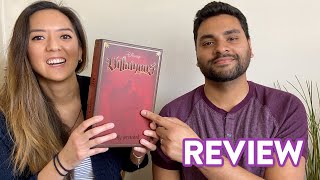
Disney Villainous Deep Dive
What the Community Thinks About Disney Villainous
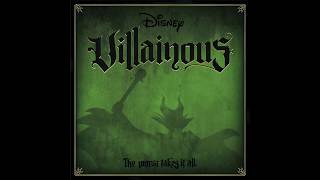
Disney Villainous has earned widespread acclaim from the board game community as a remarkable achievement in licensed gaming. Reviewers consistently praise the game for delivering surprisingly excellent gameplay beneath its Disney branding, with many noting that the theme enhances rather than distracts from the mechanical design. The game has become a staple recommendation for both casual players and experienced gamers, spanning date nights, competitive tournaments, and collection highlights. While universally respected, opinions vary on player count and specific expansions, with most agreeing that the game shines in smaller groups.
Core Mechanics That Define Disney Villainous
Asymmetric Design and Unique Victory Conditions
At its heart, Disney Villainous delivers what many consider its greatest strength: genuine asymmetry. Each player controls a different Disney villain, and every character pursues a completely unique victory condition. Maleficent might need to place curses, while Ursula works toward specific spell combinations, and Jafar follows an entirely different path. This is not surface-level asymmetry with minor variation; the designers at Prospero Hall crafted each villain to play fundamentally differently from the others. The design philosophy is genuinely impressive: maintaining balance between wildly different win conditions while keeping the overall complexity manageable. Players must learn their individual villain's board, deck composition, and objectives, but the game provides excellent teaching materials. The villain guides are frequently cited as a major design win that makes onboarding accessible even for newcomers.
Action Selection Through Location Movement and Card Management
Each turn, players move their villain pawn to a new location on their personal board and execute the available actions at that location in any order they choose. These actions typically include gaining power tokens (the currency for playing cards), playing power cards from hand, activating fate abilities to disrupt opponents, and moving heroes or allies around the board. The tension emerges in hand management and sequencing: you must decide not only which location to visit but also the order and timing of your actions, especially when fate cards have blocked portions of your board. This creates a puzzle-like element where players adapt their plans based on disruptions from opponents. The fate deck means that while you control your own destiny, opponents actively work to slow your progress by placing heroes into your realm, forcing you to invest resources into vanquishing them or play around their presence strategically.
The Disney Villainous Experience
Thematic Integration and Production Excellence
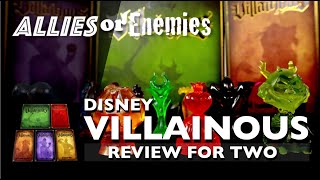
What makes Villainous special is the seamless marriage of theme and mechanics. This is not a generic game with Disney characters pasted on; the theme is woven throughout the experience. Each villain's objective directly reflects their film narrative: you understand why Maleficent needs to accomplish her specific goals, why the Queen of Hearts pursues her scheme, why Captain Hook obsesses over Peter Pan. The production values reinforce this immersion. The villain tokens are described as chunky and wonderful to handle, the cards feature distinctive artwork tied to each villain's aesthetic, and the overall visual presentation is consistently praised as beautiful. Players frequently mention how discovering the thematic integration of end-game objectives and card designs keeps the experience engaging even after multiple plays. The component quality and artwork combine to create a game that appeals to both dedicated board gamers and those who primarily enjoy the Disney license.
Scalability and Player Interaction
Disney Villainous accommodates two to six players, though the community consensus strongly favors two to three. At two players, the game functions as a focused duel with constant back-and-forth fate card plays and direct engagement. At three players, interaction remains engaging and manageable. At four or more, the game can stretch in length and complexity, as each additional player means more rounds of others taking their turns between your actions. The asymmetric nature means downtime can vary significantly depending on whether you are playing a fast villain or one with a more complex board state to manage. The meanness of the game is a feature, not a bug: fate card disruption is constant and deliberate, creating a playful but genuinely competitive experience where you are always trying to frustrate your opponents' plans while defending your own. Some players find this take-that dynamic frustrating, while others view it as the game's defining appeal.
What Makes Disney Villainous Stand Out
Innovative Villain-Specific Designs and Replayability
Each villain feels like a complete design achievement rather than a variation on a template. The base game includes six villains, each with their own power deck, fate deck, unique board layout, and asymmetric win condition that plays out completely differently from the others. The expansion boxes, which are standalone and do not require the base game, introduce additional villains like Cruella de Vil, who needs to collect dalmatian tokens, or Mother Gothel, who constantly battles the hero Rapunzel moving toward escape. This variety means returning to the game feels fresh, because playing as different villains genuinely changes the experience. The replayability is not just about facing different opponents; it is about learning and mastering different characters who each require different strategic approaches. Some villains reward aggressive play, while others demand careful resource management or defensive positioning. Because the expansions are standalone with varied villain selections, they create natural entry points for players interested in specific Disney characters.
Exceptional Teaching and Accessibility
A major highlight for the community is how the game solves the teaching problem. Asymmetric games are notoriously difficult to teach, because explaining different rule sets for different players typically creates confusion and bloats teach time. Disney Villainous addresses this by including a villain guide for each character that clearly outlines their specific mechanics, objectives, and unique rules. These guides are consistently praised as excellent design solutions that make teaching newcomers significantly easier. The base rules are relatively simple: move to a location, take actions from that location, manage your hand of cards, and play them to advance toward your goal. What changes between villains is the specific nature of their objectives and card interactions, not the fundamental turn structure. This makes Villainous highly accessible to casual players while maintaining sufficient depth for experienced gamers.
Potential Drawbacks
King-Making and Predictability Issues
At higher player counts, particularly five or six players, the game can suffer from king-making behavior where the player in last place becomes a target for fate card harassment from everyone else. Because no one can be eliminated, the second-place player sometimes receives less attention from fate card disruption, which can inadvertently allow them to sneak to victory while attention focuses on the leader. Additionally, understanding villain balance and knowing which character is closest to winning becomes crucial information, and this can create scenarios where knowledgeable players gang up on a specific player, interfering with their progress rather than purely playing their own game. This is less a design flaw than a natural consequence of asymmetric design at higher player counts.
Game Length and Engagement at Higher Counts
The game's length expands significantly with more players, and not always in satisfying ways. With four players, expect the game to run considerably longer than intended as each player takes their turn and potentially makes interrupt decisions during others' turns. Some players report that games at five or six players can drag, with significant downtime for some characters while others execute their turns. The interaction pattern also shifts: at two to three players, you are constantly aware of what opponents are doing and actively disrupting each other. At higher counts, you might find yourself focused only on the players directly before and after you in turn order, with less meaningful interaction across the full table. Most community members recommend playing with two or three players for the tightest experience and strongest sense of tension.
If You Enjoy Disney Villainous
If Villainous captures your interest, the broader design space offers several complementary experiences. Marvel Villainous presents a different asymmetric villain game with similar mechanics but distinct character implementations and a shared fate deck instead of individual ones. For cooperative play around classic monsters, Horrified flips the script with a team-based hunt against Universal Monsters. If you appreciate the accessible card play and tableau decisions, Sushi Go! and Love Letter offer simpler, card-focused alternatives with their own interactive elements. Each shares Villainous's knack for delivering meaningful decisions in an approachable package, while Disney Villainous remains the standout for players who want every seat at the table to feel like a different game.
What Reviewers Are Saying
"The most surprising thing about this Disney focused game is that it has genuinely good gameplay. The fact each character plays differently and has its own unique strengths and weaknesses while all feeling equally capable of winning is excellent design."
— 3 Minute Board Games
"It's a highly asymmetric game where you are playing as the villains, different villains, and you're trying to be the best villain. You're trying to out-compete the other villains. Each person has their own asymmetric end game that is specific to the theme of your villain."
— Before You Play
"Villainous is straight up mean. This is by far the meanest game on our list, and you're just trying to frustrate each other. You're trying to fulfill your nefarious plots, and you stop others by sending heroes to their realm to mess with them."
— Allies or Enemies