/pic6257426.jpg)
/pic7371890.png)
/pic6257426.jpg)


















Dog Park Deep Dive
What the Community Thinks About Dog Park
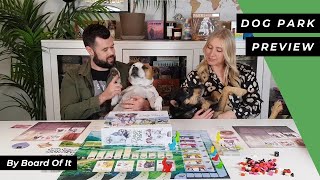
Across preview and review channels, Dog Park draws a consistent response: reviewers connect with this dog-themed set-collection game on a personal level, and several of them reviewed prototype or preview copies sent directly by publisher Birdwood Games ahead of its Kickstarter launch. Ilia and Tyler, working from one of those prototypes, describe being sold on Dog Park before even opening the box and say the bidding mechanic quickly became one of their favorite parts of the design. Board of It, also reviewing a preview copy from Birdwood Games, calls Dog Park excellent fun and singles out the auction phase as a highlight, while flagging real production concerns: their prototype's dog card colors were hard to differentiate at the table, and the penalty for finishing the walking phase last felt harder to swallow in a three-player game than in a two- or four-player one.
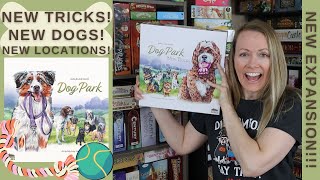
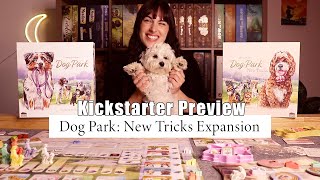
Not every channel agrees on how the game should be pitched. Three Minute Board Games frames Dog Park as a safe, non-confrontational design built for couples and casual groups rather than serious gamers, arguing it does not push any new ideas even as it nails its niche. Our Family Plays Games pushes back on that framing after playing a three-player game, concluding Dog Park is not a gateway title because tracking a secret objective, the breed expert awards, and in-game scoring abilities all at once takes real attention. The Board Game Garden's preview, produced as a sponsored feature for the New Tricks expansion, walks through how the add-on's multi-breed dogs, super locations, and new trick-training board raise that complexity further, while Tabletop Tolson, reviewing as a Kickstarter backer of the original game, credits the base game with being clean and quick even before the expansion is layered on top.
Core Mechanics That Define Dog Park
The Recruitment Auction
Each of the four rounds opens with two rounds of blind bidding, and reviewers keep returning to how sharply that phase is built. Ilia and Tyler explain that players spend their own reputation points, which double as the game's victory points, to bid on the dogs they want to add to their kennel, and a bid cannot be changed once a walker token is placed. Board of It walks through the same phase, noting that everyone starts with five reputation points and must bid at least one and at most five per dog, with ties broken in favor of whoever placed their walker first. Both channels frame the tension the same way: spending reputation now might win a dog that pays off later in walking bonuses or breed expert majorities, but overspending on the wrong dog can cost the game outright.
Drafting, Walking, and Home Time
After recruitment, players choose up to three dogs from their kennel to place on the lead for that round's walk, paying the resource costs shown on each card, as The Board Game Garden lays out in its base-game overview. The walking phase then sends every player's walker token through a shared park track, moving one to four spaces at a time and collecting whatever bonus sits on that space; landing on a space another player already occupies costs a reputation point, and the last player to leave the park loses a point outright. Home time closes the round by handing out two reputation points for every walked dog and subtracting one for anything left in the kennel, before the whole cycle resets. Final scoring layers several tracks together, the reputation total, dogs with end-game abilities, and the breed expert awards that reward whoever collected the most of a given breed, which The Board Game Garden and Board of It both describe as shaping how players draft from the very first round.
The Dog Park Experience
A Cozy, Competitive Vibe
Reviewers repeatedly describe Dog Park as feeling exactly like its theme promises. Ilia and Tyler say the gameplay stays smooth and demands attention to what everyone else is doing, but that it still feels like taking pups out to the park rather than grinding through a spreadsheet. Our Family Plays Games echoes that warmth, praising the fact-filled dog cards as both charming and genuinely educational about breeds and kennel classifications, useful for kids and adults at the table alike.
Close Games and Real Tension
Underneath the theme, several channels point to genuinely tight scoring. Ilia and Tyler mention winning a recent match by a single point, and Board of It calls the reputation-as-currency bidding one of the most interesting risk-reward decisions in the box, since every point spent chasing a dog is a point not banked toward the final score. That tension carries into the walking phase too: Board of It notes that racing to leave the park early guarantees a bonus but limits how many resources a player collects, while lingering risks landing in last place and losing a point outright.
What Makes Dog Park Stand Out
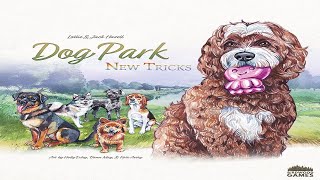
Over 200 Uniquely Illustrated Dogs
The scale of the card pool comes up again and again as the game's signature feature. Ilia and Tyler are amazed to find over 220 different breed cards, each uniquely illustrated rather than duplicated, and highlight that every card also carries a fun fact about its breed. Beyond Solitaire's interview with designer Lottie Hazel confirms the intent behind that design: Dog Park was built to include all 221 dog breeds recognized by the UK Kennel Club as a way of celebrating as many real dogs as possible.
Art Direction Built to Welcome Everyone
Multiple reviewers single out the art specifically. Board of It calls the presentation super good quality and says the artwork gives the game real table presence, while Three Minute Board Games describes it as remarkably pleasant to look at. In the interview, Hazel credits art director Dan May and illustrators Holly Exley and Kate Avery for the finished look, and frames inclusive design choices, like avoiding language and components that assume only one kind of player, as a deliberate publishing decision behind Dog Park rather than an afterthought.
Potential Drawbacks
Prototype Rough Edges
The most concrete criticism comes from Board of It, reviewing a prototype copy: several dog card colors, particularly certain greens and yellow-greens, blend together enough to make the breed expert awards hard to track at a glance, which matters because those awards require comparing what everyone else has collected across the table. They flag it explicitly as something that may or may not change before the final production run. In the interview, Hazel also discusses the broader challenge of pricing a board game accessibly compared to a book, weighing manufacturing costs against keeping Dog Park affordable for the widest possible audience.
Not Quite a Gateway Game
Reviewers disagree about who Dog Park is really for. Three Minute Board Games considers the base design very safe, warning it might be too simple for serious gamers, especially without the expansion. Our Family Plays Games reaches the opposite conclusion from an actual three-player session, arguing the game asks players to juggle a secret objective, breed expert majorities, and multiple scoring abilities at once, and concluding outright that it is not a gateway game despite its friendly theme. Board of It adds a structural concern on top of that: the penalty for finishing the park last can swing a player's score by more than it first appears, and they found that effect felt especially unbalanced in a three-player game.
If You Enjoy Dog Park
Parks comes up as the closest comparison across multiple channels: Board of It calls Dog Park reminiscent of it, The Board Game Garden points to the same one-way movement along the park track, and Three Minute Board Games recommends Parks directly for something similar but simpler. Board of It also likens Dog Park's round-by-round forecast cards to the scoring tiles in Wingspan, since both ask players to look ahead and adjust their choices accordingly. For a heavier alternative, Three Minute Board Games points toward Raising Robots.
What Reviewers Are Saying
"Dog Park is a remarkably pleasant looking game with art that is easy on the eye and a core concept and theme that is super accessible. At its core it's a drafting and set collection game that doesn't do anything exceptional or new, but it doesn't really need to. It's pitched as a non-confrontational game for couples and casual gaming groups and that's exactly what it is."
— 3 Minute Board Games
"In mechanical terms there's actually quite a few different mechanics going on here, it's quite fun. You have auction, which is always fun, it's always one of our favorite mechanics. Then you also have some resource management, you have some work placement, and you actually aim for some objectives, you go for some set collection, you want to have the most of certain types of dogs, and it's all good fun."
— Board of It
"You are going to be gathering different resources. This is similar to Parks, where you can go as far as you want forward but you can never move back."
— The Board Game Garden