/pic3432548.png)


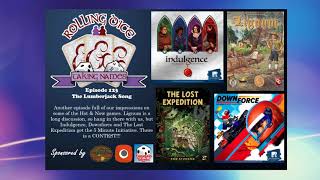















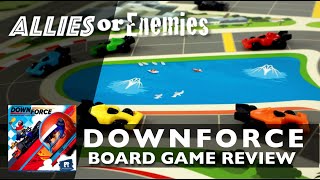













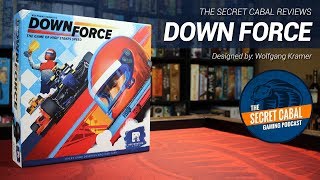
Downforce Deep Dive
What the Community Thinks About Downforce
Downforce has earned its reputation as one of the finest racing games in modern board gaming. Reviewers consistently praise its elegance, accessibility, and surprising depth. The game shines brightest with larger groups, where the tension between competition and betting creates engaging moments around the table. Many players return to Downforce repeatedly, whether in person or on digital platforms, drawn by its quick playtime and ability to accommodate both experienced gamers and newcomers.
Core Mechanics That Define Downforce
Auction and Card-Driven Hand Management
At the heart of Downforce lies a brilliant combination of simultaneous auction and strategic card play. Before the race begins, players bid on car ownership using a simultaneous blind auction where they select cards from their hand whose values determine their bids. This creates immediate tension as players must evaluate which cars pair best with their available hand. Once the race starts, card play becomes the core decision space. Players select cards to move multiple cars around the track, forcing them to navigate the constant conflict between advancing their own vehicles and managing the cards they must discard that benefit opponents. The cards themselves deplete as a finite resource, and timing matters enormously. Playing a strong card too early leaves weaker options for critical moments, while holding too long invites opponents to punish you with blocking moves.
Betting on Race Outcomes
Downforce's betting mechanic opens multiple paths to victory beyond simply finishing first. At three designated checkpoints during the race, all players secretly mark which car they believe will win. These bets provide substantial point bonuses, making it viable to profit from accurately predicting opponents' success. The beauty of this system is that ownership and victory are decoupled. A player controlling a rear-position car can still win the game by betting shrewdly on the frontrunner, adding a layer of psychological gameplay. Some groups report that early race leaders create self-fulfilling prophecies where most players bet on the same car, making that vehicle's victory more likely.
The Downforce Experience
Social, Competitive Tension
Downforce excels at creating moments of collective anticipation and tactical blocking. When a player uses hand management to strategically jam opponent cars into corner choke points, or when an unexpected card flip shifts the lead, the table erupts with genuine excitement. The game encourages interaction through blocking and jostling without becoming overly hostile. Laughter and groans punctuate gameplay as players discover they're powerless to move or watch their carefully positioned cars suddenly leap ahead. This competitive friction feels friendly rather than punishing, making Downforce a strong choice for groups that enjoy table talk and player interaction.
Quick, Accessible Gameplay
Despite featuring multiple decision layers, Downforce resolves remarkably quickly. Most plays conclude in 15 to 30 minutes once players understand the flow. This speed makes it easy to teach and inviting for players concerned about game length. The auction phase takes the longest, though even that pales compared to the streamlined racing itself. Once players grasp that card selection is about moving multiple cars and managing opponent position, the mental load shrinks. Later game turns flow even faster as hand sizes dwindle and options narrow, maintaining momentum without demanding constant attention.
What Makes Downforce Stand Out
Variable Power Cards That Enable Asymmetry
Six unique power cards distribute during the auction, granting each car owner a special ability. These powers genuinely change how cars move and race. One allows changing movement order from bottom-to-top instead of top-to-bottom, another provides bonus movement for rectangular spaces, and another grants extra movement when the player's car appears at the top of a card. These asymmetries create meaningful decisions during the auction, as players must evaluate which powers synergize with their hand of cards. A power that seems weak in isolation might become devastating when paired with the right combination of cards. This forces players to think beyond the immediate auction and consider the entire race ahead.
Elegant Design That Scales Across Player Counts
Downforce genuinely improves with larger groups. Six-player games offer optimal engagement, with constant interaction and blocking opportunities. Five-player games work very well on the right track. Even three-player games maintain enjoyment, though four-player experiences hit a sweet spot for many groups. The only significant downside appears at two players, where the reduced blocking opportunities and car density thin out the competitive tension considerably. This is not a flaw in design but rather an acknowledgment of the game's social nature. Downforce wants a table full of players strategically interfering with each other's ambitions.
Potential Drawbacks
Track Selection Dramatically Impacts Player Count Suitability
Downforce includes two double-sided boards. One features a wide-open circuit offering plenty of space and strategic routing options. The other presents a tighter, more constrictive layout with fewer escape routes and tighter choke points. The game becomes frustrating at mismatched player counts and track combinations. Five players on the cramped track creates excessive blocking where cars stall for extended periods, draining enjoyment. Conversely, three players on the open track removes sufficient friction that blocking becomes rare and tension evaporates. The rules should ideally include explicit player count recommendations for each track, but currently leave this guidance to player discovery through trial and error.
Betting Patterns That Can Converge Toward Sameness
In multiple playgroups, the betting mechanic has evolved into a self-reinforcing pattern where most players bet on the frontrunner at each checkpoint. Whichever car leads when the first checkpoint is crossed often receives nearly universal predictions of victory. This creates a cycle where all players earn roughly similar betting payouts, shifting the game's outcome heavily toward who spent the least during the auction and whose cars finished in the best positions. While this might reflect optimal group strategy rather than a design flaw, some players report wishing for more frequent upset bets and varied predictions. The mechanism remains solid, but not all groups experience its full potential for bluffing and counter-betting.
If You Enjoy Downforce
Fans of Downforce should explore Camel Up, which shares Downforce's betting and racing DNA while adding pyramid dice and a more chaotic energy. Formula D and Heat: Pedal to the Metal offer deeper racing mechanics for those seeking greater tactical complexity. Cubitos provides a push-your-luck racing experience with different decision trees. Jamaica and Flamme Rouge round out the modern racing game landscape with distinct flavors. For the auction and hand management elements, Camel Up again fits perfectly, as does Jaipur for intimate two-player auction action. Downforce occupies a unique middle ground: heavier than gateway racing games like Quest for El Dorado, lighter than simulation racers, and perfectly balanced for social gaming.
What Reviewers Are Saying
"I've played downforce three times at this point and in general I've had a good time with it. The main hand management race evaluation part sounds interesting to you, it's likely you'll enjoy it too. I think five and especially six is probably the best way that you're going to be playing this game, and not a lot of games do that very well."
— Jong Gits Games
"It looks like it's a racing game, but it really isn't. It's a game about gambling and messing with other players. It's all about using your player privileges to screw with other people and get the cars you want in the right position in order for you to make the most points."
— Three Minute Board Game
"Downforce is a big hit. It's so much fun. When you had more people at a higher player count, it's such a great gateway game. You've got hand management, player movement, variable power cards, player powers, you're betting, and when your car is really doing well, so much fun."
— OPG Voices