/pic3683059.png)

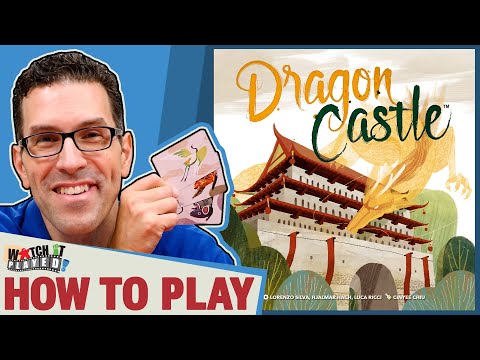





















Dragon Castle Deep Dive
What the Community Thinks About Dragon Castle
Dragon Castle has earned consistent praise from the board game community for its elegant design and visual presentation. Reviewers appreciate it as a thoughtfully executed take on classic tile-placement mechanics, with many noting its potential to stand the test of time. The game appeals to both casual players discovering the hobby and experienced gamers seeking a refined experience.
Core Mechanics That Define Dragon Castle
Tile Drafting with Strategic Puzzle
At its heart, Dragon Castle asks players to make two distinct puzzles work together. First is the drafting puzzle: selecting pairs of identical Mahjong-style tiles from a central ruin structure. Reviewers highlight the cleverness of this selection layer, where choosing which tiles to take directly impacts what opponents can access. The secondary puzzle then unfolds as players arrange their acquired tiles onto personal castle boards, using color adjacency and orientation to activate scoring combinations.
3D Building and Shrine Placement
A distinguishing feature is the vertical stacking mechanic. Rather than building only on a grid, players construct their castles three-dimensionally, placing shrines at various heights. These shrines provide points based on their elevation but also block future tile placements. The tension between grabbing quick scores and building higher for shrine bonuses creates meaningful decisions about how aggressively to pursue immediate points versus setting up long-term structural advantage.
The Dragon Castle Experience
Serene and Tactilely Satisfying
Reviewers consistently describe Dragon Castle as a serene experience that delivers surprising depth within its calm aesthetic. The physical components are exceptional: blocky acrylic tiles feel weighty and pleasant to handle, and the overall production quality reinforces a sense of elegance and craft. The visual beauty of towers growing across the table creates a shared moment of appreciation, rather than conflict.
Push Your Luck Timing
Each turn presents a subtle risk-reward calculation. Players must decide whether to pursue quick consolidation of tile sets for immediate scoring or hold back, banking on larger sets that will mature later. This timing element keeps the game engaging without overwhelming players with analysis paralysis. The variable end-game scoring conditions introduced each round ensure that different strategic paths remain viable across different plays.
What Makes Dragon Castle Stand Out
Elegant Presentation and Accessible Depth
The game achieves a rare balance: visually and mechanically elegant enough to introduce new players to modern board gaming, yet thoughtfully designed enough to reward experienced players. Component quality and art direction work together to create an understated luxury feel that invites play. The relatively short playtime means strategic engagement remains focused rather than fatiguing.
Timeless Design Philosophy
Reviewers note that Dragon Castle feels likely to age beautifully. Its abstraction allows it to transcend era-specific aesthetics, while its core mechanics avoid the bloat and special-case rules that can erode a game's elegance over time. The design respects player intelligence without demanding excessive rules overhead, creating a design that feels fresh and modern rather than dated.
Potential Drawbacks
Limited Strategic Depth on Repeat Plays
After many plays, some reviewers find that winning strategies begin to solidify. The puzzle of tile placement, while elegant, can feel solved rather than continually surprising. The game excels at delivering a satisfying experience, but players heavily invested in strategic discovery may eventually feel the design space has been thoroughly explored.
Moderate Player Agency Within Turns
While the drafting puzzle offers genuine choices, individual turns can feel somewhat constrained by the tiles available and board state. Players seeking games with multiple viable strategies or tactical pivots on every turn might find Dragon Castle's relatively streamlined decision trees less rich than weightier designs. The serenity comes partly from avoiding the chaos of high-volatility mechanics.
If You Enjoy Dragon Castle
Players drawn to Dragon Castle typically appreciate Mahjong Solitaire and tile-placement games like Planet Unknown. The serene, puzzle-forward experience appeals to those seeking games that don't demand confrontation or negotiation. It works exceptionally well in two-player format, where the strategic layer deepens slightly. Designers and players interested in how component quality and art direction can enhance mechanical elegance should study this title closely.
What Reviewers Are Saying
"The overall aesthetic theme the mechanics how they're implemented component quality it just really oozes a sense of Elegance that I find a lot of other games might not be able to convey as well."
— Tabletop Tokki
"It's really clever and like I like a lot of what's going on here. The visual of each game, you can make different structures and then taking the pieces and putting them on your own. Like just that is all so great."
— Rolls in the Family
"Very elegant and gorgeously produced. Perfectly produced with those kind of acrylic tiles. Really understated and classy design but still felt deluxe and rich. I think this one is going to really stand the test of time."
— Chairman of the Board