/pic3176771.jpg)




















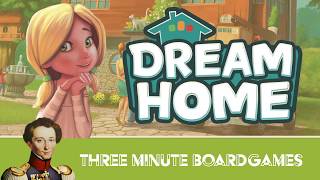
Dream Home Deep Dive
What the Community Thinks About Dream Home
Dream Home has earned consistent praise from board game reviewers and enthusiasts since its release at Essen Spiel 2016. The game resonates with both families and experienced gamers, striking a balance between accessibility and strategic depth that keeps players engaged. Channels like Adam in Wales, Actualol, and Board Game Garden highlight its beautiful execution, charming theme, and surprising decision-making potential despite its light, streamlined mechanics. The game has become a gateway title that introduces new players to modern board gaming while offering enough subtle complexity to satisfy seasoned hobbyists.
Core Mechanics That Define Dream Home
Card Drafting with Placement Constraints
At its heart, Dream Home employs a pair-based drafting system. Each round, players select two cards from a central display: one room card to place in their house, plus a helper resource card. The critical twist is that room placement is not arbitrary. Rooms can only be placed in designated spaces depending on their type, and building proceeds from the bottom floor upward, creating real decisions about timing and opportunity costs. Players might see an ideal room card but lack the foundation to place it, forcing them to either commit to a different path or take a card for the start-player advantage instead.
Set Collection and Spatial Scoring
Beyond placement, Dream Home rewards players for building thematically coherent homes. Matching room types earn multiplied points when grouped together, creating natural clustering incentives. Completing entire floors or collecting roof tiles of matching colors unlocks bonus scoring. The game includes delightful thematic rewards: having a bathroom on both floors, possessing kitchen and bedroom essentials, and placing decorative items like pianos or hot tubs in appropriate rooms. This layering of scoring conditions means a single room card can interact with multiple scoring pathways simultaneously.
The Dream Home Experience
Beautiful, Intuitive Accessibility
Dream Home shines in its presentation and ease of learning. The artwork is gorgeous and child-friendly, featuring lovely illustrations that evoke the theme of building a home. The rulebook is refreshingly streamlined for a modern board game. Turns move quickly since players are simply selecting cards and placing them, making the entire game play in around 30 minutes. Despite the simplicity, reviewers praise the surprising depth of decision-making. The game works wonderfully for families and younger players but never feels patronizing to experienced hobbyists who appreciate the economy of the design.
Engaging Moments of Denial and Compromise
The heart of Dream Home's appeal lies in its moments of difficult choice. Players begin with grand aspirations: complete matching rooms, fill both floors with bathrooms, collect a full rainbow of roof tiles. Yet the card market is shared, and each choice denies opponents their targets. Real tension emerges as players confront the gap between their ideal home and what the drafted cards allow. Deciding when to abandon a dream and commit to a new path creates the kind of bittersweet moments that make games memorable. Experienced gamers can pivot between mean drafting and collaborative building, making difficulty scalable by table culture.
What Makes Dream Home Stand Out
A Relatable, Underexplored Theme
Dream Home claims a rare thematic space in board gaming. The home-building theme is immediately relatable and appeals to players of all ages and backgrounds. The theme is deeply integrated into the mechanics: room placement mirrors real construction, helper cards represent practical aid, and decorative items genuinely feel like furnishings. Reviewers consistently praise the integration of theme and mechanics, noting that the artwork and card names reinforce player decisions rather than feeling tacked on.
Elegant Design Philosophy
Dream Home exemplifies what great game design looks like when a publisher clearly understands its target audience and executes cleanly. There are no rules that feel clunky, no overly fiddly components, no unnecessary chrome. The designer, Klemens Kalicki, and publisher Rebel achieve that rare alignment where nothing in the box feels out of place. Even the tiebreaker rewards close observation: hidden children illustrated throughout each player's house determine the winner if points are tied, encouraging players to admire the artwork they have built. This attention to detail extends to every element, creating a cohesive experience from opening the box through final scoring.
Potential Drawbacks
Limited Depth for Hardcore Strategy Gamers
Reviewers acknowledge that Dream Home's light ruleset may not satisfy players craving heavy, crunchy strategy or emergent complexity. The mechanics are intentionally streamlined, which means high-level play does not unlock radically different strategic layers. Experienced hobbyists who play decision-heavy games regularly might find Dream Home too straightforward, though many still enjoy it as an accessible family game or a quick opener at game night. The game rewards smart drafting and reading your opponents, but it does not reward deep mathematical optimization or multi-turn planning.
Box Size and Replayability Questions
Several reviewers note that the box is larger than the contents warrant, a common frustration with modern board game packaging. More substantively, some question whether the game sustains long-term replayability without expansion content. The core room-fill structure and relatively fixed scoring tracks mean that after several plays, the strategic decision space becomes familiar. An expansion, Sunny Street, has since released, addressing this concern by adding new rooms and helper options that refresh the puzzle. Without it, players chasing long-term engagement may find their interest plateau after a solid handful of plays.
If You Enjoy Dream Home
Players drawn to Dream Home's charming, accessible drafting should explore Sushi Go! for a tighter, faster card-drafting experience with similar pass-and-play mechanics. Carcassonne offers comparable gentle tile-placement strategy with beautiful artwork, though it requires more rules explanation. For those who love home-building and spatial themes, Cottage Garden by Uwe Rosenberg delivers a similar comfort-game feeling with polyomino puzzle mechanics. If the set-collection and bonus-scoring elements appeal, Seven Wonders provides deeper drafting complexity, while Calico offers a puzzle-building experience with charming cat-themed aesthetics. Dream Home fans seeking more without leaving the design philosophy should try the Sunny Street expansion.
What Reviewers Are Saying
"This game is probably the most beautifully executed game that I've seen in years. It's a light game with real streamlined mechanics where all you do is select cards and place them on your board. It's set collection, and yet there are frustrating decisions, there are fun decisions. It works for families and it works for people who are more experienced with board games."
— Adam in Wales
"Dream Home is a really fun gateway level card drafting game where you're building your dream home. Everyone's got a cardboard map of their house, and on your turn you just pick up a set of two cards. There are cool room placement rules, lots of difficult decisions and frustrating moments where you can't build the thing you want to build. The artwork is adorable and just beautiful to look at."
— Actualol
"Dream Home is another drafting game and I really really love this game. The theme of it being someone building their dream home just brings me so much joy and nostalgia. The gameplay is so fantastic, it's so easy to get to the table, and it just provides a lot of joy and a lot of comfort."
— Board Game Garden