












Dungeon Roll Deep Dive
What the Community Thinks About Dungeon Roll
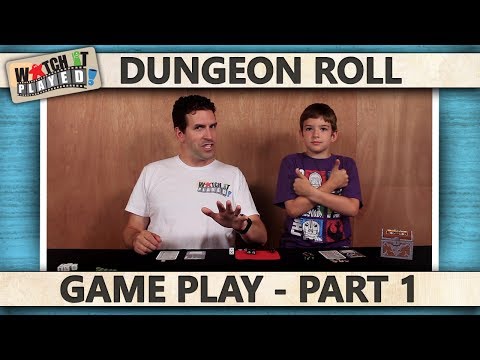
Dungeon Roll, the 2013 dice game from Tasty Minstrel Games, gets a divided but largely positive reception. Reviewers generally agree that its core loop is quick, tense and easy to teach. They disagree on whether that simplicity is a strength or a ceiling. Rodney Smith, Watch It Played presents the game as one about restraint, where every delve turns on whether to keep descending or leave with what you have. Chris Ryber, Board to Death TV focuses on its roleplaying flavor, describing the party of heroes as an attempt to capture the feel of a tabletop RPG in a compact package.
Enthusiasm is strongest among players who want a short, light adventure. Felicia, Board to Death TV calls it a fun, simple game that is not expensive for what you get, and suggests it for fans of Zombie Dice, Ninja Dice and Incan Gold. Watch It Played's playthrough shows the same appeal in practice, with a single bad roll able to cut a delve short. The skeptics are more pointed. Board Gaming Ramblings rates it a four on a ten point scale and describes it as boring once more than one player is involved. Board Games UnLocked placed it on a list of disappointing Kickstarter games, citing its luck-driven pacing, a lack of cooperation and a box that did not hold up. Reviewers agree on the quick, push-your-luck core. They split on multiplayer pacing and on whether the tactical depth lasts beyond a few plays.
Core Mechanics That Define Dungeon Roll
Dice Rolling and Color-Matched Party Dice
Dice rolling drives every delve. The adventurer rolls the white party dice to form a party, while the Dungeon Lord rolls black dungeon dice whose count is set by a ten sided level die. Felicia explains that the colors on the faces are there to match party members with their favorite actions: fighters with goblins, clerics with skeletons, mages with oozes, and thieves with chests. Champions can handle any monster type. Each companion die removes all monsters of its matching type, so one fighter can defeat every goblin in the room. Chris Ryber describes the result as one roll at the start of the delve followed by a kind of hand management, since the dice are spent as the party goes deeper. The randomness is central to the design, and Felicia notes that the game is luck based at first, with strategy emerging as treasures and hero abilities enter play.
Press-Your-Luck Delving
The second defining mechanic is the decision to keep delving. Each new level adds dice and raises the stakes, and the adventurer can retire to the tavern at any point to bank experience points equal to the level die. Failing to defeat every monster forces a flight that forfeits all points for that delve. Rodney Smith frames the core tension as whether to keep going deeper for more points or leave early with what you have. Board Gaming Ramblings and Felicia both describe the game as a press-your-luck design, and dragons add a sharp spike of pressure. A third dragon forces a fight that requires three different companions, and Rodney Smith's Watch It Played playthrough shows how a party that looks strong can still collapse under a run of monsters.
The Dungeon Roll Experience
Light, Fast and Adventurous
Reviewers consistently describe Dungeon Roll as a light, quick game. A co-host of Watch It Played says the game moves quickly because it is a very light, fast game, and that the turns tend to flow with little downtime for a solo table. Felicia describes it as a press-your-luck dice game with an adventurous feel, and says it can be really fun in small groups. The mood is one of tension rather than heavy strategy. Each choice to delve one more level carries a small thrill, and reviewers often remember the moment a dragon appears or a potion revives a champion more vividly than any tactical plan.
A Roleplaying Party in a Small Box
The game is also praised for its thematic sense of a roleplaying party. Chris Ryber says the designers were trying to capture the feel of a role playing game in one cohesive package, with fighters, mages, clerics, thieves, scrolls and champions standing in for a classic adventuring cast. Each hero carries a specialty that is always active and a unique ability that is used once per delve. Heroes level up at five experience points by flipping to a stronger master side, which reviewers see as a satisfying sense of growth across a session. Chris Ryber and Felicia both describe the minstrel's ability to make mages act as thieves and thieves act as mages as a clear example of this flavor.
What Makes Dungeon Roll Stand Out
Treasure and Hero Progression
Reviewers repeatedly highlight how treasure tokens and hero abilities change the game over three delves. Chris Ryber notes that as a player accumulates treasure, the party grows stronger, so the third delve can become a big run. Felicia points out that once treasures and better abilities appear, players must work out how to use them, which adds a layer of planning on top of the random dice. Items such as the Ring of Invisibility, which sends dragons back into the pool, and the Town Portal, which can be kept for two points at the end, give players meaningful choices about when to spend resources and when to save them for scoring.
Value, Production and Solo Play
Felicia singles out the production as a strength, describing the box as nice and the components as good quality, and says the game is not too expensive for what it delivers. Felicia also highlights that it can be played solo, with a ranking system that grades each score so players can chase achievements. Rodney Smith's Watch It Played final scoring walkthrough shows the ranking tiers in action, with the top rank requiring 35 points or more. For players who want a compact, affordable game they can play alone or with a small group, these elements are frequently cited as reasons to recommend it.
Potential Drawbacks
Multiplayer Downtime and Player Count
The most common criticism is pacing with more than a few players. Felicia says the game is not recommended for more than four players, and notes that waiting for a turn can be a little annoying because delves can run long. Board Gaming Ramblings is more blunt, describing the experience with more than one player as waiting for another player to finish a turn for as long as ten minutes. Their verdict is that the game is slow and boring in that setting, while still fine as a solo game.
Thin Interaction and a Luck-Heavy Opening
Some reviewers find the game lacks meaningful interaction and that its early turns depend heavily on the dice. Board Games UnLocked argues that the game is not cooperative, so players are primarily racing to collect the most treasure. The same reviewer called the game boring after a play or two, while acknowledging that the production was not the problem. Felicia also warns that some heroes are stronger than others and that players will need to develop strategies to cope with weaker draws. Reviewers who find the opening random tend to be the ones who see the game as shallow after a few sessions.
If You Enjoy Dungeon Roll
Felicia recommends Zombie Dice, Ninja Dice and Incan Gold as close relatives, since each rewards pushing a risky push-your-luck decision with an uncertain outcome. Board Gaming Ramblings invoked Yahtzee as a comparison point when describing a dice game that felt slow and dull to them, which makes it a useful reference for players deciding whether they want a similar format. Board Games UnLocked contrasts the small-game format with the larger designs from Tasty Minstrel Games, such as Orleon, which the reviewer felt suited the publisher better. Players who enjoy the dice-driven tension and light adventure theme should look at the first group, while those who want more depth and interaction may prefer the larger titles from the same publisher.
What Reviewers Are Saying
"So do you keep going deeper to get more points or do you get out early with the points you have and your head still intact?"
— Rodney Smith, Watch It Played
"This is a Press Your Luck dice game with an adventurous feel to it and can be really fun in small groups. We do not recommend this game if you are more than four players."
— Felicia, Board to Death TV
"This is a boring game. This is a game that you can play one player, that is okay, but if you play more than one player, then basically the other player is just waiting for you for ten minutes to do your turn. I felt like, really slow, really boring."
— Board Gaming Ramblings