/pic8702741.png)
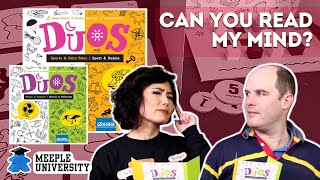
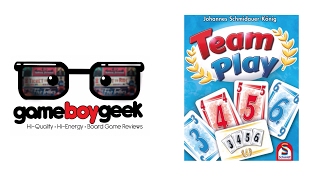
In Duos, a.k.a. Team Play, players compete in teams of twos to score points. On a turn, a player can draw two cards, pass 1-2 cards face down to their teammate, and complete one or more goals in whatever order they wish.
Cards come numbered 1-8 in magenta and blue with multiple copies of each card. Each player has a personal, face-up goal, with one public goal being available for all players, with goals being something like have four blue cards in sequence, have three of the same even number, or have two magenta cards that add to a third magenta card.
As soon as you have the right cards in hand, you can discard them to complete your personal goal or the public one, after which a new goal is revealed, with the achieving player being able to reject the first one revealed. When a team has completed eight goals, each player has one final turn, then whichever team has scored more points for its goals wins.



- Daughter is doing fantastic.
- Team is winning.
- The speaker lost at Duos.
- The youngest beat him at Duos.
Mechanics (from transcript analysis)
- Card Drafting — Players draw cards that can be specific colors, runs, or sets.
- Objective Fulfillment — Players have objectives to fulfill.
Video topics + discussion points
Quotes (from this video)
- All right, so we are playing Australas, which has these awesome little coral pieces.
- And already it's positive. I I it's the rule the learning is positive.
- This is kind of a the fish version of Wingspan.
- I liked it a lot.
- All right, so I'm about to start the Boop tournament.
- Endeavor Deep Sea is probably my favorite game of the convention so far.
- One of my absolute favorite trick taking games.
- This is only available in Korean, unfortunately, but it's super cool if you're a Pokemon fan.
- Basically, this kind of order fulfillment game.
- I did lose at Duos.
- Yeah, another game that his youngest beat him at.
References (from this video)
- Unique silent communication mechanic
- Engaging mind games and deduction
- Cannot talk to partner, relying solely on card play for communication
- Difficult to describe or categorize fully
Mechanics (from transcript analysis)
- Drafting — Drafting cards with the intent to mislead opponents or help partners.
- Objective claiming — Partners work together to complete objectives.
- Partners card game — A card game played with partners.
- Set Collection — Players aim to complete sets, both personal and public objectives.
Video topics + discussion points
Quotes (from this video)
- Everyone seems to be chasing this new card game fascination.
- As a person who really enjoys when a game comes with great packaging and great graphic design, they really did, I think, a good job setting this product apart.
- This is one of those quiet games at the table. It's very thinky.
- This is like one of those rockus party games where everybody's going to be yelling at each other.
- I'm a sucker for packaged sets of games. I really am.
- Until next time though, make sure everyone has fun at the table, and we'll see you then.
References (from this video)

- Appealing steampunk theme
- Label and concept around steam-powered inventions
- steampunk; Victorian era; inventions
Mechanics (from transcript analysis)
Video topics + discussion points
Quotes (from this video)
- I am so so looking forward to seeing them
- 13 games that I am so, so looking forward to this year
References (from this video)
- Energetic steam-powered theme; potential engaging engine-building
- steam-powered energy production
- energy production theme; steam-powered
Mechanics (from transcript analysis)
- Worker movement/engine-building — Moving workers to fuel a steam system.
Video topics + discussion points
Quotes (from this video)
- I am very keen on this game
- This is a energy production type of game; it's a steam powered game.
- it's a heavy pen and paper game
- it's got cute dragons
- Storm Raiders coming out on Kickstarter
- card management for taking your actions and leveling up your actions
References (from this video)
- family-friendly and accessible to a wide age range
- two theme variants add variety
- narrator-based scoring creates interaction
- language independent makes it usable by non-English speakers
- humor and connections can feel forced or not funny in some plays
- not a strong fit as a traditional adult party game
- requires two copies for full flexible play
- some rule explanations and playthrough can be confusing
- image pairing with color-coding; narrator-driven clues
- Fairy Tales and Sports themes (two variants)
- narrator-centered guidance for matching pairs
- Dixit
- Codenames
Mechanics (from transcript analysis)
- double-sided thematic cards — cards are double-sided with different themes (e.g., Fairy Tales, Sports) affecting play and scoring.
- image-based pairing — players look at images and attempt to form four pairs of related objects using color cues.
- leader and scoring dynamics — one player is the leader; players score when their selections align with the narrator; movement ends after each character has been narrated.
- multiple theme sets via two copies — the game can be played with two copies to mix themes and increase difficulty/variety.
- narrator-driven matching — one player acts as the narrator and others try to match images to what the narrator is matching; scoring based on how many players match with the narrator.
- Speed Matching — one player acts as the narrator and others try to match images to what the narrator is matching; scoring based on how many players match with the narrator.
Video topics + discussion points
Quotes (from this video)
- it's a party game
- language independent and they don't really speak English
- we did have fun with it
References (from this video)
- Easy to teach and quick to learn
- Fits casual and competitive groups
- Encourages cooperative play and partner interaction
- Deep enough for strategic depth within about 30 minutes
- Iconography can take a moment to parse
- Theme/naming may feel generic for mass-market shelves
- Team coordination and memory-based goal completion
- Partnership-based card game where teams aim to complete shared goals using hand management and collaborative play
- abstract / light thematic framing
- Skull Cane
Mechanics (from transcript analysis)
- Goal-based set collection — Progress is driven by completing specific goals (e.g., color/rank combinations) that are pursued by the team collectively.
- Hand Management — Players draw cards to maintain a minimum/maximum hand; decisions revolve around when to draw, keep, or discard to build toward goals.
- Hand management / draw and discard — Players draw cards to maintain a minimum/maximum hand; decisions revolve around when to draw, keep, or discard to build toward goals.
- Passing cards to teammate — Players can pass cards to their partner to assist in achieving shared goals, introducing cooperative play dynamics.
- Set Collection — Progress is driven by completing specific goals (e.g., color/rank combinations) that are pursued by the team collectively.
- Team play / alternating turns — Turns rotate among teams (two teams or more), and teams accumulate points until one reaches the target.
Video topics + discussion points
Quotes (from this video)
- it's a light game but there's so much to think about
- this is absolutely one of those games it's just fun to do that too
References (from this video)

- team-based twist on card drafting
- potential for satisfying synergy between players
- packaging is large and perhaps excessive
- some players may dislike oversized components
- teamwork to craft the perfect deck
- card-crafting duo game
- cooperative drafting with partners
- No Thanks (packaging lineage)
- Five Chips / Five Cucumbers (comparison theme)
Mechanics (from transcript analysis)
- cooperative pairing / pairing cards — players pair up to craft the perfect can of cards
- oversized packaging design — large box with a bulky insert and helper tokens
Video topics + discussion points
Quotes (from this video)
- two players, you choose
- I'm really excited to see how this one plays since it is also a two-player game with eye cut you choose
- Unlock is really top tier as far as room escape games go
- pass your partner the perfect card
References (from this video)

- Cozy and collaborative mood
- Quick to teach and play
- Strong cooperative skills development
- It may feel slow if teams stall
- Requires good communication
- Cooperative collaboration and contract fulfillment
- Two-player team-based card contracting
- Clear, cooperative puzzle-solving
Mechanics (from transcript analysis)
- Compound Scoring — Public and personal goals drive scoring
- contract fulfillment — Public and personal goals drive scoring
- Hand Management — Manage hands; pass cards to teammate; optimize deals
- team play — Two against two teams work to fulfill contracts
Video topics + discussion points
Quotes (from this video)
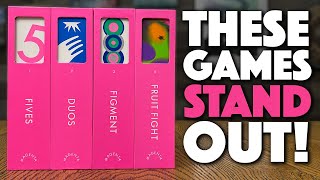
- Fives is a really spectacular balancing act of feeling like a traditional card game.
- Duos is quick to teach, quick to play, but it's still a really satisfying experience.
- Figment is the most non-gamelike game in the bunch.
- Fruit Fight is fast, frantic, and really entertaining.
- CMYK's Magenta series, I think that this is a slam dunk experience.
References (from this video)

- Chunky Euro with rich production systems
- Strong design pedigree from Danny Garcia
- Likely heavy weight; long playtime
- Industrial production and engineering
- Steam-era manufacturing world
- mechanical/industrial storytelling
Mechanics (from transcript analysis)
- Resource optimization — manage resources to build and produce
- Worker Placement — send workers to a beautiful board to perform actions
Video topics + discussion points
Quotes (from this video)
- two-player only trick-taking game
- the Trump is constantly changing
- chapter one is drafting cards that's chapter one
- 60 to 120 minute playtime
- not a deduction game
References (from this video)
- plays for 2, 4, or 6 players in team format
- simple set collection mechanics
- quick gameplay
- large number card visibility
- accessible to older players and younger learners
- no table talk allowed about goals
- need to complete 8 goals to win
- set collection
- teamwork
- Skip-Bo
Mechanics (from transcript analysis)
Video topics + discussion points
Quotes (from this video)
- Grab your dice and shuffle your deck. It's game time now.
- We're playing games with wood and meeples.
- It's a hit. Everybody enjoys it.
- Really low entry to rules. Just move and pick and it's fun.
- I would love to share even more thoughts on it. It's in my top 10 games I've played this year.
- Don't give candy corn to trick-or-treaters - it's only good as candle jar filler for decorations.
- This is a set collection game with team-based gameplay.