/pic3691121.jpg)










Edge of Darkness Deep Dive
What the Community Thinks About Edge of Darkness
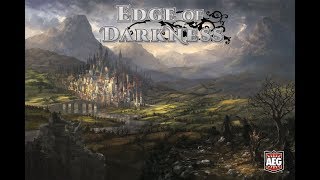
Edge of Darkness has earned significant praise from board gaming reviewers and content creators. The game is recognized as a truly unique design from renowned designer John D. Clair, published by Alderac Entertainment Group. While the game is challenging to acquire due to its Kickstarter-exclusive status and the impact of tariff issues on production, those who have experienced it speak of it with genuine enthusiasm. The community recognizes it as one of the most innovative card crafting experiences available, combining deep strategic gameplay with exceptional mechanical design.
Core Mechanics That Define Edge of Darkness
Card Crafting System
The beating heart of Edge of Darkness is its sophisticated card crafting mechanic. Players build cards by adding transparent advancement sleeves to base cards, allowing up to four enhancements per card throughout the game. This creates a dynamic deck that evolves continuously rather than gaining or losing cards like traditional deck builders. The brilliance of this system lies in the interaction it creates: as players craft cards, they're added to a communal tableau where opponents can use them, paying the creator for the privilege. This forces difficult decisions about whether to craft cards for your own strategy or create such powerful cards that your opponents can't resist using them. The tension between self-interest and the communal card display creates memorable moments of tactical gameplay.
Worker Placement with Variable Location Setup
Edge of Darkness features a worker placement system built around location boards that can be customized for each game. With over 20 location boards in the base set and additional options through expansions, every session can present entirely different action economies. Players position their agents across these locations to perform specific actions, but the true depth emerges from the sheer variety available. Whether you're easily generating money, focusing on fighting threats, or pursuing alternative strategies, the modular nature of the board allows for complete gameplay reinvention. This flexibility ensures that the core worker placement system remains fresh across multiple plays.
The Edge of Darkness Experience
Unique Mechanical Interaction and Table Presence
Playing Edge of Darkness creates a distinctly interactive experience compared to many Euro-style games. The cube tower that resolves threat attacks provides dramatic table presence and a satisfying physical resolution system. Players drop colored cubes into the tower to determine which opponents face threats, creating moments of anticipation as results unfold. The overproduced nature of the game, with its substantial box, numerous cards, and dramatic tower mechanism, ensures that Edge of Darkness commands attention whenever it hits the table. The physicality of dropping cubes and watching the results cascade down makes resolution feel consequential and exciting rather than purely mechanical.
Strategic Depth with Endless Combinations
The true magic of Edge of Darkness reveals itself in the seemingly endless strategic combinations possible within a single game. The number of actions available, the diversity of card crafting possibilities, and the customizable location boards create a game where your approach can vary dramatically from one session to the next. Players consistently find new synergies and strategies to explore, and the game rewards both careful long-term planning and tactical flexibility. This depth extends beyond simple optimization, it creates a puzzle space where creative players discover novel approaches that actually work, generating that satisfying feeling of discovering something the designer perhaps anticipated but left for players to uncover.
What Makes Edge of Darkness Stand Out
Card Crafting as a Shared Resource
Unlike most deck builders where your cards remain your own, Edge of Darkness transforms card crafting into a communal act. Once crafted, cards enter a shared supply that any player can claim by paying the original crafter. This design decision solves one of the genre's fundamental tensions: what happens when one player creates dominant cards? In Edge of Darkness, everyone benefits from their creation, but never in quite the way the original designer intended. This mechanic creates a beautiful push-pull dynamic where you're constantly evaluating whether to create cards for yourself or whether you're inadvertently helping your opponents.
Modular Location Setup System
The location boards offer unprecedented modularity compared to most worker placement games. Rather than a fixed set of actions, players choose which location boards to include before each game, allowing scenarios tailored to specific themes or player preferences. This modularity means that experienced players can create challenging setups emphasizing certain strategies, while teaching players benefit from simplified configurations. The system validates diverse playstyles and allows the game to function as both a puzzle to be solved and a sandbox for experimentation. Few games offer this level of customization without sacrificing balance or coherence.
Potential Drawbacks
Physical Space and Setup Requirements
Edge of Darkness demands substantial table real estate and setup time. The large box, numerous location boards, card supply displays, and the cube tower all compete for space. Teaching the game requires time investment, and players unfamiliar with the card crafting system may need multiple turns to fully grasp the subtle decisions involved. The production quality, while visually impressive, creates a heavy footprint that limits when and where the game can comfortably be played. For casual gaming groups or those with limited space, these requirements represent a genuine barrier to regular play.
Availability and Tariff Pressures
As a Kickstarter-exclusive title, Edge of Darkness remains difficult to acquire through traditional retail channels. The current tariff environment threatens production of new copies, and even backing costs significantly more than many comparable games. For players interested in experiencing the game, secondary market prices often demand substantial investment. The limited availability means many enthusiasts have never had the opportunity to play it despite strong word-of-mouth recommendations. This exclusivity protects the game's status as a collector's item but limits its reach within the broader gaming community.
If You Enjoy Edge of Darkness
Players captivated by Edge of Darkness typically seek games with innovative mechanical design and interactive player dynamics. Mystic Vale offers a simpler take on card crafting but lacks the interactive tableau system. Dominion and similar deck builders provide the satisfaction of engine building but without Edge of Darkness's shared resource element. Dead Reckoning shares the cube tower resolution mechanic while offering a different strategic framework. Robinson Crusoe delivers similar complexity and theme, though focused on cooperative rather than competitive interaction. For those seeking modular worker placement without the card crafting focus, games like Terra Nil or Terrene Mara provide similar customization and strategic variety.
What Reviewers Are Saying
"The real fun of this game is the card crafting system where all the cards go across this conveyor belt in the middle and you can take cards as part of like a drafting thing that you do every turn regardless. And you but the card crafting system allows you to upgrade the cards with those little transparent sleeve things. And you do this every turn. So you don't have to do an action to do it. Yes, you can do it more times, but you'll always do it at least once. So the cards are always getting better and better and better."
— The Broken Meeple
"Edge of Darkness is basically the super heavy version of John Declair's whole card crafting system. And the card crafting system is fantastic. I love it as a mechanic. But this one takes it to the next level. You've got worker placement with all these different location boards, which there's so many of them now with the expansions I've got that allow you to lay up scenarios for games like different themes. Like this one's easier to get money, this one's easier to do fighting, that sort of thing."
— The Broken Meeple
"I'm a huge fan of John Declares work and I love the card crafting system so this to me I'm pretty sure that I'm really gonna like this. It's a really long campaign page so I'm just kind of like going through it but this is more of just this series is supposed to be kind of like a quick hitting hey these are the things that I'm backing and I think you should take a look at as well."
— Board Game Spotlight