




El Gaucho Deep Dive
What the Community Thinks About El Gaucho
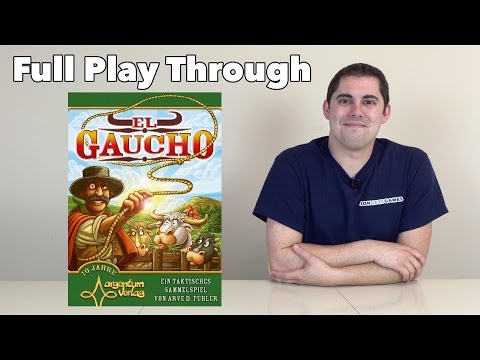
El Gaucho, the 2014 dice-driven Euro in which players are cattle barons sending gauchos to the Pampa, draws reviewers who find it clever and tactile but who differ sharply on whether its scoring holds up over repeated plays. John Gets Games calls it a "fascinating and solid dice pool drafting Euro," praising how its mechanics mesh with one another, while also arguing that its scoring rewards a single narrow plan too heavily. Reviewers agree on the core loop: dice are rolled into a shared corral, players draft them to activate gauchos, and cattle are claimed, sorted, and sold at the end of each round. Where opinions split is on the long-term appeal. Some players describe the game as a favorite they keep returning to, while the most critical reviewer says that after roughly six plays the experience had become frustrating and that the game had "one thing that you got to do."
Core Mechanics That Define El Gaucho
Dice Pool Drafting
The defining system of El Gaucho is its dice rodeo. At the start of each round, all seven dice are rolled into a physical corral, and the start player then takes two dice on their turn to activate gauchos. Reviewers repeatedly point to the way this shrinking pool shapes decisions. John Gets Games notes that players can sum two dice to claim cattle but cannot combine dice to match a bonus action, and that the starting player faces a rich selection while the last player inherits the leftovers. John Gets Games describes the balance this creates by noting that the player who starts a round with the most options often becomes the player with the weakest choices in the next round. Special gaucho spots, including the Hero of the Rodeo, which supplies a wild die, add further value to the draft, since a die that looks unhelpful can be converted into the exact value a player needs.
Pasture Claiming and Cattle Herds
The second core system is the pasture, where cattle tiles are laid out in rows and claimed by gauchos. A gaucho placed standing up on a cow secures it, while a gaucho lying down can be bumped by a special action and leaves the claimant with insurance money equal to the cow's value. A row is evaluated only once every cow in it carries a gaucho, and then standing gauchos collect their cattle. Cattle must be added to a herd in ascending or descending order, and a tile that breaks the pattern forces the sale of the herd. John Gets Games praises the result as a mechanic that "wraps the whole game together," because players must decide whether to commit early, hold back, or take a calculated risk on a cow they do not yet need. Reviewers consistently describe the herd as the emotional center of the game.
The El Gaucho Experience
Table Presence
Reviewers spend considerable time on how El Gaucho looks and sits on the table. John Gets Games describes the cow illustrations as having a huge variety of expressions, with some cows "really mad," some "really happy," and some "confused," and calls the board's aesthetic well suited to a ranching game. The dice corral itself draws the most enthusiasm. John Gets Games explains that the corral holds dice in place so they do not scatter across other players' areas, and that it reinforces the theme of herding. The same reviewer also praises the cow illustrations and overall setup as good looking, reinforcing the sense that the physical production is part of the draw.
Interactive Dynamic Play
El Gaucho generates tension through the way players interact over the pasture. The Cattle Thief spot lets one gaucho steal a tile from an opponent's herd, and the victim is paid the stolen cow's value. John Gets Games describes this as "almost like a cold war effect," where once someone places a gaucho on the thief spot, everyone becomes more wary, and that gaucho may sit there for the rest of the game as a threat. The Overseer spot, which can stand up two lying-down gauchos or bump an opponent's lying-down gaucho, is named by one reviewer as a favorite action. The selling house, which lets a player sell a herd at a moment of their choosing, becomes a way to protect a herd before a thief can reach it.
What Makes El Gaucho Stand Out
The Dice Corral as a Design Idea
Multiple reviewers single out the dice corral as the feature that sets El Gaucho apart. John Gets Games calls it "such a cool idea" and wants to add a dice corral to nearly every dice game, while the Pair of Dice Paradise reviewer treats the rolling mechanic as one of the most appealing parts of the game. The corral keeps the dice tidy, makes the available options easy to read at a glance, and gives the start of each round a physical ritual that feels like a rodeo. For players who enjoy dice drafting, this component is the clearest reason to seek out the game.
Special Gaucho Actions at the Bottom of the Board
The bonus actions along the bottom of the board, which include the Hero of the Rodeo, the Overseer, the Cattle Thief, the Sorting House, and the Selling House, are the other feature reviewers highlight. John Gets Games argues that these spots are "pretty strong," with the Hero of the Rodeo in particular letting a player cash in an unwanted die for the exact value they need. The reviewer describes the result as a layer of decisions that makes almost every turn rewarding, since a player can nearly always find a useful low-value action even late in the turn order. The Sorting House, which allows one cow to be inserted into the correct place in a herd without breaking its pattern, also draws praise for enabling efficient turns.
Potential Drawbacks
A Dominant Big-Herd Strategy
The most consistent criticism is that El Gaucho rewards a single approach. John Gets Games argues that the game "feels like a very dominant strategy," in which players must build the largest herd they can and sell it late. Attempts to spread points across several smaller herds, the reviewer says, rarely produce comparable totals. The concern is less about winning once than about replay: if everyone knows the big-herd plan, the reviewer feels that players end up "doing kind of the exact same thing," and the variety that the random cow layout is meant to create is undercut. This critique is central to the reviewer's decision not to recommend the game.
Swingy Scoring and Analysis Paralysis
The second concern is the scoring. Because a herd's value equals its cow count multiplied by its highest value cow, a single tile can produce a large swing. John Gets Games notes that the same swing works in reverse when a thief takes a valuable cow, and says that the winner often has a far higher score than the loser, sometimes by a doubling of points. John Gets Games adds that analysis paralysis can take hold with so many dice and cows in play, and that the four-player game can run long as a result. The same reviewer suggests that three players offers the best balance, while the two-player game is described as workable but more tit-for-tat when it comes to claiming cattle.
If You Enjoy El Gaucho
Reviewers who appreciate El Gaucho's dice drafting and cattle-pasture tension often point toward other games built around shared pools and mounting pressure. Santiago, which Pair of Dice Paradise introduces as a farming game that still encourages underhanded play, shares El Gaucho's sense of bidding, positional advantage, and last-minute scheming, although its plantation auctions give it a different texture. Ark Mage, the card-and-dice tournament game discussed on Pair of Dice Paradise, shares El Gaucho's central design of drafting dice that alter what each player can do, and it rewards planning ahead as the dice pool changes across seasons. Players drawn to El Gaucho's table presence and dice corral may find both games worth exploring for similar reasons.
What Reviewers Are Saying
"I have to mention that dice Corral, man, that is such a cool idea. It's just fun throwing the dice into there, and I've always liked the mechanic of pulling from a diminishing supply."
— John Gets Games
"El Gaucho is a fascinating and solid dice pool drafting Euro that is somewhat hobbled by the issue of having a dominant strategy and having the scoring be so incredibly swingy."
— John Gets Games
"If El Gaucho hit the table, I would jump in and play it right now. I don't know why I wouldn't."
— Pair of Dice Paradise