/pic3328521.jpg)

























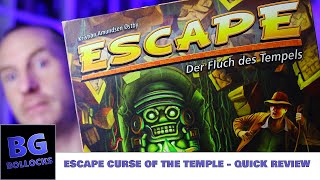






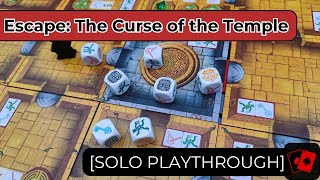

Escape: The Curse of the Temple Deep Dive
What the Community Thinks About Escape: The Curse of the Temple
Escape: The Curse of the Temple stands as a landmark real-time cooperative game that fundamentally changed how the board gaming community approaches simultaneous play under pressure. Reviewers consistently highlight its ability to deliver concentrated excitement in just ten minutes, creating heart-pounding tension that rarely lets up from start to finish. The game has earned respect across multiple gaming communities, from casual family players to seasoned hobbyists who appreciate its elegant core design.
Core Mechanics That Define Escape: The Curse of the Temple
Real-Time Dice Rolling Under Pressure
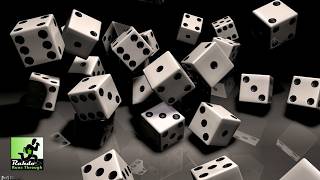
The foundation of Escape rests on simultaneous dice rolling, where all players roll their dice continuously without waiting for turns. Players generate icons through their rolls that correspond to specific actions: moving into new chambers, discovering tiles, activating magic gem chambers, or escaping the temple. What makes this mechanic compelling is its sheer pace. Reviewers note that there is zero downtime between actions. Every moment matters, and the constant rolling creates an infectious urgency that keeps all players engaged simultaneously. The mechanic forces fast thinking and coordination, making each round feel like controlled chaos rather than a typical turn structure.
The Soundtrack as Active Game Element
Escape uses an included CD soundtrack not merely as atmosphere but as an active timer that triggers three critical events. The first gong marks the temple closing and the game's start. The second gong signals players must rush back to the start chamber before it sounds again. The third and final gong means the temple collapses and any players still inside lose. Reviewers consistently cite this soundtrack as transforming the game from a simple dice-rolling exercise into a visceral experience. The audio timer creates genuine tension because it cannot be negotiated with, ignored, or rushed. Unlike a sand timer, which players might monitor casually, the soundtrack demands complete attention and forces players to make rapid decisions before time expires.
The Escape: The Curse of the Temple Experience
A Frenetic Heart-Pounding Journey
One dominant theme across reviews is the game's ability to generate rapid heartbeat reactions. Reviewers describe Escape as delivering one of the fastest-paced gaming experiences available, a game that feels like "speed has been shot into your backside." The exploration mechanism, moving between chambers, discovering new tiles, and managing curses, creates a constant sense of forward momentum interrupted by moments of pure panic when the gong sounds. The social dynamic is equally striking. Because all players are rolling simultaneously and working together against a collapsing temple, the experience becomes highly collaborative yet frantic. Teammates help each other by rolling the symbols needed to free cursed dice, and joint victories feel genuinely earned.
Replayability Through Expansions and Variability
The base game's simplicity masks extraordinary depth through its expansion ecosystem. Queen Games has supported Escape with approximately nineteen expansions, ranging from big box versions to smaller "Queenieties" modules that add traps, quests, illusions, treasures, and curses. Reviewers highlight how these additions keep the game fresh across dozens of plays. More importantly, players can calibrate difficulty by including or excluding content. New players can learn with the core ruleset, while veterans can layer in complexities. This flexibility means the game scales from introductory to challenging experiences while maintaining its essential ten-minute runtime.
What Makes Escape: The Curse of the Temple Stand Out
Extreme Accessibility With Genuine Depth
The rules are simple enough to teach in minutes. Roll dice, match symbols, move. Yet the strategic layer emerges through resource management and tactical decisions. Do players explore aggressively to find gems, making escape easier, or play conservatively to ensure they can return to safety in time? Teams must decide whether to split up to cover more ground or stay together to help each other. These decisions carry weight without requiring complex bookkeeping or lengthy rulebooks. Reviewers note this balance between simplicity and meaningful choice makes Escape unusual. Most games force a trade-off: either they are mechanically light with shallow decisions, or they require expertise to evaluate options properly. Escape achieves both accessibility and interesting gameplay simultaneously.
Perfect Time Investment for Engagement Value
Ten minutes represents a sweet spot that reviewers repeatedly celebrate. The game delivers a complete narrative arc, exploration, discovery, return journey, climactic escape attempt, without overstaying its welcome. Because it is so brief, players typically want to play multiple rounds in succession, especially if the first game went poorly. There is no fatigue or tedium. The time commitment is small enough that Escape works as a palate cleanser between longer games, yet it generates as much table energy as games requiring hours to play. Reviewers describe wanting to immediately play again after finishing, a sign of genuine satisfaction.
Potential Drawbacks
High Stress May Alienate Some Players
The frenetic pace and constant pressure create an intensity that is not universally enjoyable. Reviewers note that players prone to anxiety or those uncomfortable with pressure-packed moments may find the experience stressful rather than fun. Some players, including the reviewer's spouse mentioned in one review, simply dislike the panic that the game induces. The game's own rules recommend caution for players with heart conditions, acknowledging that it genuinely elevates heart rate and creates physiological stress responses. For casual players seeking relaxation, Escape's intensity can feel overwhelming rather than entertaining.
The Random Nature of Dice Rolls Creates Frustration
While reviewers appreciate the speed and excitement, some note that the game's outcome depends heavily on dice luck. Players might roll only cursed symbols and become permanently locked out of contributing to the team's success. A player who generates all wrong results in crucial moments cannot affect the outcome, leading to helplessness and frustration. Because the game is timed and frantic, there is no opportunity to mitigate bad luck through clever play. The randomness is part of the design, and reviewers acknowledge it works fine for those who embrace the luck factor, but it genuinely turns off players who prefer games where skill dominates outcomes.
If You Enjoy Escape: The Curse of the Temple
Players seeking similar experiences might explore Project Elite, which offers a cooperative real-time game with slightly longer downtime between player turns, allowing moments to breathe. Magic Maze provides real-time cooperative play but removes the dice element entirely, replacing it with a silent communication puzzle. For those who love Escape's theme but want less intensity, Break the Safe offers a more leisurely-paced real-time game spanning roughly thirty minutes. Each alternative preserves elements of Escape, cooperation, time pressure, exploration, while shifting the intensity level or mechanics to suit different player preferences.
What Reviewers Are Saying
"This game really did change the nature of real-time games. It's essentially a heart attack in a box."
— BoardGameBollocks
"Every time I play it in such a short amount of time I get such a fun social experience with the people I'm playing with. The expansions are really what have given it legs in my collection."
— Rolls in the Family
"There is no downtime. You're immediately going it's just go go go go go. A perfect example of delivering the most packed fun in 10 minutes."
— Ryan and Bethany Board Game Reviews