/pic6632318.jpg)
Oh no! Something terrible has happened: Santa Claus' golden book has disappeared! It contained a complete list of all the Christmas wishes. If the book isn't found by Christmas Eve, there will be nothing but sad faces around the tree on Christmas morning. It is up to you to save Christmas — and time is of the essence!
The thief's trail leads you to a remote mountain village. You quickly notice that something strange is afoot here...but what? And where has the golden book gone? You must find it, but let me tell you: Behind the doors of this village there are many surprises waiting for you!
Exit: The Game – Advent Calendar: The Hunt for the Golden Book is an EXIT game and a 24-part adventure story in one. To find the golden book, you must open a little calendar door every day. Behind each, you will find a new exciting puzzle, the solution of which will help you to move onto the next room. Only if you follow the clues and solve all 24 puzzles will you find the thief and the book...and save Christmas.
Level: Beginner



- Array
- Escape-room style puzzles
- Escape Room-themed games
- Taboo
Mechanics (from transcript analysis)
Video topics + discussion points
Quotes (from this video)
- Target board games selection is gonna get a 7 out of 10
- there's an entire corner of the store dedicated to just board games
- I'm thoroughly impressed
- the fact that there's an entire corner of the store dedicated to just board games means that there's still a notable presence of games that's definitely gonna include something you're gonna want to want
References (from this video)

- Accessible puzzle experience; good stocking filler
- Brand recognition with Unlock / Exit styles
- Puzzles and component destruction (potentially destructive to components)
- Escape room style
Mechanics (from transcript analysis)
- Puzzle solving — Described as a puzzle in a box; components can be destroyed in some versions.
Video topics + discussion points
Quotes (from this video)
- it's a small tin game it's cute
- it's the most well known out of all the ones we're going to say here
- this is a new small box game from the cult express family
- it's a puzzle in a box
- it's just such a straightforward game
References (from this video)
Mechanics (from transcript analysis)
- Escape room — Mentioned as a game that could be played on a plane.
Video topics + discussion points
Quotes (from this video)
- The first question I have for you this month is how do you feel comfortable buying a game on Kickstarter if you haven't played it?
- It seems like a gamble. Kickstarter is a lot less like a shop front or a storefront going to a board game shop and buying a game and much more like investing in an idea.
- My golden rule for Kickstarter is I wouldn't back any game that did not have a copy of the rules PDF available for you to read through.
- Long flight coming up? What are the best roll and right games small enough to fit on an airplane trade table?
- How long is too long to allow a retcon in a game?
- If you could only play mass market games, what games would you play?
- IP or no IP?
- I don't really love IPs on games but like everybody in the world if it's the IP that I really like I'm also much more interested in playing a game if it's got an IP that I like.
References (from this video)
- There are many games in the series, and each one is great.
- It provides a good escape room puzzle experience.
- It's fun to do puzzle room type games in spare time.
- The components must be destroyed, making it a one-time play.
- Jigsaw puzzle ones break up the fun.
- Unlock!
- Deckscape
Mechanics (from transcript analysis)
- Escape room — this is just one of the escape room puzzle games that we play.
- One-time play — you have to destroy the components so one use only.
- Puzzle — doing a sort of one of these puzzle room types of games is uh good fun.
Video topics + discussion points
Quotes (from this video)
- it took the core from Dinosaur Island dinosaur world but made a much better game out of it
- it's the only game out there that's taken the pandemic action point allowance style thing and cut it right back to two actions per turn
- this is sort of the next layer up once you've worn through your copy of Seven Wonders duel
- it really brought that you can't see your own cards mechanism to life
- it isn't going to drag on because it ends when someone gets to 40 points I think it's just a perfectly little compact game like that
- this is how I learn trick takings thanks to Taryn this is a Cooperative trick taking game
- this is probably the heaviest game out of the top 10 terraforming masks and I think part of why it's here is it is the heaviest game we've played the most or the heavy game we've played the most often makes it the easiest to just pick up and play
- you have to destroy the components so one use only
- the way they managed to take one of the seminal large count party games and make it into an even better two-player couple game doesn't get enough credit in my mind
References (from this video)

Mechanics (from transcript analysis)
- Cooperative Game — Players cooperate to solve puzzles and escape within a time limit.
- cooperative puzzle/escape room style — Players cooperate to solve puzzles and escape within a time limit.
Video topics + discussion points
Quotes (from this video)
- I'm heading off to Essen Germany for Essence Spiel 18 soon and I wanted to share with you a few tips and tricks for a good travel experience
- I personally like carcasson because they'll put me to sleep
- If you see me there find me I will hopefully hunt some lovely gamer or Ally tags for you
References (from this video)

- New Exit game set in Catan; all Exit games do come to Canada.
Mechanics (from transcript analysis)
- N/A — Not specified.
Video topics + discussion points
Quotes (from this video)
- UKGE is 47 days away and there are some games coming out that I am really excited to see.
- Forest Shuffle Dartmore. This is like a reskin of Forest Shuffle.
- Come Sail Away is available in Canada but if I can manage to with that combo get come sail away for less than 23 British pounds.
References (from this video)
- Fun competition
- Swag given to participants
- Solving puzzles
Mechanics (from transcript analysis)
- competitive — Multiple teams compete head-to-head to solve puzzles.
- Puzzle solving — Teams compete to solve puzzles as quickly and effectively as possible.
Video topics + discussion points
Quotes (from this video)
- Do not do cannonballs into the pool with Queen's Gambit.
- Well, hello everybody and welcome back to What's Happening.
- My name is Zee Garcia.
- The app takes care of that fiddliness of shaking the bag, pulling the tokens, dealing with the upkeep of it all. It's very upkeep-y as a game.
- It feels like an It almost feels like an early Board Game Arena app.
- It'd be nice to see just kind of like a you know, a more up-to-date implementation of the game.
- So, there you go, guys. That is Coffee Roaster.
- Tell your friends about the Dice Tower.
References (from this video)

- Competitive version where multiple tables do the same escape room at the same time to race to complete it.
- Escape room in a box
Mechanics (from transcript analysis)
- Escape room — Little escape rooms in boxes
Video topics + discussion points
Quotes (from this video)
- And this is uh Jason and the Argonauts. So, a solo quest with uh silver foiled cards, you know,
- But I felt like it was a bridge too far. I hope that they I I think a couple of of little tweaks honestly could have turned it into a really good game.
- Um, I think stealth in board game form is a little hard to pull off.
- Why why why would you call this Legacy of Mars?
- The legacy is the biggest complaint about this. The calling it a legacy, calling it legacy of Mars, I think is a problem.
- It's just a big old gamble on a piece of tech that you don't know is proven, right?
- My pick of the week is Jason and the Argonauts, a solo quest.
- I really like the theme. Jason the Argonauts is a great theme. I think the production value here of Envorn Games is fantastic.
References (from this video)

- Brings escape room experience home
- Good for two players
- Accessible to wide skill levels
- Encourages teamwork and communication
- Can become difficult with more than two players due to alpha gamer tendency.
- Escape room experience
- Puzzle-based narrative
- Unlock!
Mechanics (from transcript analysis)
- cooperative play — Players work together to solve the game's challenges.
- Escape room — Brings an escape room experience home with puzzles and challenges.
- Puzzle solving — The core gameplay involves solving various puzzles to progress.
Video topics + discussion points
Quotes (from this video)
- I'm going to give you my top 10 casual games, but nothing on my strategy game list can make it on this one, which makes me a little bit sad.
- It's so strategic this game. So strategic and but it's also casual. See? See what I did? It's strategy and casual. Both of them in here. It's okay. I'm all right. I'll live with it.
- Those aren't opposites. I mean, something could be strategic and casual.
- The rules are simple enough for anyone to grasp, right?
- This is a very elegant martial arts duel with simple rules and the players are going to share the movement cards and you're it's a constantly changing puzzle.
- I refuse to put this on the strategy list because the str it's not difficult to play.
References (from this video)

- The game was good and engaging, with clever puzzles that made players think.
- Got stumped on a couple of things, but the solutions were logical upon review.
- On a plane during a storm
Mechanics (from transcript analysis)
Video topics + discussion points
Quotes (from this video)
- hello and welcome to the it's live live show
- if you want to ask questions it's very easy to do because we will be answering questions later
- our sponsor is board game arena
- the happiest camel is a camel that's wild the camel that's living their own best life akimbo that's a and Yolo and running around the desert with whatever number ups they feel like having because they get to choose their wild
- the best camel is the superior of the camels the bactrian camel
- three two one Nisha yes exactly well done points
- I will say I do really like Everdell yeah and I really like that aspect of it where you are able to take actions on the other turns as well it keeps you engaged
- my favorite game is always situational
- traditionally historically my answer to this has been heroscape
- Magic the Gathering is probably my other pick
- The rulebook was difficult to understand, making the host feel like the writer didn't care if the player understood how to play.
References (from this video)
- great introduction to escape-room experiences
- replayable across multiple different scenarios in the series
- designed as one-time scenarios
- may require a dedicated space and some prep
- mystery, puzzle solving
- an escape room in a box
- scenario-based, puzzle-driven
- Unlock! Star Wars
- Escape Room: The Board Game
Mechanics (from transcript analysis)
- Cooperative Game — players work together to solve puzzles and escape a room
- cooperative puzzle solving — players work together to solve puzzles and escape a room
- Real-Time — puzzles unfold within a set time frame
- scenario-based challenges — one-time-use adventures with escalating clues
- time pressure — puzzles unfold within a set time frame
Video topics + discussion points
Quotes (from this video)
- these are games that we think will make people happy and make people have fun
- we need to share the joy of games because all people should love games
- it's very quick and simple rules
- two games in one and very fun for families
- no talking
References (from this video)
- Immersive, thematic puzzles
- Variety across different scenarios
- Some puzzles can be hard or confusing
- Destruction of components may deter reuse
- escape-room experiences
- 60-minute scenarios, short gaming sessions
- self-contained stories with modular cards and hints
- Escape Room in a Box
- Unlock!
Mechanics (from transcript analysis)
- Deduction — timed, clue-based puzzles integrated into a scenario
- destruction/ alteration of components — puzzles require destroying or folding components to progress
- hints/cards/wheel — hint system and solution reveal via cards or wheels
- Physical Removal — puzzles require destroying or folding components to progress
- Puzzle solving — timed, clue-based puzzles integrated into a scenario
Video topics + discussion points
Quotes (from this video)
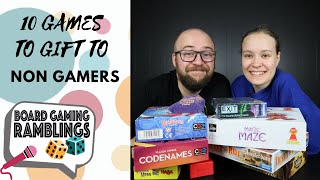
- hello everyone this is still Hannah's
- and you are watching board gaming
- rambling Sam today we are talking about
- this is the most like authentic escape room experience in a box
- three to eight players that's stupid
- this is a family game
- this is easily playable with two players
- puzzles are easy but it's really really fun
References (from this video)
- Engaging puzzle-forward design that rewards patience and pattern-matching, with a strong sense of daily momentum.
- The advent calendar format creates a ritual-like experience, turning puzzle solving into a daily event.
- Thematic motifs (animal icons, tablets, and on-page imagery) offer rich visual hooks and tactile engagement.
- Clue integration often rewards cross-day memory, encouraging long-term retention of earlier steps.
- Ambiguity in color cues can cause initial confusion, requiring careful interpretation and sometimes backtracking.
- Inconsistencies between in-box visuals and box-art representations may mislead players briefly.
- Some puzzles demand precise alignment of multiple components, which can be fiddly on a small play surface.
- Escape room-style puzzle solving within a sci-fi advent calendar frame
- A jungle planet revealed through a mysterious Advent Calendar puzzle, where warriors demand a task and cryptic tablets must be assembled to progress.
- First-person, diary-like narration of solving daily puzzles and constructing clues into a larger code
Mechanics (from transcript analysis)
- Code deciphering — Numeric codes derived from assembled clues unlock subsequent stages.
- Color/shape interpretation — Shapes take precedence over colors; color cues can mislead and require shape-focused deduction.
- Pattern Recognition — Fragments must be arranged to form images or patterns that unlock further steps.
- Pattern recognition and assembly — Fragments must be arranged to form images or patterns that unlock further steps.
- Puzzle solving — Core mechanic: players deduce codes from clues, assemble pieces into meaningful shapes, and derive codes.
- Sequential clue progression — Each day’s puzzle builds on prior days, creating a progressive challenge.
Video topics + discussion points
Quotes (from this video)
- It's not the color that it is inside the box, cuz the alligator's green inside the box. It's the color it is when you make the shape.
- See you for day 13.
References (from this video)
- Engaging, puzzle-heavy cooperative experience that rewards careful interpretation
- Creative use of textual cues (italics, underlines) to guide discovery
- Strong atmosphere with space salvage and race themes
- Some clues can be opaque and require persistent trial-and-error
- Physical setup and spatial alignment can be fiddly and slow-paced for some groups
- Cooperative deduction and clue-based problem solving within a time-pressured, puzzle-driven adventure.
- A spacefaring salvage scenario where a blocked spaceship must be cleared of debris to continue a race, framed as a puzzle-rich Advent calendar experience.
- Dialogue-driven puzzle hints with embedded clues (italsics, graffiti, and debris cues) delivered through in-game chatter and riddle-like cards.
Mechanics (from transcript analysis)
- Clue interpretation — Hints are embedded in textual and visual cues (italics, underlines, graffiti) that must be parsed to reveal the correct actions.
- Cooperative Game — Players collaborate to interpret clues, select actions, and coordinate debris clearance and door interactions to progress.
- cooperative puzzle solving — Players collaborate to interpret clues, select actions, and coordinate debris clearance and door interactions to progress.
- Deduction — Hints are embedded in textual and visual cues (italics, underlines, graffiti) that must be parsed to reveal the correct actions.
- Narrative-driven trials — Story prompts and in-game dialogue guide the flow of the puzzle and heighten immersion.
- Pattern Recognition — Decoding sequences (e.g., 7, 5, 9) and door-number relationships to unlock progress.
- Spatial reasoning with physical components — Handling and rearranging debris and components around the ship layout to free paths and access boxes/doors.
Video topics + discussion points
Quotes (from this video)
- Place debris upright on doors.
- Close one eye. Look at the box.
- What the heck is this trying to say to me?
- Some of these words are in italics and I'm going to underline those.
- I think it's seven, five, 9.
- This place is supposed to be guarded.
- Stand upright on the lot and grab the components and doors lying around and throw them into the air.
- It might come in handy.
- I'm going for a snack.
- Debris upright on doors.
- Are the numbers in here the door numbers that have debris on them that we need to open and look at?
References (from this video)

- Engaging hands-on puzzle solving
- Cooperative play fosters teamwork
- Compact, self-contained adventures suitable for calendar format
- Story-driven and gradually reveals puzzle progression
- Component fragility and wear with repeated play
- Finite replayability
- Requires careful organization to avoid mixing components
- Sci-fi mystery with a continuing storyline across days
- Intergalactic race puzzle adventure; space environments
- episodic, day-by-day puzzle narrative
- Exit: The Game (series)
- Escape Room in a Box
Mechanics (from transcript analysis)
- Cipher and code decoding — Decipher codes, sequences, and cipher clues (e.g., decoding 613, symbols).
- Cooperative Game — Players collaborate to solve multi-step puzzles using clues and physical components.
- cooperative puzzle solving — Players collaborate to solve multi-step puzzles using clues and physical components.
- Pattern Recognition — Determine the correct sequence of moves or inputs based on clues (e.g., key order and arrow directions).
- Pattern recognition and ordering — Determine the correct sequence of moves or inputs based on clues (e.g., key order and arrow directions).
- Physical manipulation of components — Handling keys, slots, and other game pieces to reveal solutions.
Video topics + discussion points
Quotes (from this video)
- 613
- Do the symbols match? Circle triangle Y.
- We did it. We found it.
References (from this video)

- Rich variety of clue types that reward careful observation and pattern recognition
- Strong emphasis on cooperation and collaborative reasoning
- Tactile components create tangible engagement and a sense of discovery
- Color and symbol coding provides satisfying, repeatable puzzle mechanics
- Some hints may feel open to interpretation, which can slow pace or lead to ambiguity
- Small components are easy to misplace, potentially interrupting flow
- Requires attention to visual details (colors, symbols) which may challenge color-blind players
- Access to the next steps sometimes relies on transient or obscured information (e.g., milkshake obscuring text)
- Mystery, deduction, collaboration, and problem-solving under time pressure. The core theme centers on decoding cryptic clues, aligning color-coded identifiers, and assembling a coherent solution from disparate components.
- Story-driven, episodic puzzle experience embedded in an Advent Calendar format. The narrative positions players in a space race context where a mysterious vehicle must be identified and assembled from clues found across daily puzzles. The setting blends a bar-room clue hunt with a longer arc of competition and discovery, all tightly packaged as a timed sequence of events typical for an Advent Calendar puzzle series.
- Array
- Episodic and diary-like, with a running sense of progress as each day’s puzzle is tackled. The style emphasizes character-driven hints (e.g., mentions of a 'bar', a 'business card', a 'milkshake' obscuring information) to enrich immersion while steering toward a concrete solution.
Mechanics (from transcript analysis)
- code_breaking_and_symbol_matching — Interpreting and aligning color-coded identifiers and symbols to derive the intended solution.
- group_discussion_and_consensus — Steering a team conversation to choose among possible vehicles and verify clues.
- physical_component_exploration — Handling and inspecting cards, coasters, and calendar sheets to extract actionable data.
- puzzle_solving — Solving riddles, interpreting symbols, decoding letters, and noting hidden letters or tilts that reveal information.
Video topics + discussion points
Quotes (from this video)
- we have two riddle cards and one strange item coaster
- these are our riddle cards
- we have gone into the bar to pick up a business card
- So, we want seven green red 1 3 7 1 3 is my guess for our solution
- Okay. [music] So to go from day one, we go over one from this door over again