/pic7598950.png)






























Explorers of Navoria Deep Dive
What the Community Thinks About Explorers of Navoria
Explorers of Navoria generates enthusiasm from multiple segments of the board gaming community, though opinions diverge on what the game delivers. The Board Game Garden placed it at number 10 on their 2024 heavier games list, calling it a wonderful and unique experience. Let's Table It ranked it among their top games, with reviewers emphasizing its approachable art and layered mechanical depth. The game appears across many "whimsical" and top-games lists from 2024, suggesting strong aesthetic appeal paired with solid mechanical execution. However, Tabletop Turtle offered the most critical perspective, rating it a 5-6 for being mechanically simple without meaningful depth, arguing it feels "like it's sort of playing itself." This divergence highlights a key tension: whether the game's accessible simplicity serves strategy or replaces it.
Core Mechanics That Define Explorers of Navoria
Bag-Draw Drafting
The core card-drafting mechanism defines the Explorers of Navoria experience: players draw two action tokens from a bag, select one to keep and place the other on the board for future opponents. This system creates a distinctive decision point between seeking known cards from the central display versus drawing blind and hoping for favorable token colors. Board Game Dad described the connection between drafting tokens and then using those tokens as workers as "very cool," highlighting how your discard becomes a future player's opportunity. The randomness of the bag draw creates debate: Let's Table It valued the choice and flexibility it enabled, while Tabletop Turtle called it artificial limitation without meaningful consequence.
Tableau Building with Cascading Effects
Each card color serves distinct functions: green cards provide resources, yellow cards build settlements, purple cards advance explorers, blue cards unlock income-phase bonuses, and red cards score end-game points. The interplay between these card types rewards planning and synergy. Peaky Boardgamer explained how collecting five of the same creature type unlocks a favor tile that multiplies end-game scoring for specific card colors, creating multiple scoring pathways rather than a single optimal strategy. Let's Table It emphasized that two players pursuing distinct strategies can finish with similar scores, indicating genuine mechanical balance across the five-species set-collection layer.
The Explorers of Navoria Experience
Accessible and Welcoming Gameplay
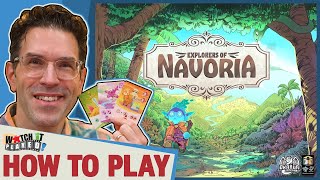
The game teaches in 15 minutes and plays in 45-60 minutes, creating an approachable footprint. The five card types each have clear roles and simple icons. Watch It Played demonstrated this clarity without oversimplifying, while Peaky Boardgamer covered the core loop in under seven minutes, validating the design's elegance. Let's Table It emphasized the game doesn't overstay its welcome: exactly three recruiting phases, three gathering phases, and three income phases before final scoring. Board Game Garden placed it among medium-weight games rather than medium-heavy, acknowledging its accessibility while recognizing genuine strategic depth beneath the surface.
Colorful Production That Matches Gameplay Warmth
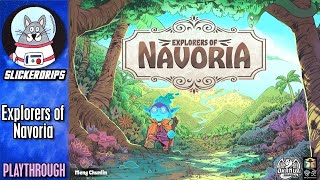
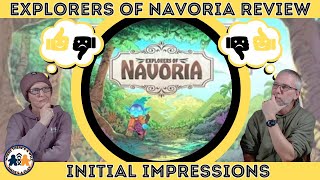
Multiple reviewers singled out the art and component quality. The palette of vibrant colors and creature illustrations creates an inviting aesthetic that matches the accessibility of the mechanics. Let's Table It specifically praised the cute artwork and colorful presentation. Board Game Garden called it wonderful, with "bright colors and cute artwork" being explicit draws. Even Tabletop Turtle conceded it's a very pretty game, with quality art being one of the few elements they highlighted positively. The playmat and upgraded components available from the publisher suggest the community values this production quality enough to invest further.
What Makes Explorers of Navoria Stand Out
Dual-Phase Token System
Phase two transforms the tokens used for drafting into a worker placement pool. The colors of available tokens determine which worker placement spots players can claim, and different colored workers activate only their matching territory areas. Board Game Dad called this connection between drafting and worker placement "the game's heart," praising how choices in phase one ripple through phase two in logical, predictable ways. The system never feels arbitrary; resource collection from cards feeds into contracts requiring specific combinations, and fulfilling contracts triggers cascading bonuses tied to trading posts.
Multiple Viable Strategic Paths
Let's Table It observed that different engine types can succeed, with players pursuing distinct strategies finishing with comparable scores. The territory tracks (glacier, forest, desert) each offer unique rewards, and the favor tile system creates additional scoring dimensions. Peaky Boardgamer walked through how contract completion becomes satisfying when pieces click together: advancing exploration tracks, scoring points, and triggering post-based rewards all resolve in sequence. This structural variety means the game avoids a single dominant strategy while remaining mechanically coherent.
Potential Drawbacks
Limited Player Interaction
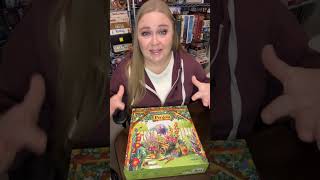
Tabletop Turtle centered their critique on the game's minimal meaningful interaction. Players can draft cards opponents wanted, gain points based on track placement relative to others, and claim favor tiles before opponents. But once cards hit the table, players are largely solving their own puzzles. Tabletop Turtle argued that if a game removes player interaction, it must offer a genuinely compelling solo puzzle, a criterion they felt Explorers of Navoria failed. Board Game Dad and others disagreed, suggesting the decision about which cards to draft and which tokens to leave provides sufficient interaction for the game's weight and playtime.
Randomness in Token Selection
Tabletop Turtle's loudest complaint targeted the bag-draw randomness. You see cards you want, but whether you can take them depends on random token draws. They argued better gateway games exist that introduce mechanics without leaning on luck. Board Game Dad and Watch It Played reframed it as decision-making space: drawing two and choosing one creates a choice point with asymmetric payoffs, and the option to take known tokens from the board reduces pure luck. The divergence suggests whether randomness enhances or undermines the experience depends on what players want from the game.
If You Enjoy Explorers of Navoria
Players drawn to Explorers of Navoria's accessible engine-building will find strong parallels in Orleans for bag-building worker placement with deeper economic systems. Wingspan offers comparable tableau-building with engine development in an approachable package. Barcelona provides grid-based worker placement with multiple viable approaches, while Wondrous Creatures delivers worker placement with vibrant aesthetics and a similar difficulty curve. For lighter tableau-building with whimsical art and faster playtime, Creature Caravan captures a similar spirit.
What Reviewers Are Saying
"The connection between drafting tokens to draft cards and then using those tokens as workers for worker placement, I think is very cool."
— Board Game Dad
"It's definitely one of those games where there's so much decision space going on in a shorter play time. You definitely have a lot to think about and do, but it doesn't feel like it overstays its welcome."
— Let's Table It
"Simplicity is not an excuse to make a game that feels like it's sort of playing itself. If you're going to make me ignore everybody else at the table, you better present me an interesting puzzle that is worth my time to solve."
— Tabletop Turtle